
Asian Citrus Psyllid Photos
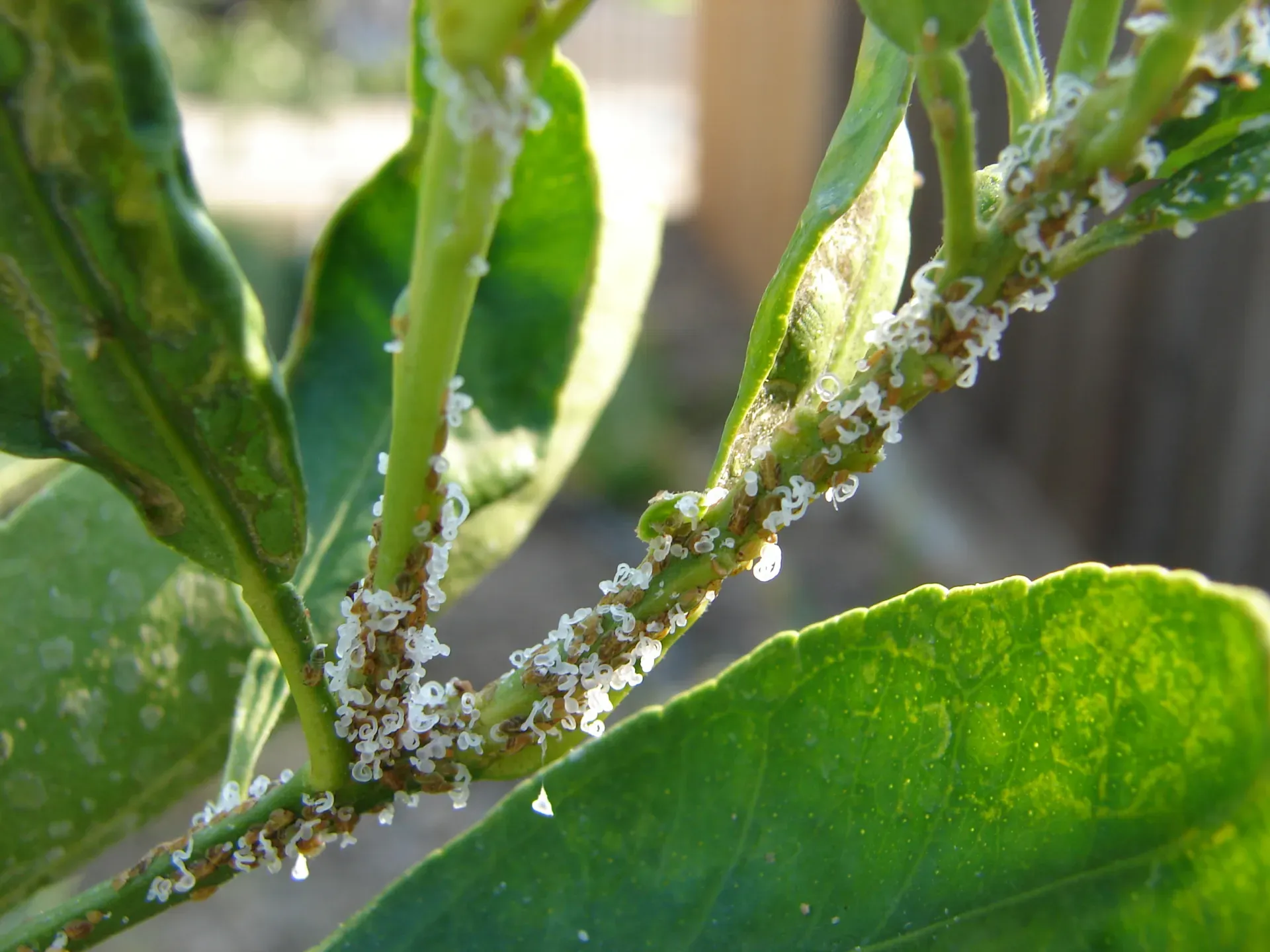
Asian citrus psyllid nymphs excrete distinctive waxy tubules.
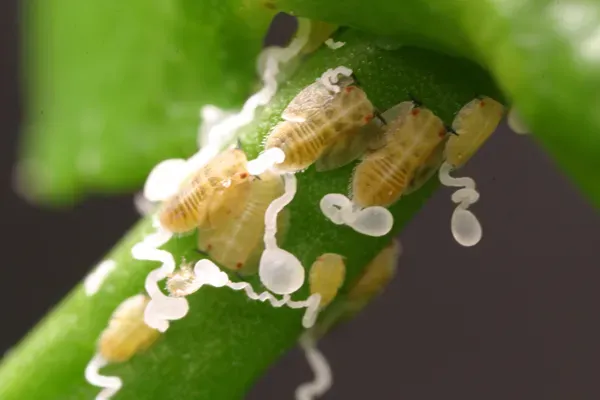
Asian citrus psyllid nymphs excrete distinctive waxy tubules.
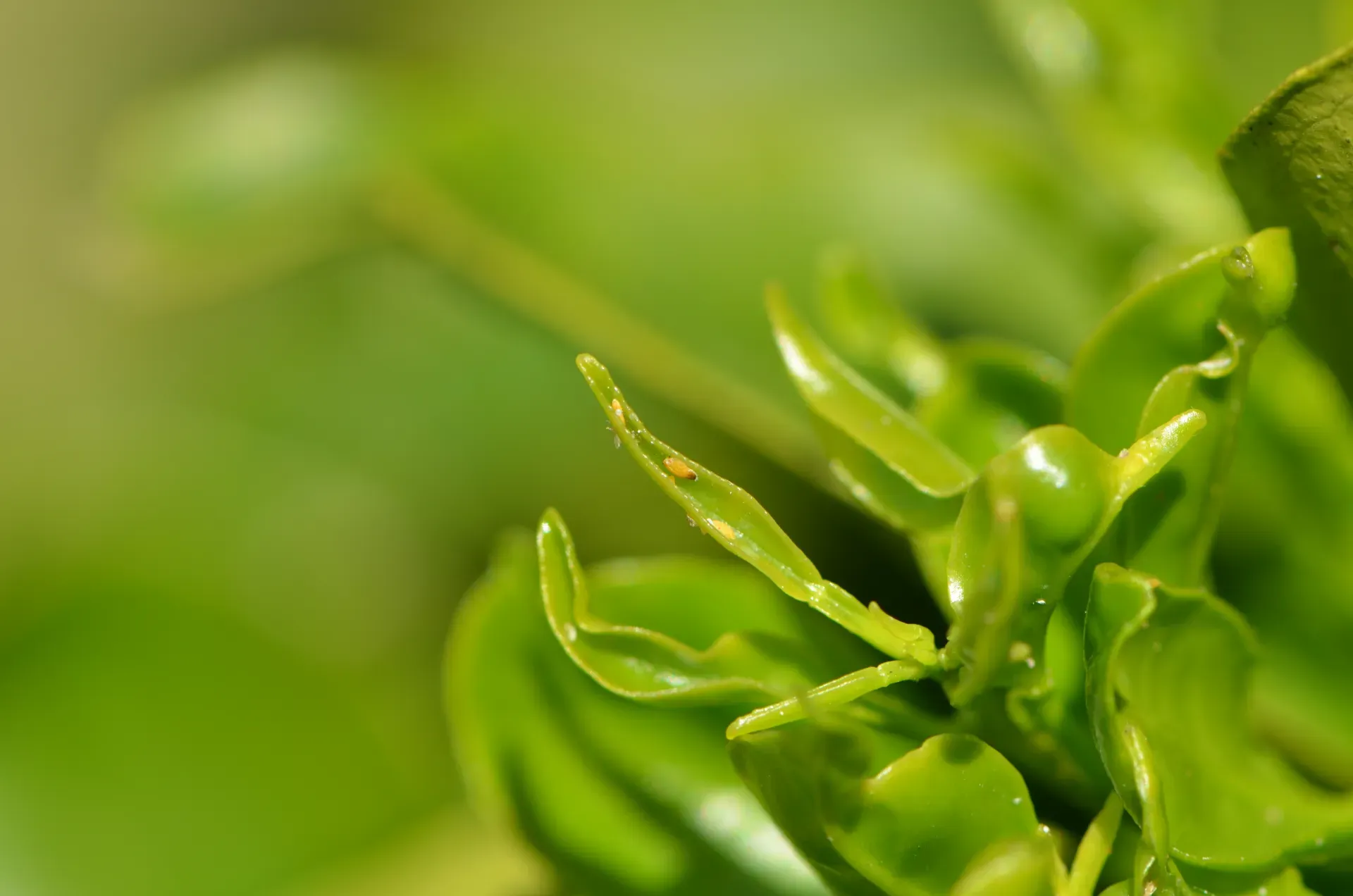
Psyllid nymphs on young flush.
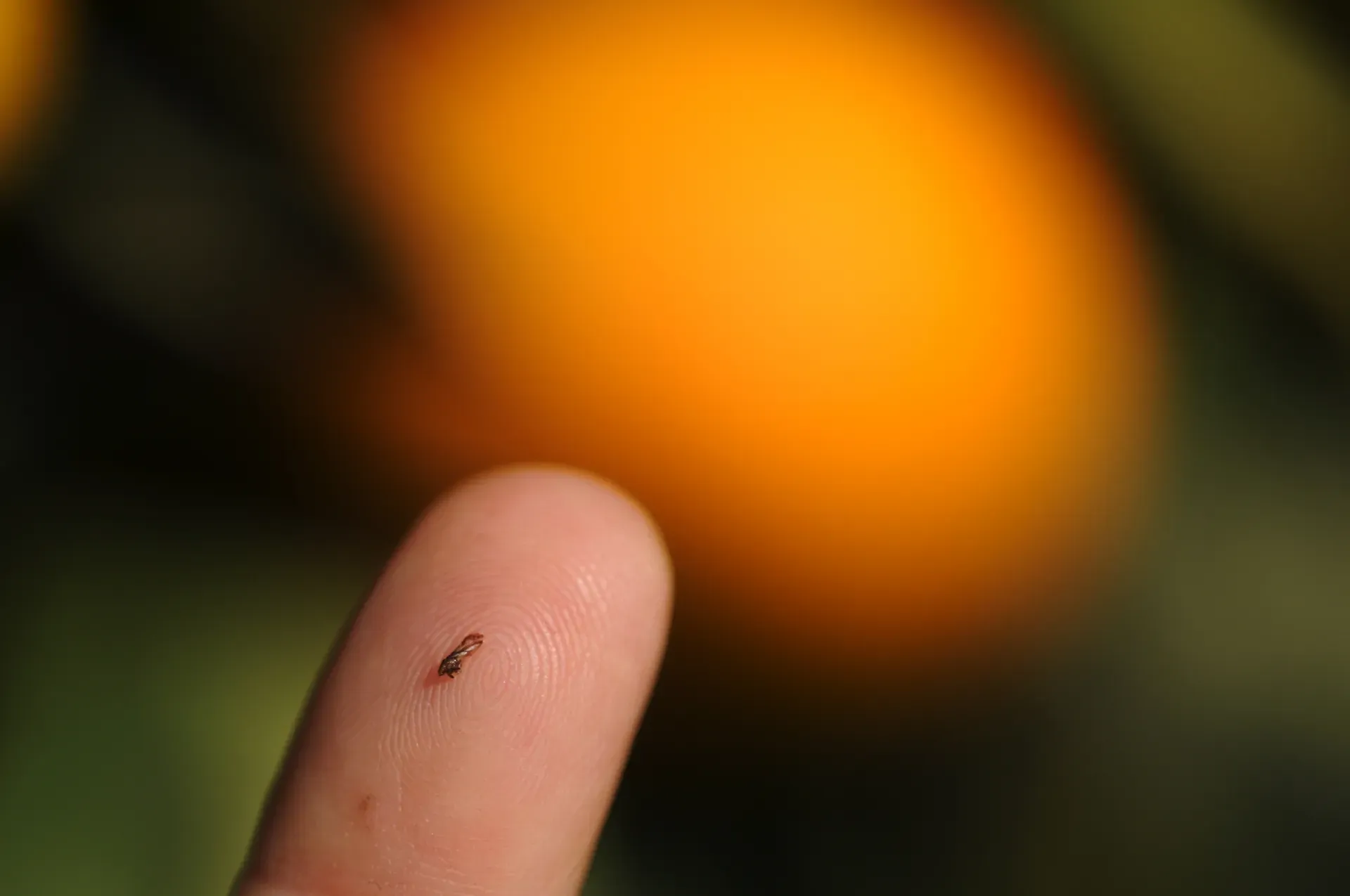
Size of adult psyllid.
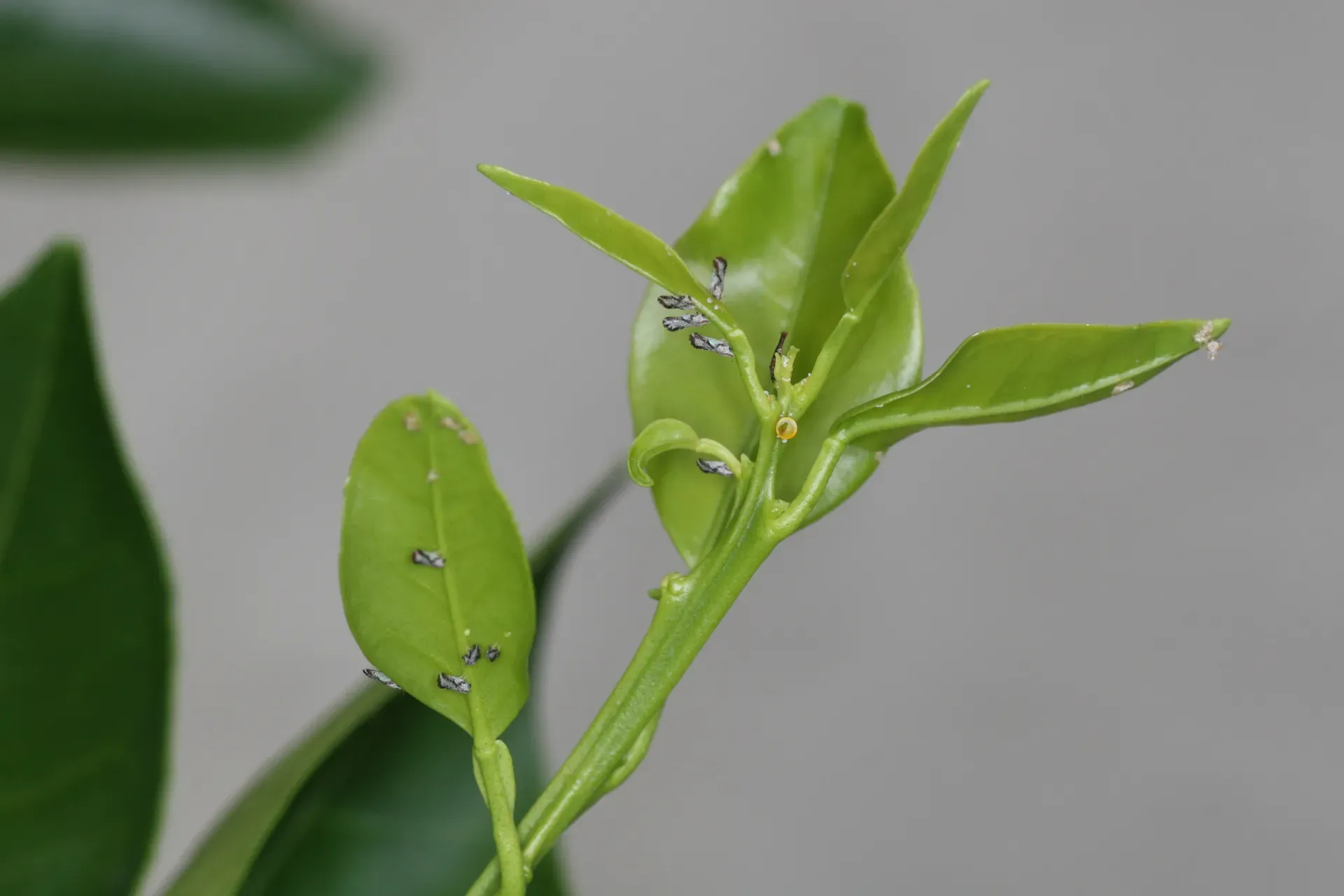
Asian citrus psyllids typically congregate on new growth
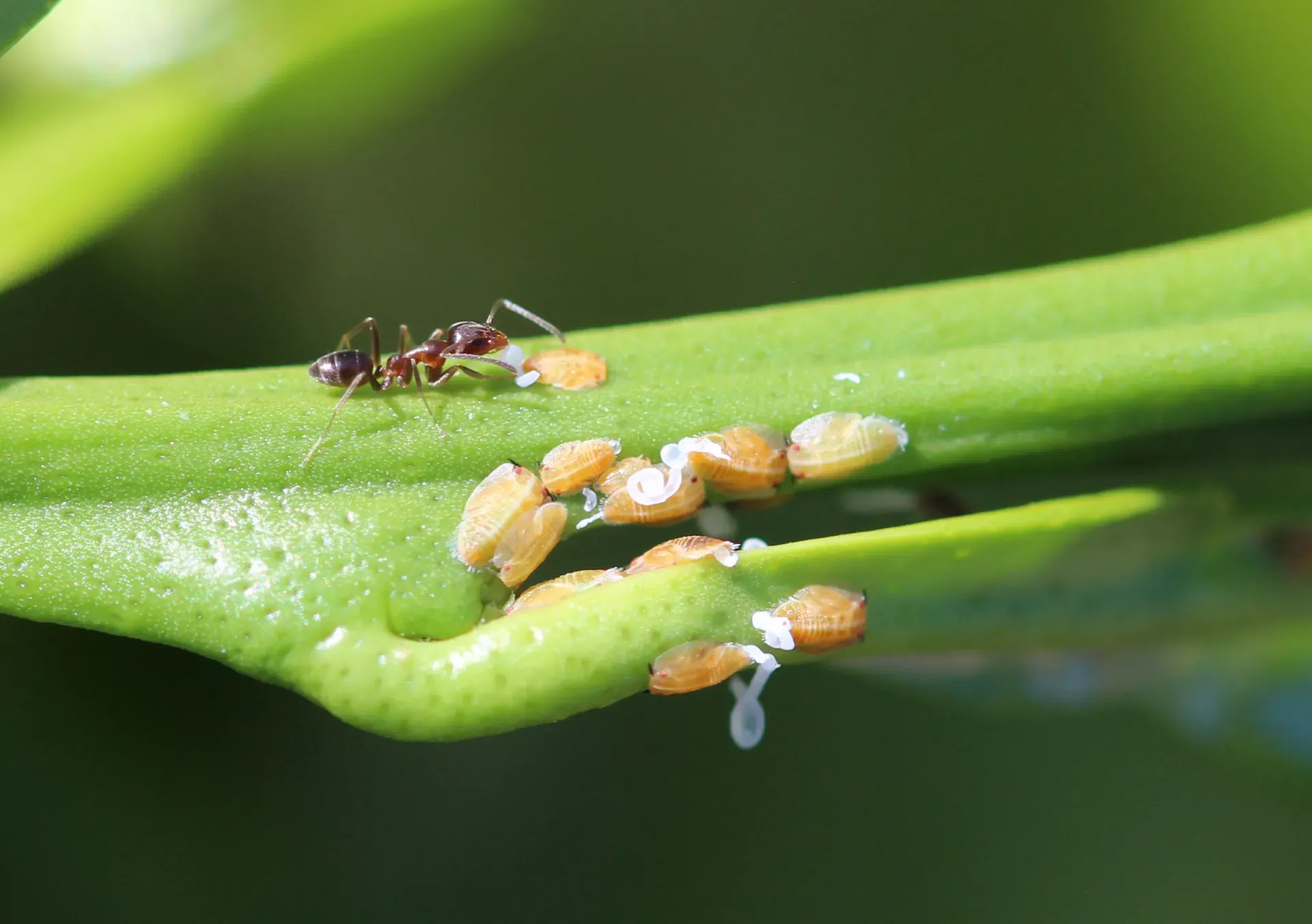
Ant protecting psyllids to farm the sweet honeydew they produce.
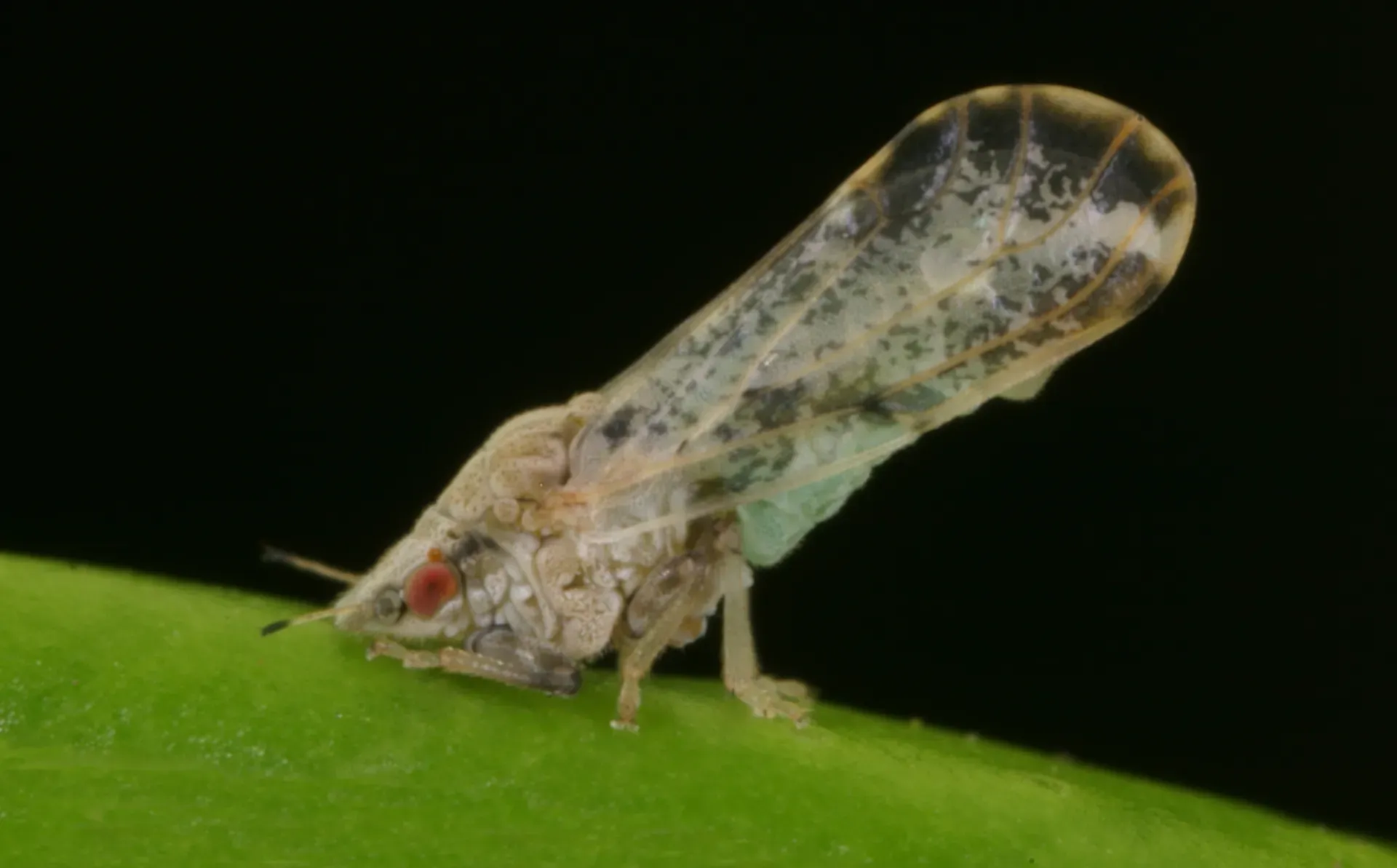
Asian citrus psyllids often perch with their hindquarters raised
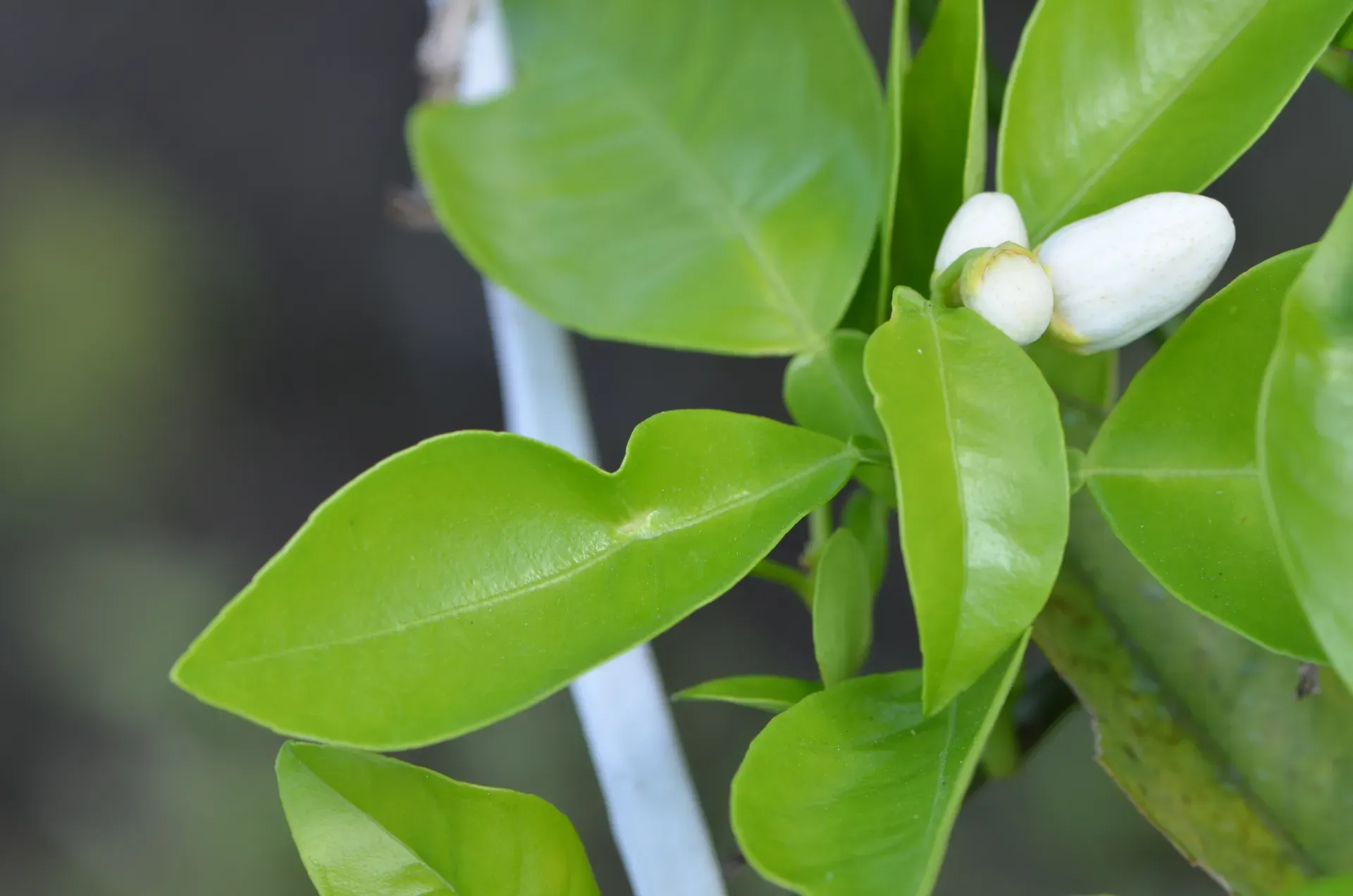
Notching on leaves due to psyllid feeding.
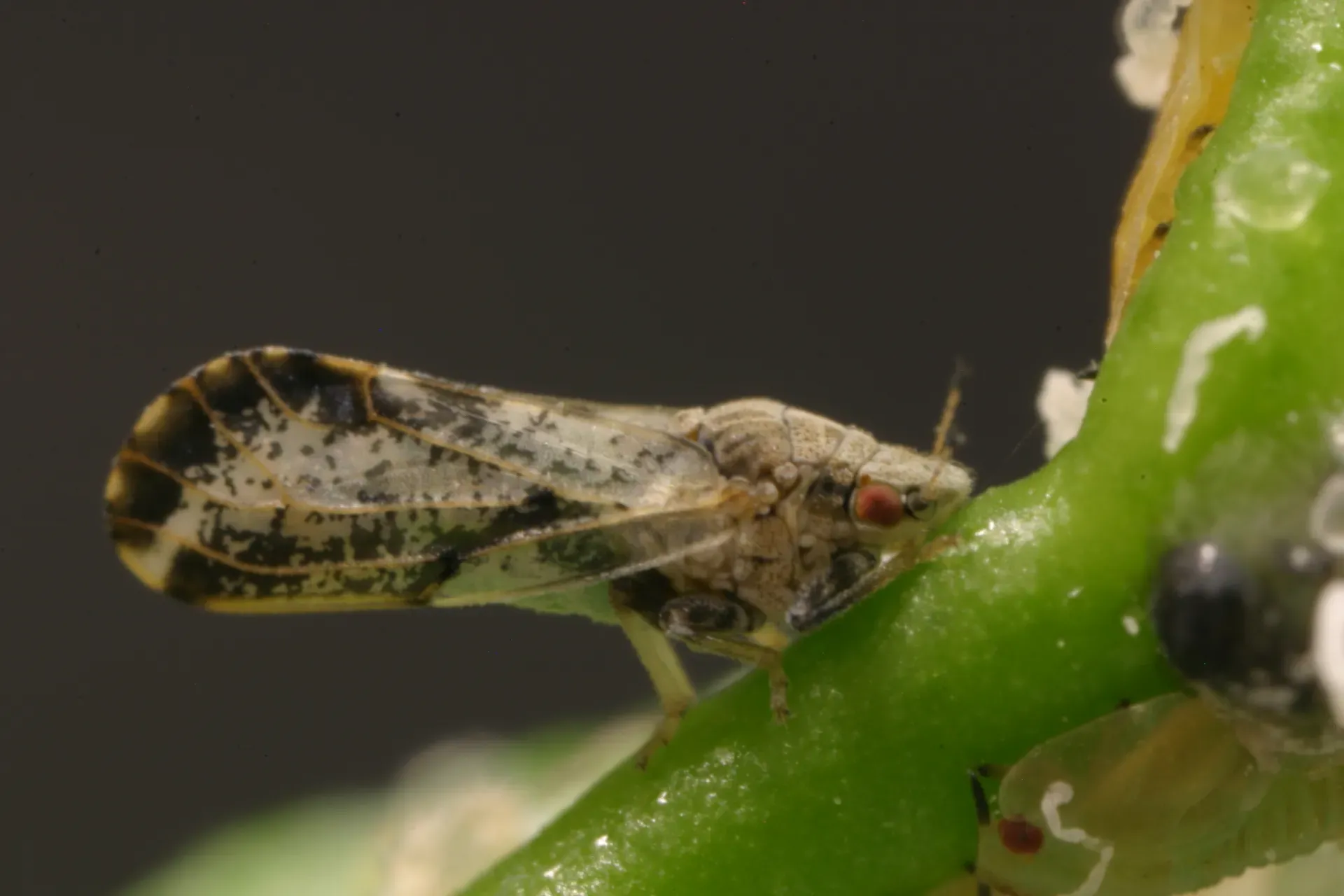
An adult Asian citrus psyllid, and a nymph underneath the shoot.
Huanglongbing Disease of Citrus Photos
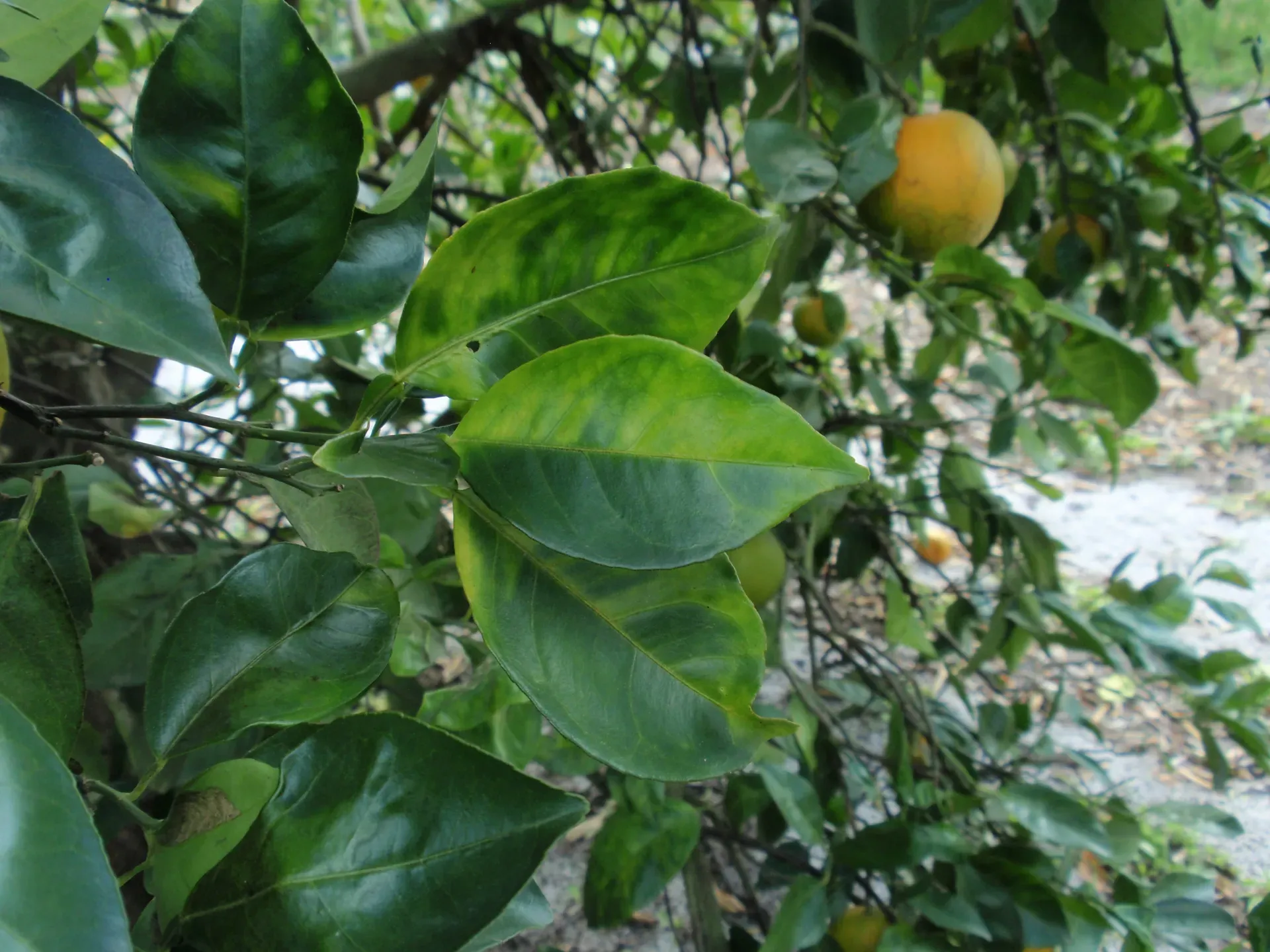
Leaves on a huanglongbing infected tree in Florida.
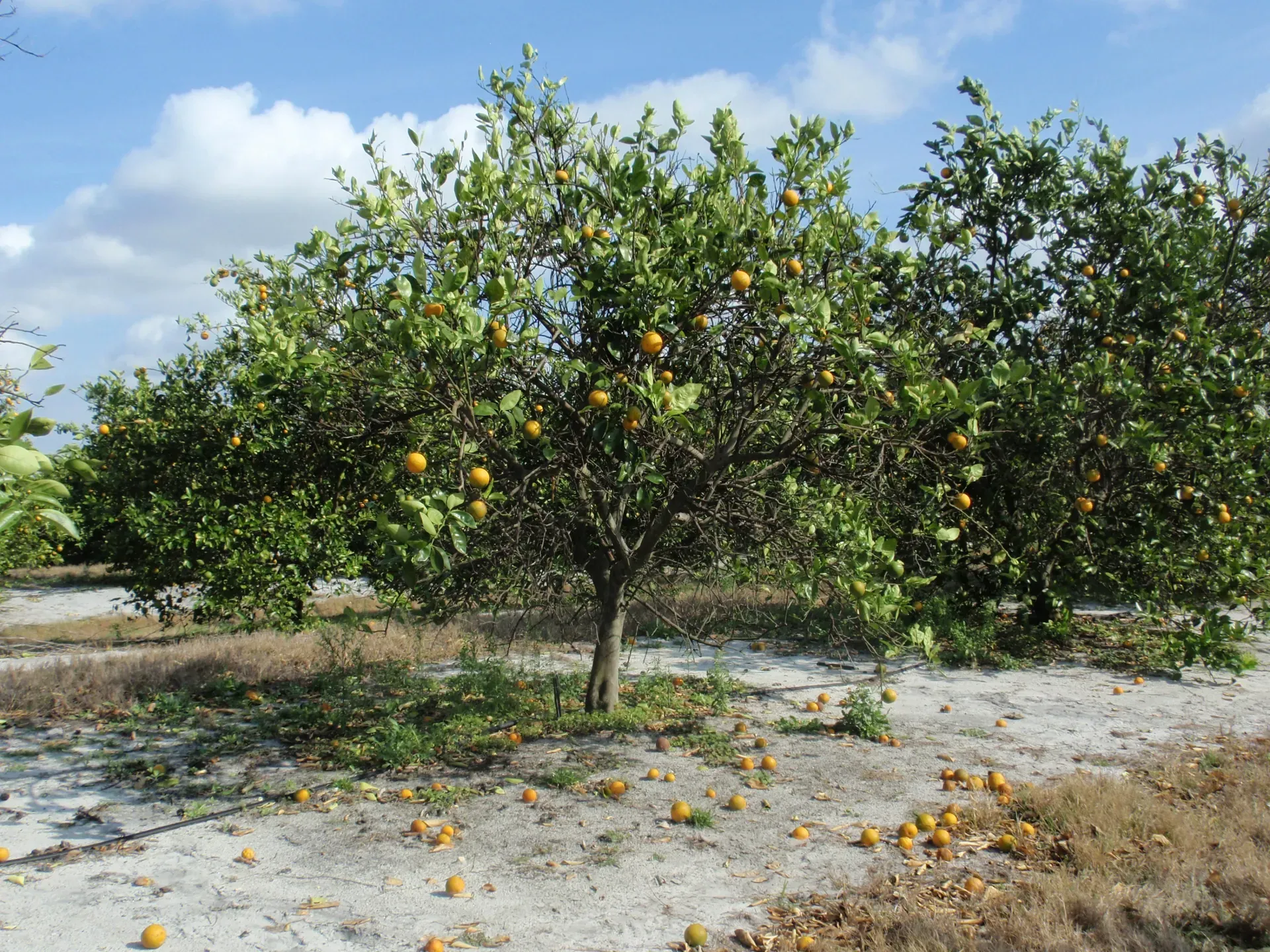
HLB infected tree in Florida. As the disease progresses, the canopy thins and fruit falls off easily.
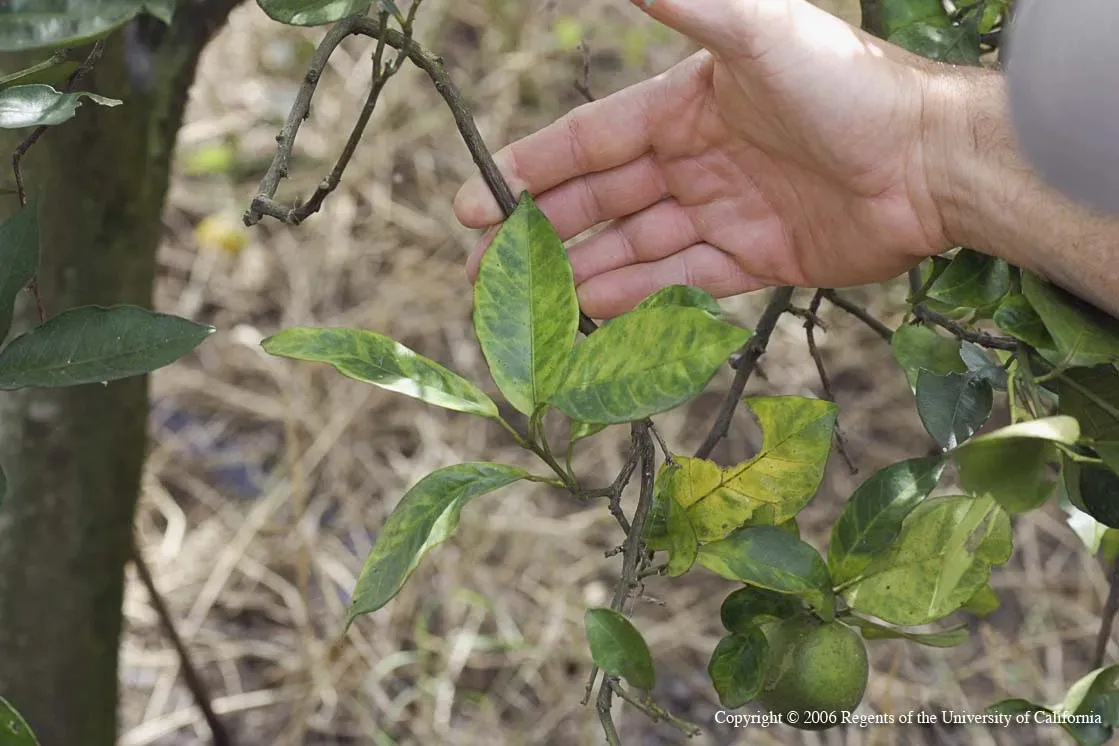
Yellowing of citrus leaves can be a sign of HLB or other disorders. HLB yellowing is asymmetrical.
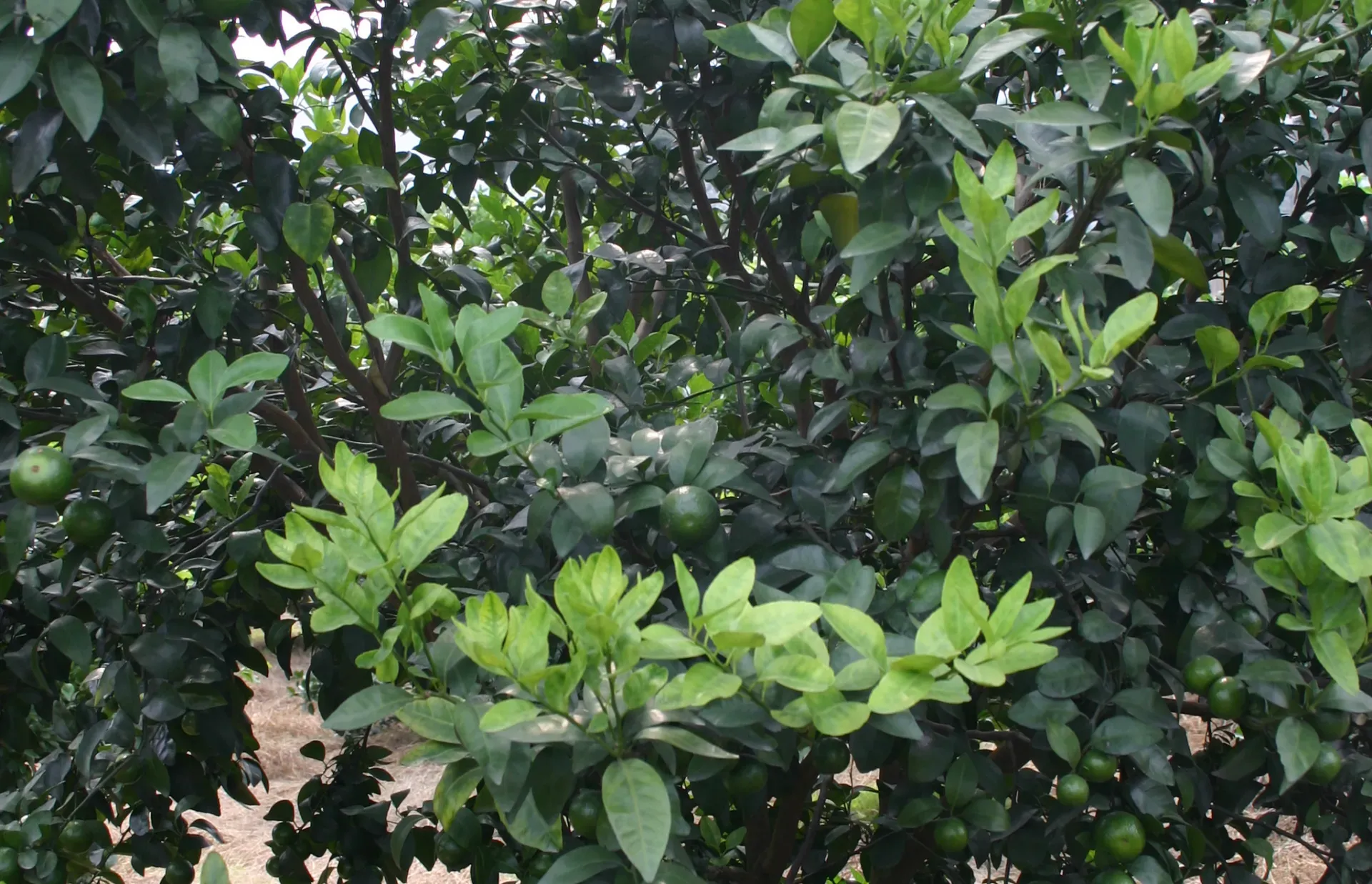
Yellow shoots due to huanglongbing disease.
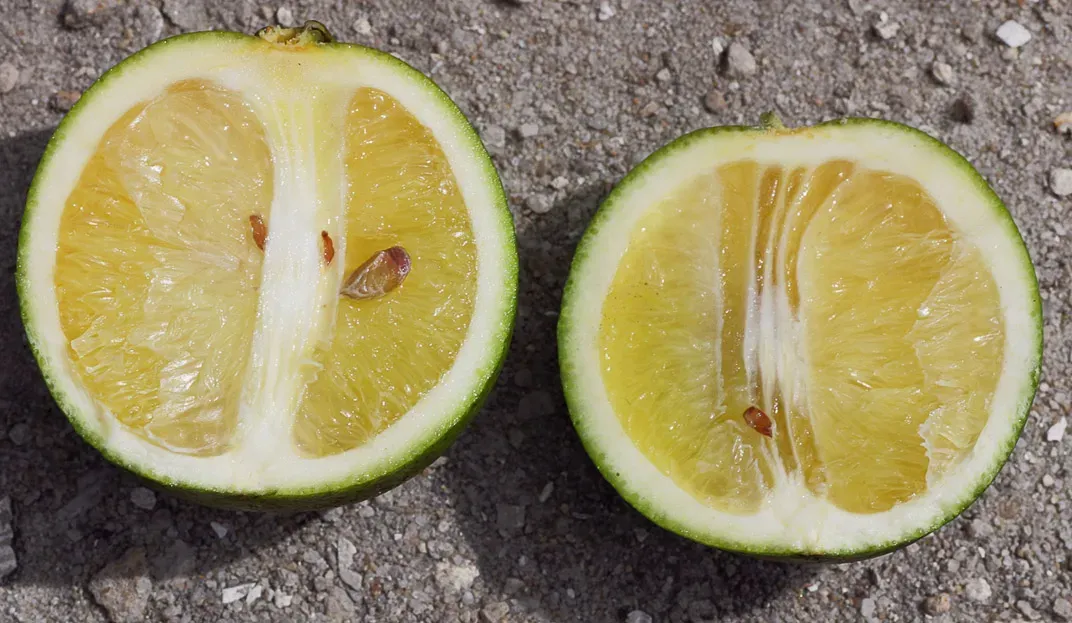
Citrus fruit with asymmetrical segments and brown seeds due to huanglongbing.
Additional Photos
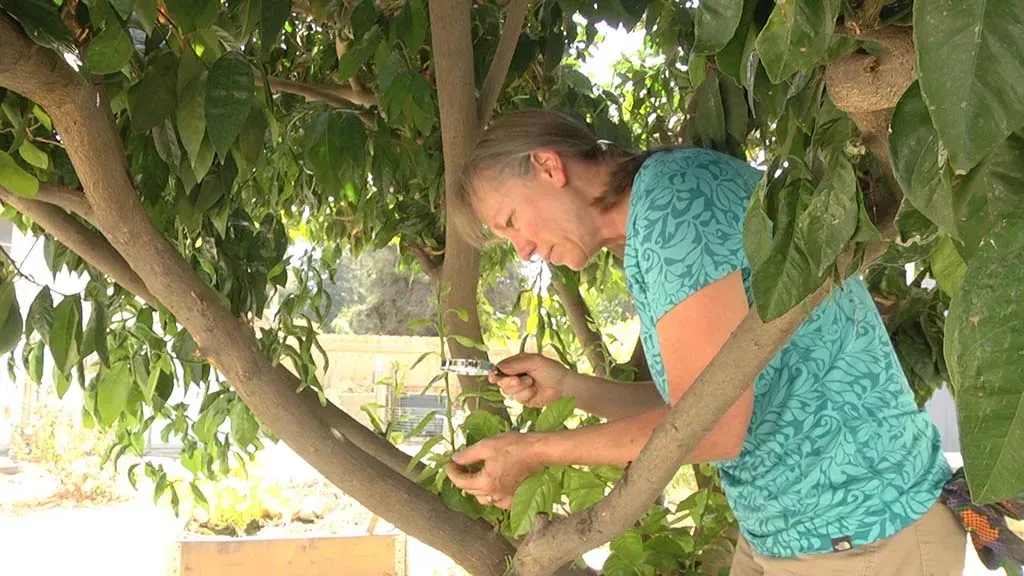
Californians can do their part to protect citrus from Asian citrus psyllid and huanglongbing disease by inspecting the news growth on citrus for signs of Asian citrus psyllid.
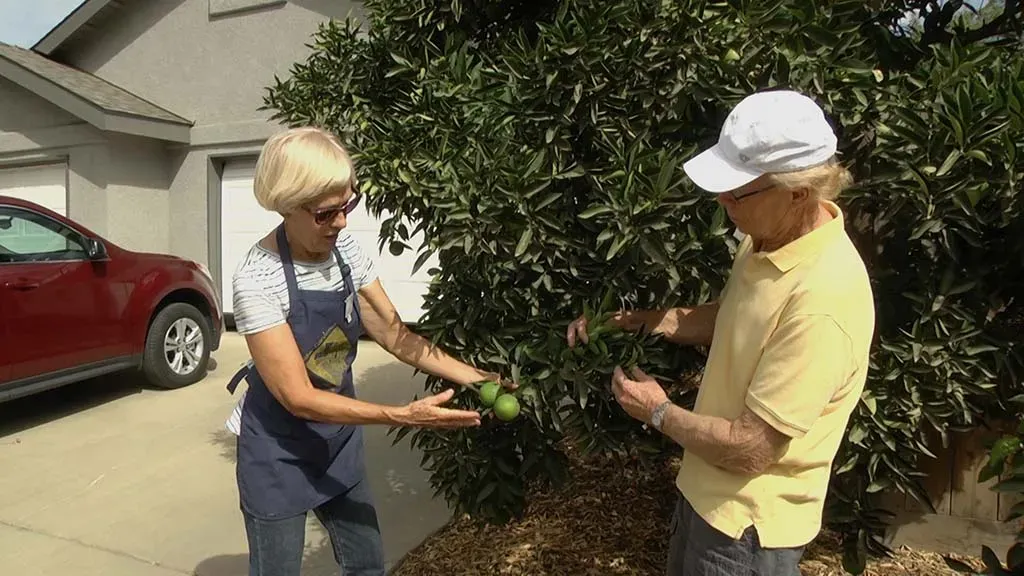
Many residences in California have citrus trees in the landscape.
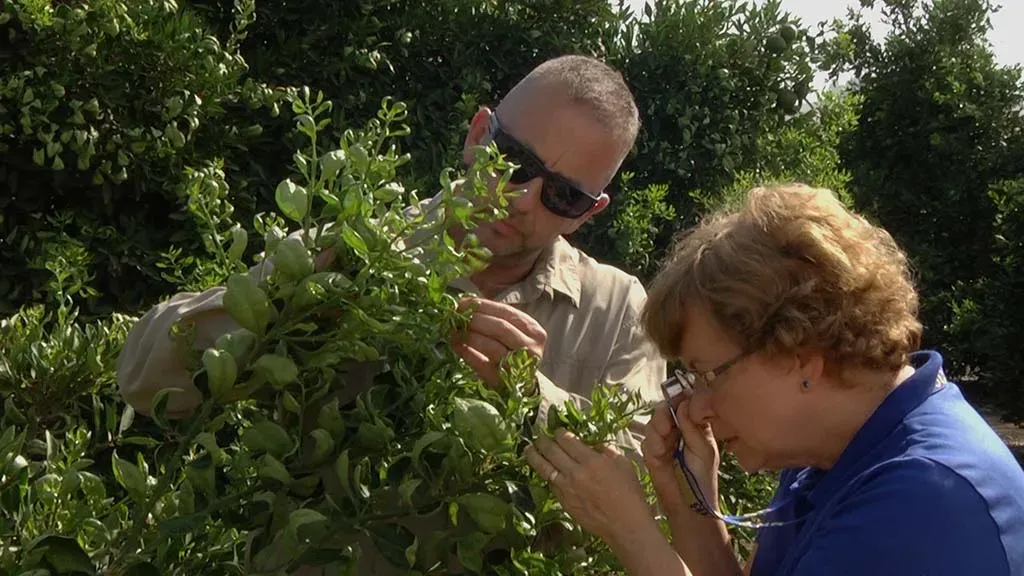
Mark Hoddle, UC Cooperative Extension biological control specialist, left, and Beth Grafton-Cardwell, UCCE citrus entomologist.
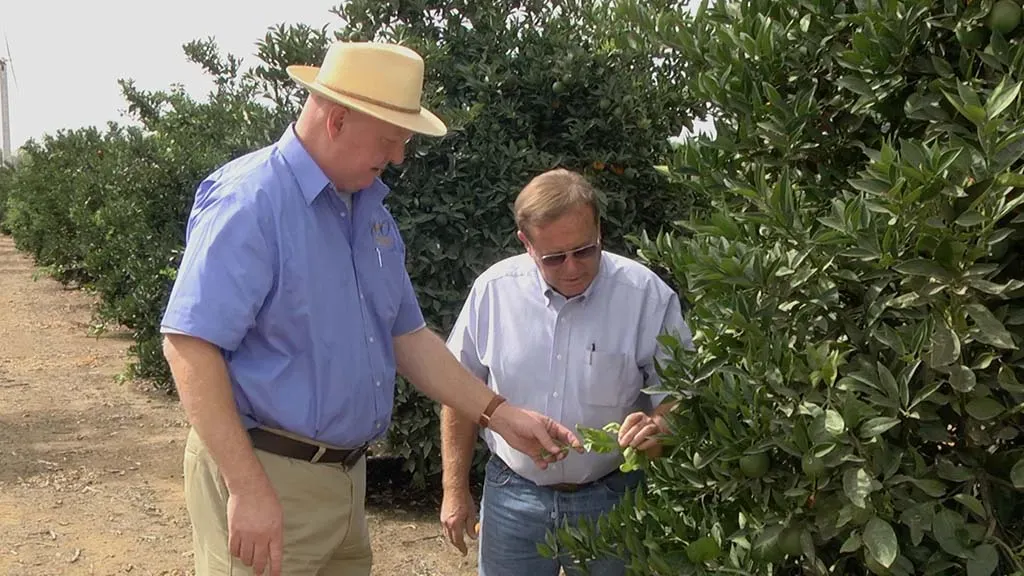
Farmers need to inspect their trees for signs of Asian citrus psyllid.
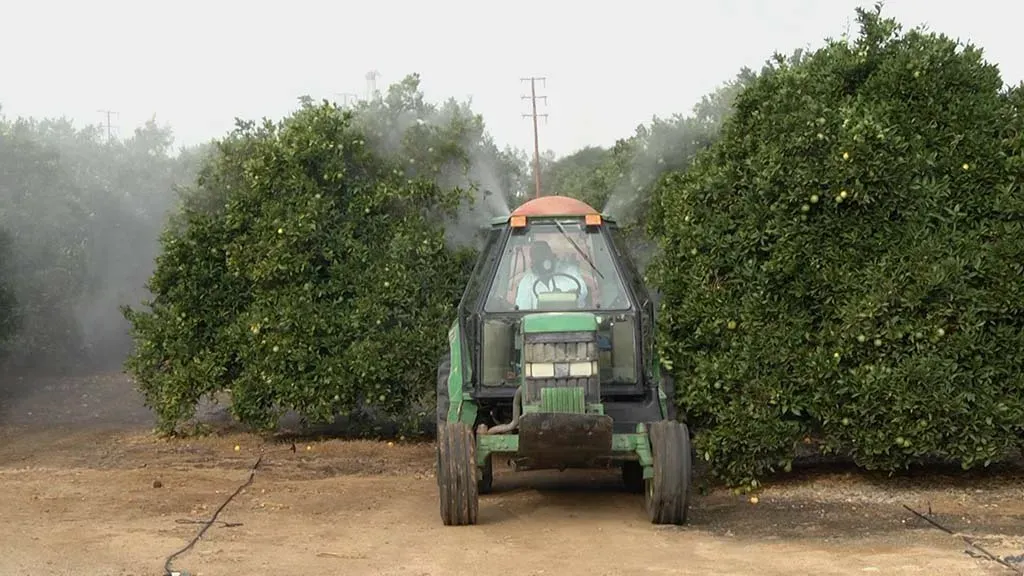
Farmers may need to treat commercial trees to control Asian citrus psyllid.
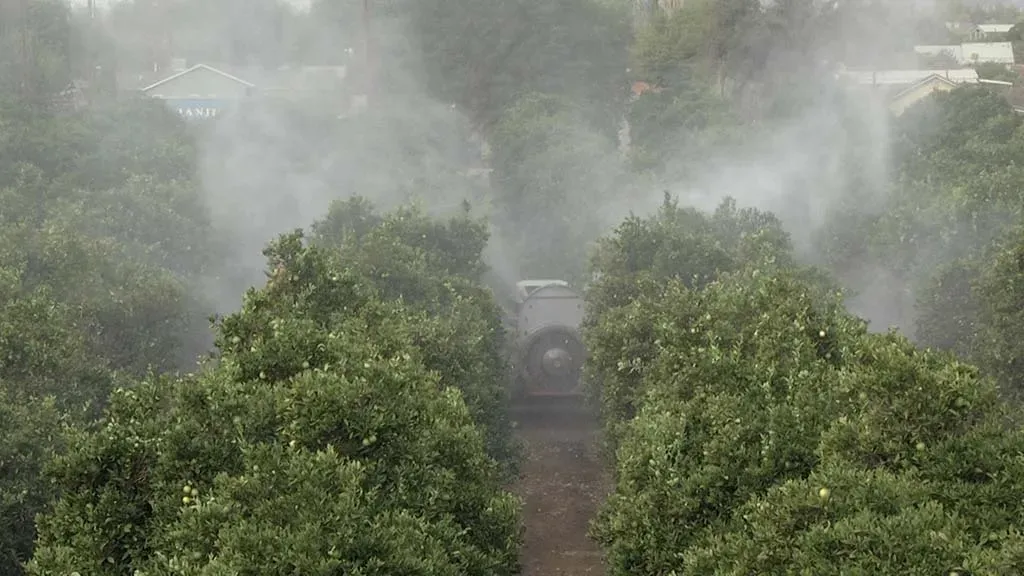
Another angle showing a spray rig treating citrus trees.