

Fact Sheet • June 2026 • Download PDF (2.8 MB)
What is IPM?
Integrated pest management, or IPM, is a way of using multiple methods to manage pests instead of depending on one or two solutions. These methods can include choosing the right planting practices, encouraging beneficial insects, and using sprays only when necessary. By combining these methods into a clear plan, IPM helps control pests effectively while reducing harm to people and the environment, and allows farmers to grow healthy, profitable crops.
What is a Pest?
A pest is any living thing that reduces yield or crop quality, including weeds, insects, snails, rodents, birds, and plant diseases caused by fungi, bacteria or viruses.
Monitoring
A successful IPM program starts with knowing your pests and keeping an eye on them (Fig. 1). Before you can manage a pest, you need to be sure what pest it is. Pests have different life stages, feeding habits, and behaviors, and these differences help determine which control methods will work best.

Walk around your production fields regularly, at least once a week during the growing season. Look closely at your plants and take note of what you see, including 1) type of pests, 2) number of pests, and 3) any indicators of crop damage. Simple tools like sticky traps and sweep nets make tracking pest activity easier, and recording what you see helps to identify small but important changes to your crop. Keeping simple written or photo records helps track pest trends over time and improves decision-making.
Once you know your pest, you can choose the most effective way to manage it based on where it lives, what it eats and when it is active.
IPM Strategies
An effective IPM program integrates multiple approaches, and combines cultural control, mechanical and physical control, biological control and chemical control (Fig. 2).
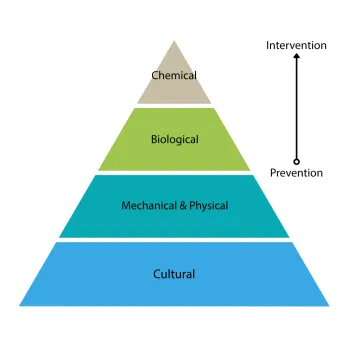
Cultural control
Cultural control means using everyday farming practices to make your crops less attractive to pests and to prevent pests from becoming a problem. For example, using resistant varieties so crops are less likely to be damaged by specific pests or diseases. Or adjusting your irrigation because too much water can encourage root diseases and weeds. Or killing mustard weeds on your farm edges so that stink bugs don’t build up on the edges, and then move into your field when it gets dry.
Mechanical & physical control
Mechanical and physical control involves physically removing pests or blocking them directly. For example, hand picking insects off plants or covering new transplants with netting to protect them from birds. If you're pruning your trees, using a diluted bleach solution to clean your pruners between trees helps prevent the spread of diseases.
Biological control
Biological control is the use of beneficial insects, such as lady beetles and predatory mites, to reduce pest populations. For example, planting flowers can attract these allies, and in some cases, you can release commercially available predators to help kill pests. The goal is to let nature help keep pest numbers low without using chemicals.
Chemical control
Finally, another method of pest management is chemical control. Pesticides are part of IPM, but they are used only when other methods are not working well enough to keep pest populations below economically damaging levels. For example, if pest numbers keep increasing, start to damage the crop, or are likely to reduce your yield or profit, then it may be time to use pesticides.
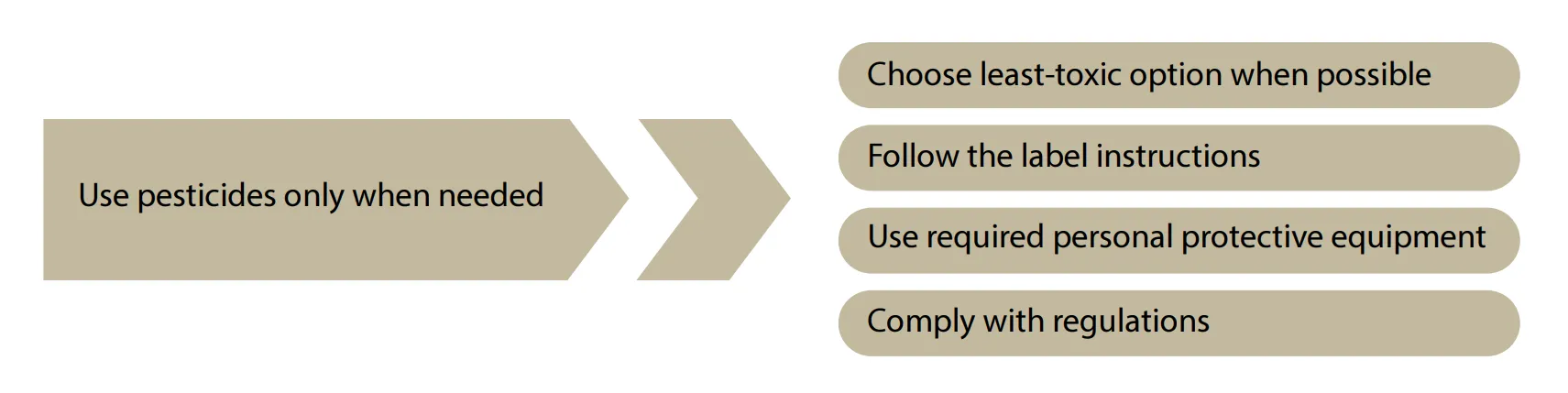
Within pesticides, some are more toxic than others. IPM helps you choose less hazardous options while still allowing the use of pesticides when pest populations get out of control. The key is to choose the least toxic option, apply it only when necessary, use it carefully, and always follow label instructions to reduce harm to people and the environment (Fig. 3). Always follow the pesticide label, it’s the law, and use required personal protective equipment. Also, check California regulations and restricted use requirements before applying any pesticide.
Six Major Components of an Effective IPM Program
- Know your pest: make sure you can accurately identify what pest you are dealing with.
- Check your fields regularly: look for pests, count how many you see and watch for any indicators of crop damage or loss.
- Decide when to act: not every pest needs treatment. Nature can keep some pests in check, like low numbers of aphids or thrips. For others, action levels (which vary by crop and region) help decide when to step in. In strawberries, you can regularly check the undersides of leaves for spider mites. If only a few mites are found and there is no leaf damage, you can continue monitoring. If 15-20 mites per plant are found on many plants and many leaves show yellow spots, it’s time to take action to prevent yield loss.
- Prevent pest problems: use practices that make it harder for pests to get established or cause damage.
- Use multiple control methods: combine different methods of pest management such as natural enemies, farming practices, physical barriers, and careful use of pesticides.
Check your results: after taking action, see what worked and what didn’t, and adjust for the future.
How Small-scale Growers Benefit from IPM
IPM helps small-scale and diversified growers in several practical ways:
- Save money by preventing pest problems and reducing pesticide use.
- Protect beneficial insects by conserving pollinators and natural predators, helping maintain a balanced crop system.
- Care for the environment by using practices that are better for the soil, water, yourself and your family, and surrounding community.
- Grow better crops with careful pest management, resulting in healthier plants that are more attractive to consumers who value safer practices.
Farm more safely by reducing the use of pesticides that can be harmful to you, your family, and your customers.
Resources for Small Farms from University of California
UC Small Farms Network - find materials and support tailored for small operations
County Cooperative Extension offices - find crop advisors and community education specialists near you
UC IPM - find online guides for pest identification, thresholds, and management practices
Suggested Citation: Tian S, Lloyd M, Farrar J, Doan H, Gazula A, Teiken C. Integrated Pest Management (IPM): A Practical Guide for Small-Scale Growers in California. University of California, Agriculture and Natural Resources. June 2026.
University of California Agriculture and Natural Resources is an equal opportunity employer.
©2026 The Regents of the University of California. This work is licensed under the Creative Commons Attribution-NonCommercial-NoDerivatives 4.0 International License. View a copy of this license here.
