"Just living is not enough... one must have sunshine, freedom, and a little flower.” – Hans Christian Andersen
This summer, we're focusing on science-based, sustainable gardening practices that not only support your garden but also the environment. Inside, you'll find tips on earning Firewise USA® certification, designing water-wise lawns, and insights from a UC Davis study on how plants adapt to less water. We're also spotlighting the honeybee crisis, how to support pollinators with simple watering stations, and where to turn when you need expert advice, because Master Gardeners are here to help.
Looking to dig deeper? Visit us anytime at ccmg.ucanr.edu for trusted resources and local gardening guidance.
Let’s grow smarter, together.
Hedwig Van Den Broeck and Robin Mitchell, editors - Contact Us
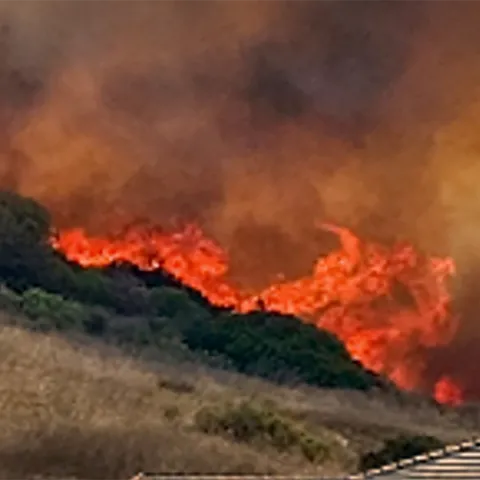
Neighborhood Firewise USA Certification 1-2-3


After the Palisades and Altadena firestorms in Southern California, Contra Costa homeowners don’t need to be reminded that we also live in risky wildfire territory. Homeowners face multiple threats, including complete loss of their homes and possessions, insurance premium increases or cancellations, and the cost of hardening their homes and surroundings against fire. How can we homeowners create a more fire-resistant community? One program that hundreds of Contra Costa neighborhoods have already adopted is Firewise USA certification.
The Firewise USA® program from the non-profit National Fire Protection Association (NFPA) is a nationwide initiative designed to help communities reduce wildfire risks by implementing fire-resistant practices. Achieving Firewise certification requires a clear plan, community involvement, and a commitment to making long-lasting changes. Here's a step-by-step guide to help your neighborhood through the process.
- Organize a Neighborhood Project Committee - Form a group of community members who are passionate about fire safety to lead the initiative. A dedicated team ensures the program stays organized, work can be equally shared, and that your certification remains the primary goal.
- Host a Firewise USA Education Event - Organize workshops or neighborhood events to educate residents on fire-safe practices, highlight the importance of Firewise USA certification, and guide them through the certification process. What new fire safety laws are going into effect? What are fire-safe landscaping best practices? What changes are newly required by insurance companies? Michelle Rinehardt, Firewise county coordinator for Contra Costa Confire, is a great person to invite to discuss these topics and more. Contact Michelle at (925) 440-5831, or mrine@cccfpd.org. Raising awareness with your neighbors helps to gain the support and participation you’ll need when the work phase begins.
- Submit a Firewise USA Certification Application - The National Fire Protection Association (NFPA) will track your progress through regular updates. Include your community size, action plan, event summaries, and investment records. The no-cost application formalizes your neighborhood's efforts and leads to certification. You can apply with as few as eight homes in your neighborhood. “In fact”, says Marilyn Saarni of Contra Costa UC Master Gardeners, “an optimal number might be 15 to avoid spreading limited grant money too thinly.”

Assess Wildfire Risks - Conduct a wildfire risk assessment for your neighborhood. This can be done with the help of local fire authorities or wildfire specialists. Every Contra Costa fire district office now employs one or more individuals focused on community wildfire information, assessment, and coordination. Call or email them to schedule the neighborhood risk assessment walkthrough. Do you have tree canopies that hang over your key access roads? Are your attic vents wrapped? Understanding your neighborhood’s vulnerabilities is key to creating an effective, targeted action plan.
- Develop a Neighborhood Action Plan - Use the risk assessment report to identify targeted wildfire risk-reduction measures, such as creating defensible space, clearing flammable vegetation from roadsides and shared spaces, and using fire-resistant fencing and building materials.
- Invest in Risk Reduction (Do the work!) - Implement the work or changes outlined in your action plan. This could include home-hardening, Zone-0 improvements, weed abatement, trimming trees up and bushes down, removing dead growth, and installing low-flammability landscaping or noncombustible fencing. These are the actual improvements that will increase your neighborhood's resilience to wildfire, and can improve your chances of reducing home insurance costs or retaining existing insurance.
Remember that fire-wise work on private property is the sole responsibility of property owners. Firewise USA certification is a voluntary program, and project planning committees and coordinators do not have the authority to demand action. However, more and more local and state ordinances are being put in place to ensure compliance with wildfire safety measures. It is in every property owner’s best interest to comply as much as their budget allows by making necessary improvements on their property.
- Track Volunteer Hours and Investments - Keep a record of neighbor time and money spent on Firewise USA certification activities. These figures are necessary documentation for certification and demonstrate your community's commitment to wildfire preparedness. Be patient and allow neighbors to complete necessary work when their schedules and resources permit. The National Firewise Council allows 3 years from the date the application is accepted to complete all work.
- Celebrate Certification and Maintain Preparedness - Once certified, celebrate your achievement with a neighborhood event. Stay vigilant, maintain your compliance and improvements, update your action plan, and participate in annual Firewise Day activities and reviews. Continuing efforts ensure long-term wildfire resilience and keeps your Firewise USA certification active.
There are many community, state, and national organizations offering assistance to communities interested in becoming more fire safe. For more information, check out these helpful websites:
- National Fire Protection Association (NFPA): https://www.nfpa.org/education-and-research/wildfire/firewise-usa
- California Fire Safe Council: https://cafiresafecouncil.org/
- Cal Fire Wildfire Preparedness Information: https://www.fire.ca.gov/prepare
- Mt. Diablo Fire Safe Council: https://diablofiresafe.org/
- West Contra Costa Fire Safe Council: https://wccfiresafe.org/
Key local officials:
Derek Berumen – Contra Costa Confire Firewise Inspector (925) 941-3300, dberu@cccfpd.org
Marc Evans – West County FD Firewise Coordinator – (925) 876-4820, marc.evans6@yahoo.com
Jeff Isaacs – Moraga-Orinda FD Chief (925) 258-4500
In addition, some of the best advice can be found right next door. Inquire with your friends and neighbors about communities or neighborhoods near you who are in the certification process or have already achieved Firewise certification. Other neighborhood coordinators are usually happy to orient groups you form. They can point out local restrictions or other gotcha’s that interfered with their process.

How to Get Started: A few local UC Master Gardener (MG) volunteers have taken the initiative to pursue additional training outside the MG program to support wildfire preparedness in their communities. For example, Pam Schroeder received independent training through the Moraga-Orinda Fire District (MOFD) and now serves as a volunteer Fire Adapted Community Ambassador—a role separate from her MG work, focused on helping residents identify and reduce wildfire risks around their homes.
In this capacity, Pam has conducted dozens of free fire safety assessments for homeowners in Orinda and Moraga, offering personalized reports to guide practical mitigation steps.
“Most homeowners, when they contact me,” Pam shares, “say, ‘I’m so overwhelmed, I don’t know where to start!’ We begin with the Zone 0 area right next to their home and work outward. With a plan of small, manageable steps, the whole process becomes doable—and effective.”
UC Cooperative Extension (UCCE) Director, Yana Valachovic has developed a YouTube video that reviews home fire mitigation tactics that worked (and some that did not) during the massive Palisades and Altadena fires in January. This link will take you to Yana’s video: https://www.youtube.com/watch?v=a-VG12URQrc . All county Master Gardener programs across the state are part of the UCCE division.
Contra Costa UC Master Gardeners are launching a fire-wise landscaping demonstration garden at Fire Station #63 in Richmond, in partnership with the West Contra Costa Fire Safe Council and the Richmond Fire Dept. headed by Fire Chief Aaron Osorio. A launch party will take place in September 2025. The public will be welcome to visit, so watch for more announcements.
MGs Steve Danziger and Hedwig van den Broeck have presented dozens of informational webinars on the topic of wildfire safety in Contra Costa in cooperation with Contra Costa Libraries, Garden clubs and private organizations. One of Hedwig’s key messages is that because of climate change, what worked for fire safety in the past may not work in the future. In her talks, she often cites Washington governor Jay Inslee—later echoed by former President Barack Obama—who said, “We are the first generation to experience the effects of climate change, but the last to do something about it.”
Achieving Firewise USA certification is a rewarding process that enhances your neighborhood's preparedness for and resilience to wildfires. By taking action now, your neighborhood can become a model for fire safety and inspire other neighborhoods to join in. Together, we can create a safer, more wildfire-resistant region - one neighborhood at a time.
For more information, here are links to previously published articles on creating and maintaining defensible space around your home and garden:
Understanding Defensible Space Zone 0
Understanding Defensible Space Zone 1
Understanding Defensible Space Zone 2
Lawns: Are We Loving Them or Leaving Them?


Ah, the good old lawn! Whether we’re kicking around a soccer ball or backyard camping with the kids, we’ve got to love it. Our fascination with the mean green is a much-studied phenomenon. The social and cultural perceptions of expanses of turfgrass are woven into the fabric of our lives, especially for those of us who remember running out to the grass at recess to frolic and romp and let off steam.
At 50 million acres, lawns constitute the single largest irrigated acreage in the United States. Corn comes in a paltry second place at 12 million acres. According to UC ANR’s Center for Landscape and Horticulture, the state of California has an estimated four million acres of managed turfgrass. The number most likely reflects the amount of commercial (including homeowners’ associations), industrial, and institutional lawns. It seems that number could be virtually doubled if you were willing and able to count all the residential front and backyard lawns in the state.
https://ucanr.edu/site/center-landscape-urban-horticulture/turfgrass-management
Lawn Replacement
Despite being so desired for its form, function, and curb appeal, turfgrass has been vilified in California for close to 20 years. The turfgrass that we favor in Northern California, cool-season turfgrass, is a water-guzzling beast in terms of the amount of water it demands to keep it green and healthy. Because of this, you would be hard-pressed to find a water district in this state that isn’t offering incentives to “lose the lawn” at their expense through their lawn-replacement rebate programs. These rebate programs require that the grass be removed and replaced with low-water plantings. They also require that the sprinklers be removed and efficient drip systems installed in their stead.
The turfgrass battleground in California has made it into law as well. Assembly Bill 1572, signed by Governor Newsom in 2023, will be enforced in stages over the next several years. This new law bans non-functional (or purely decorative) turfgrass for commercial (including homeowners' associations), industrial, and institutional sites. We’re already seeing vast stretches of lawns either browning out or disappearing as this law creeps slowly toward fulfillment. Click the following link for more info. https://leginfo.legislature.ca.gov/faces/billNavClient.xhtml?bill_id=202320240AB1572
Cool-season turfgrasses are the preferred lawn species in Northern California because they have growth and color year-round. But Jodie Sheffield, the seed and sod specialist with Delta Bluegrass in Stockton, says they’re seeing a massive shift in the market toward warm-season grasses, because they’re much more drought resistant, robust, and rival cool-season grasses in their lush appearance. And when it comes to durability and resilience, warm-season grasses consistently outperform their cool-season counterparts.

Many sports fields and golf courses in Northern California have made the switch from water-guzzling cool-season grasses to warm-season grasses. Even Oracle Park and Levi’s Stadium, homes of the San Francisco Giants and 49ers, respectively, have switched to hybridized Bermuda grass, a warm-season turfgrass. And did you know that warm-season grasses only require a little over half the water their thirsty cool-season cousins do?
But switching out lawns for low-water landscapes could have consequences we haven’t bargained for. Jessie Godfrey, Environmental Horticulture and Water Resources Management Advisor with UC Cooperative Extension, informs us there are “considerable tradeoffs” that come with lawn removal on a large scale. The foremost tradeoff to her mind is that irrigated turf landscapes provide evaporative cooling that helps to make higher temperatures from climate change more tolerable. And removing evaporative cooling from thermal equations has thermal consequences. There’s much research that supports the view that yards landscaped with drought-tolerant plants, in contrast, may “create an ecosystem disservice in the form of increased localized microclimate heat.” (Chow & Brazel, 2012; Vahmani & Ban-Weiss, 2016)
As is often the case, taking actions to solve one environmental issue causes an imbalance that tips the scales toward issues of another type. Ultimately, the onus is on each of us with lawns to make informed decisions.
Options for Action
With respect to solving the challenge of our high-water-use lawns and using water more efficiently in the landscape, we present a few available options:
- Replace existing high-water turfgrass with a lower-water-use turfgrass or alternative groundcover.
or - Remove the turfgrass and replace it with low-water plantings.
or - Simply reduce the size of the lawn.
Replacing the high-water-use turfgrass with a lower-water-use turfgrass or groundcover that acts like a lawn is very well explained by UC Master Gardener volunteer Henry Shaw in a webinar talk he gave in 2024. Henry does a great job of qualifying several good candidates using the desirable attributes of lawns that we’ve grown to love. If you choose this option, you can leave your existing sprinklers in place and not experience the negative tradeoff consequences described above. You can find that video here: https://www.youtube.com/watch?v=Cn0k9HKxrYw
The option of removing the turfgrass in favor of low-water plantings is best employed by using the lawn-replacement rebate program of your water provider. In Contra Costa County, the prominent water districts EBMUD and Contra Costa Water District both offer generous incentives to help offset the cost.. Links to their rebate programs can be found at the end of this article.

If you take any of the actions above, be careful to ensure that trees in the turfgrass area aren’t compromised. During the last drought, we saw many trees suffer or die from a lack of water when lawn irrigation was turned off or disconnected. Trees - not only offering shade and beauty, but are of the utmost importance in performing essential ecological services and providing habitat for local fauna and pollinators.
The inspiration for writing this article was that the author is witnessing a growing number of new lawns being installed, since the last two winters were abundant with rainfall. There’s a tendency to be lulled into feeling secure about water when the sting of drought has waned. But the future of the potable water supply in California remains uncertain. We weather wild swings between drought and deluge. So, choosing whether to love lawns or leave them will help shape how resilient we can be in the face of dwindling resources and upcoming water restrictions. There’s much hope and support for preserving our precious water supply.
*See below examples of low-water turfgrass alternatives that require much less water than the standard Northern California lawn.


References
California Center for Urban Horticulture - Plant Factors for Turfgrasses
https://ccuh.ucdavis.edu/wucols/water-factors-for-turfgrasses
Chow, W.T.L., & Brazel, A.J. (2012). Assessing xeriscaping as a sustainable heat island mitigation approach for a desert city. Building and Environment, 47, 170-181. https://doi.org/10.1016/j.buildenv.2011.07.027.
Contra Costa Water District Lawn-to-Garden Rebate: https://www.ccwater.com/160/Lawn-to-Garden-Rebate
EBMUD Lawn Conversion Rebate Program: https://www.ebmud.com/water/conservation-and-rebates/rebates/lawn-conversion-rebate
UC Guide to Healthy Lawns
https://ipm.ucanr.edu/PMG/menu.turf.html
UC Verde Buffalograss Turfgrass https://ccuh.ucdavis.edu/uc-verde-buffalograss
Vahmani, P., & Ban-Weiss, G. (2016). Climate consequences of adopting drought-tolerant vegetation over Los Angeles as a response to California drought. Geophysical Research Letters, 43(15), 8240-8249. https://doi.org/10.1002/2016GL069658
Smart Watering, Beautiful Gardens: Lessons from UC Davis
The Alarming Disappearance of Honeybees


by Stephen Guglielmana
with the assistance of David George
Have you been tracking the plight of commercial honeybee hives around the country this past year? It’s frightening. As a beekeeper and UC Master Gardener volunteer, I have been painfully aware of rising national honeybee hive collapse statistics. As you read future honeybee articles, the following information may help put the current situation into perspective.
Here's a quick timeline history of honeybees:
- 100-50 million years ago, Flowering plants started to evolve, and bees joined their evolution alongside them,
- 9000 BCE - Bees appear in Spanish cave paintings,
- 2800 BCE - Bees appear in hieroglyphs, and honey is found in tombs of that era,
- 1620s - European honeybees were brought to North America by immigrants,
- 1850s - Honeybees introduced to the West Coast,
- 1852 - Reverend Lorenzo Langstroth of Philadelphia patents the modern commercial beehive.
Honeybees are agricultural livestock and are protected by federal law. Stealing a bee colony can result in federal charges. They were brought to North America by European farmers along with the fruits and vegetables that honeybees are known to pollinate.

A good example of the critical relationship between honeybees and agriculture is the almond crop here in California. Each spring, 95% of the honeybee colonies in the USA are transported to California to pollinate almond flowers. Without the bees, almond trees might produce only about 10 lbs. of nuts, but about 100 lbs. per tree with pollinating bees. After almond trees bloom, beekeepers transport the hives to other fruit-growing areas to pollinate other crops, such as apples and peaches.
One of the current beekeeping problems is that these orchards and farms are all monocultures, without the diversity of flowers and pollen that bees need. About 20 years ago, the honeybee industry experienced its first colony collapse, sometimes referred to as the “death by a thousand cuts.” Researchers have found several possible causes for these collapses, and opinions differ on how to solve the problem. While these are beyond the scope of this article, it is worth noting that honeybee colonies have been declining at an average rate of about 30% per year ever since.
Until recently, beekeepers were able to quickly recover from lost colonies, but that may no longer be the case. Recovery is no longer guaranteed. The losses are outpacing what beekeepers can rebuild. This past winter, local beekeepers with 80-100 colonies reported that their hives are now experiencing 60-80% die-off (collapse). Beekeeper reports from the rest of the USA are just as alarming, indicating a 60-70% die-off rate this past year.
Early concerns point to extreme weather events as likely causes leading to malnutrition in hives. This troubling trend mirrors the recent trend in extreme firestorms, rains, and floods across North America. If this pattern persists, beehive collapse throughout North America this coming year will expand to the point where hive regeneration may not be possible.

How can you, as gardeners, help all of the pollinators out there?
- Start by planting a variety of pollen- and nectar-rich species! These include herbs, native flowering species, and other flowering varieties.
- Eliminate the use of insecticides, especially neonicotinoids and other deadly honeybee poisons, in your garden.
- And provide a water source for pollinators.
Despite the doom and gloom, your garden can still be a place of joy—and a lifeline for honeybees. By planting pollinator-friendly blooms, avoiding harmful chemicals, and letting a little wildness in, you’re not just gardening—you’re helping a struggling species survive. It’s a hopeful, hands-in-the-dirt way to make a difference. And the best part? It’s beautiful, rewarding, and surprisingly fun.
Resources
- UC Davis Bee Haven: A Hidden Gem
and a delightful place to explore, where you can experience the beauty of bees up close and discover the plants that help them thrive.
https://ucanr.edu/blog/bug-squad/article/uc-davis-bee-haven-hidden-gem

