
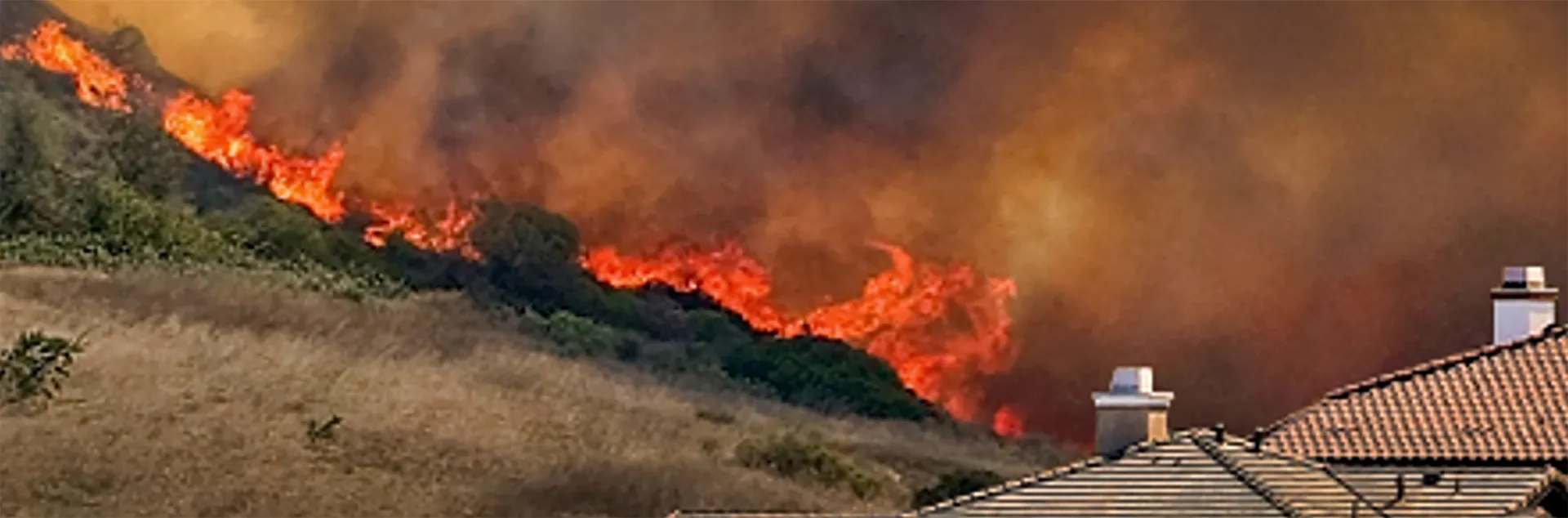
After the Palisades and Altadena firestorms in Southern California, Contra Costa homeowners don’t need to be reminded that we also live in risky wildfire territory. Homeowners face multiple threats, including complete loss of their homes and possessions, insurance premium increases or cancellations, and the cost of hardening their homes and surroundings against fire. How can we homeowners create a more fire-resistant community? One program that hundreds of Contra Costa neighborhoods have already adopted is Firewise USA certification.
The Firewise USA® program from the non-profit National Fire Protection Association (NFPA) is a nationwide initiative designed to help communities reduce wildfire risks by implementing fire-resistant practices. Achieving Firewise certification requires a clear plan, community involvement, and a commitment to making long-lasting changes. Here's a step-by-step guide to help your neighborhood through the process.
- Organize a Neighborhood Project Committee - Form a group of community members who are passionate about fire safety to lead the initiative. A dedicated team ensures the program stays organized, work can be equally shared, and that your certification remains the primary goal.
- Host a Firewise USA Education Event - Organize workshops or neighborhood events to educate residents on fire-safe practices, highlight the importance of Firewise USA certification, and guide them through the certification process. What new fire safety laws are going into effect? What are fire-safe landscaping best practices? What changes are newly required by insurance companies? Michelle Rinehardt, Firewise county coordinator for Contra Costa Confire, is a great person to invite to discuss these topics and more. Contact Michelle at (925) 440-5831, or mrine@cccfpd.org. Raising awareness with your neighbors helps to gain the support and participation you’ll need when the work phase begins.
- Submit a Firewise USA Certification Application - The National Fire Protection Association (NFPA) will track your progress through regular updates. Include your community size, action plan, event summaries, and investment records. The no-cost application formalizes your neighborhood's efforts and leads to certification. You can apply with as few as eight homes in your neighborhood. “In fact”, says Marilyn Saarni of Contra Costa UC Master Gardeners, “an optimal number might be 15 to avoid spreading limited grant money too thinly.”
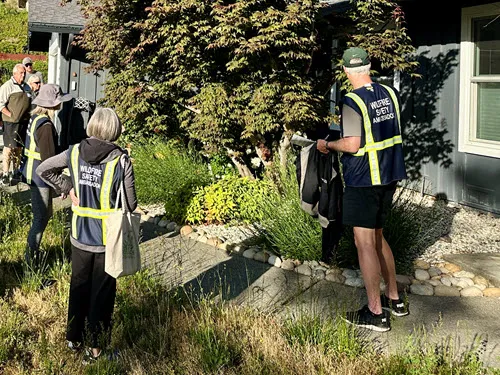
Assess Wildfire Risks - Conduct a wildfire risk assessment for your neighborhood. This can be done with the help of local fire authorities or wildfire specialists. Every Contra Costa fire district office now employs one or more individuals focused on community wildfire information, assessment, and coordination. Call or email them to schedule the neighborhood risk assessment walkthrough. Do you have tree canopies that hang over your key access roads? Are your attic vents wrapped? Understanding your neighborhood’s vulnerabilities is key to creating an effective, targeted action plan.
- Develop a Neighborhood Action Plan - Use the risk assessment report to identify targeted wildfire risk-reduction measures, such as creating defensible space, clearing flammable vegetation from roadsides and shared spaces, and using fire-resistant fencing and building materials.
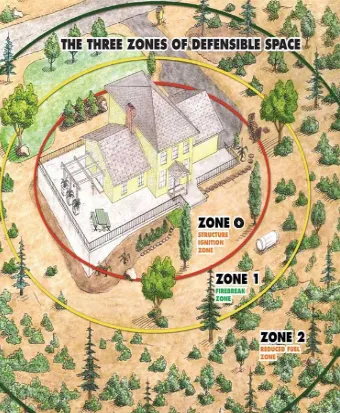
- Invest in Risk Reduction (Do the work!) - Implement the work or changes outlined in your action plan. This could include home-hardening, Zone-0 improvements, weed abatement, trimming trees up and bushes down, removing dead growth, and installing low-flammability landscaping or noncombustible fencing. These are the actual improvements that will increase your neighborhood's resilience to wildfire, and can improve your chances of reducing home insurance costs or retaining existing insurance.
Remember that fire-wise work on private property is the sole responsibility of property owners. Firewise USA certification is a voluntary program, and project planning committees and coordinators do not have the authority to demand action. However, more and more local and state ordinances are being put in place to ensure compliance with wildfire safety measures. It is in every property owner’s best interest to comply as much as their budget allows by making necessary improvements on their property.
- Track Volunteer Hours and Investments - Keep a record of neighbor time and money spent on Firewise USA certification activities. These figures are necessary documentation for certification and demonstrate your community's commitment to wildfire preparedness. Be patient and allow neighbors to complete necessary work when their schedules and resources permit. The National Firewise Council allows 3 years from the date the application is accepted to complete all work.
- Celebrate Certification and Maintain Preparedness - Once certified, celebrate your achievement with a neighborhood event. Stay vigilant, maintain your compliance and improvements, update your action plan, and participate in annual Firewise Day activities and reviews. Continuing efforts ensure long-term wildfire resilience and keeps your Firewise USA certification active.
There are many community, state, and national organizations offering assistance to communities interested in becoming more fire safe. For more information, check out these helpful websites:
- National Fire Protection Association (NFPA): https://www.nfpa.org/education-and-research/wildfire/firewise-usa
- California Fire Safe Council: https://cafiresafecouncil.org/
- Cal Fire Wildfire Preparedness Information: https://www.fire.ca.gov/prepare
- Mt. Diablo Fire Safe Council: https://diablofiresafe.org/
- West Contra Costa Fire Safe Council: https://wccfiresafe.org/
Key local officials:
Derek Berumen – Contra Costa Confire Firewise Inspector (925) 941-3300, dberu@cccfpd.org
Marc Evans – West County FD Firewise Coordinator – (925) 876-4820, marc.evans6@yahoo.com
Jeff Isaacs – Moraga-Orinda FD Chief (925) 258-4500
In addition, some of the best advice can be found right next door. Inquire with your friends and neighbors about communities or neighborhoods near you who are in the certification process or have already achieved Firewise certification. Other neighborhood coordinators are usually happy to orient groups you form. They can point out local restrictions or other gotcha’s that interfered with their process.
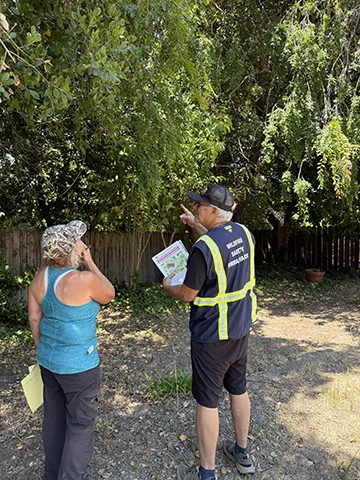
How to Get Started: A few local UC Master Gardener (MG) volunteers have taken the initiative to pursue additional training outside the MG program to support wildfire preparedness in their communities. For example, Pam Schroeder received independent training through the Moraga-Orinda Fire District (MOFD) and now serves as a volunteer Fire Adapted Community Ambassador—a role separate from her MG work, focused on helping residents identify and reduce wildfire risks around their homes.
In this capacity, Pam has conducted dozens of free fire safety assessments for homeowners in Orinda and Moraga, offering personalized reports to guide practical mitigation steps.
“Most homeowners, when they contact me,” Pam shares, “say, ‘I’m so overwhelmed, I don’t know where to start!’ We begin with the Zone 0 area right next to their home and work outward. With a plan of small, manageable steps, the whole process becomes doable—and effective.”
UC Cooperative Extension (UCCE) Director, Yana Valachovic has developed a YouTube video that reviews home fire mitigation tactics that worked (and some that did not) during the massive Palisades and Altadena fires in January. This link will take you to Yana’s video: https://www.youtube.com/watch?v=a-VG12URQrc . All county Master Gardener programs across the state are part of the UCCE division.
Contra Costa UC Master Gardeners are launching a fire-wise landscaping demonstration garden at Fire Station #63 in Richmond, in partnership with the West Contra Costa Fire Safe Council and the Richmond Fire Dept. headed by Fire Chief Aaron Osorio. A launch party will take place in September 2025. The public will be welcome to visit, so watch for more announcements.
MGs Steve Danziger and Hedwig van den Broeck have presented dozens of informational webinars on the topic of wildfire safety in Contra Costa in cooperation with Contra Costa Libraries, Garden clubs and private organizations. One of Hedwig’s key messages is that because of climate change, what worked for fire safety in the past may not work in the future. In her talks, she often cites Washington governor Jay Inslee—later echoed by former President Barack Obama—who said, “We are the first generation to experience the effects of climate change, but the last to do something about it.”
Achieving Firewise USA certification is a rewarding process that enhances your neighborhood's preparedness for and resilience to wildfires. By taking action now, your neighborhood can become a model for fire safety and inspire other neighborhoods to join in. Together, we can create a safer, more wildfire-resistant region - one neighborhood at a time.
For more information, here are links to previously published articles on creating and maintaining defensible space around your home and garden:
Understanding Defensible Space Zone 0
Understanding Defensible Space Zone 1
Understanding Defensible Space Zone 2