
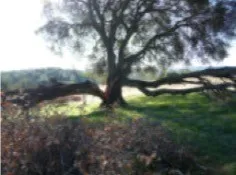
To a large degree trees are just biological organisms that progress through a predetermined life cycle, like us. They sprout and grow (infancy) and then enter a vigorous growth phase (childhood) and on into maturity (teens to young adult) when reproduction replaces rapid growth. The reproduction phase can last hundreds of years in some species. And then, of course, we all progress into old age. That time in life when the functionality in our regenerative and bodily processes declines and even stops working—enter Grandma Tree. This phase of the life cycle of a tree is called ‘retrenchment’ and many arborists refer to these trees as 'overmature’. Read more about the lifecycle of trees at https://www.woodlandtrust.org.uk/blog/2019/06/tree-lifecycle/
Retrenchment has a predictability about what will likely happen. Large limbs will no longer be sustainable and will drop. Tree health will decline from the loss of leaves (the overall mass of the tree will be too large to sustain with fewer leaves). Insects and diseases will flourish without much moderation from the biological processes within the tree meant to impede them. And, unfortunately, there is not a lot we can do. Read more about retrenchment at https://wwv.isa-arbor.com/events/conference/proceedings/2014/2014_Guy_MeilleurRetrenching.pdf
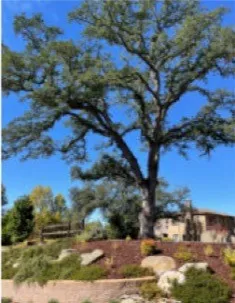
Should you keep or remove your old tree? Ask yourself these questions and consider the following:
1. Is your tree mature or overmature? Maturity can last 100’s of years depending on the species of tree. You may need an arborist’s help to identify what life cycle your tree is in.
2. What will it hit in the event of a failure? There are three types of failures. From the ground (roots failed), the main trunk snaps or splits out if there is more than one trunk, or large branches drop from high in the canopy. Evaluate all three for a clear understanding of the risk of retaining the tree.
3. Is there decay? Decay is the process by which fungi breakdown the wood tissue. Open cavities in the tree or at the ground are signs of strength loss in the wood. Also, mushrooms and conks are indicators that decay is happening inside the tree.
4. What is the current vigor of the tree and does it have adequate leaves to support the mass? Root loss from development around mature trees causes a slow decline and it can take 25 years for the tree to die. Recognizing a tree in this process can help to set reasonable expectations for the future of the tree.
5. What is your budget? Overmature trees need TLC which can be expensive expensive (think the nursing home). From the advice of a consulting arborist to the skilled pruning of a certified arborist, and everything in between (chemical insecticide and fungicide treatments, supplemental irrigation for managing drought in our climate, mulch), time and costs will add up.
With the right expectation about the longevity of the tree and some good advice from a Consulting Arborist (ASCA), you can usually have a plan of action for how long to keep a mature tree, what the risks are, and what options you have to extend its lifespan to the greatest degree possible.
More information can be found here:
Tree Care Industry Association. https://tcia.org/TCIA/Blog_Items/2016/Tree_Pruning_to_ANSI_Standards.aspx
International Society of Arboriculture. https://www.isa-arbor.com
References
Oak Tree Species ID & Ecology. UC Oaks, UC Agriculture and Natural Resources. https://oaks.cnr.berkeley.edu/oak-tree-species-id-ecology/
Meilleur, Guy. Retrenching Hollow Trees, an International Practice. 2014 ISA Annual International Conference and Trade Show. August 6, 2014. https://wwv.isa-arbor.com/events/conference/proceedings/2014/2014_Guy_MeilleurRetrenching.pdf