
Article by Peggy Beltramo, UC Master Gardener of Placer County

Have you heard of the term “keystone” species?
They are the species of plants and animals within an environment that hold all the other elements together, much like the keystone block in an ancient arch.
Without the keystone support, the whole arch topples! Notice the wedge-shaped block at the top of the arch? Gravity pressure pushes the block down, locking all the other stones in place. Without that “key” stone, the arch collapses.
In 1969, zoologist Robert T. Paine coined the phrase, keystone, to explain the vital importance of species within the intertidal areas that he was studying. Keystone species are so named because they provide significant resources to the ecosystems in which they occur, helping to hold those ecosystems together.
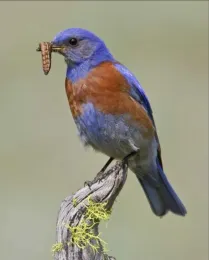
An ecosystem is all of the living organisms within an environment, as well as the non-living environment such as air, water and soil. These keystone species can be predators: animals that control the overabundance of other animals within an area, ecosystem engineers: plants that maintain a habitat, or mutualists: plants and animals that interact beneficially with other parts of a habitat (e.g. insects aiding pollination of plants).
One significant keystone species in our foothill region is the local oak tree, (genus Quercus). Driving on Interstate 80, we pass miles and miles of oak trees which provide food and shelter for wildlife. “Over 300 species of wildlife inhabit Placer [and Nevada] County’s oak woodlands, including mountain lions, bobcats, several species of hawks, rodents, snakes, owls, and songbirds.“1 Over 900 species of butterfly and moth caterpillars also benefit from oak trees. Learn about oak restoration, the importance of local oak woodlands and oak as a power plant.
Oak trees also improve air quality, provide shade and cooling, and even noise reduction! Oaks excel at carbon sequestration, “the process of capturing, securing and storing carbon dioxide from the atmosphere… to stabilize carbon in solid and dissolved forms so that it doesn’t cause the atmosphere to warm.”2 Oak leaves are another resource which provide valuable leaf litter for soil building, water retention, protection of earth organisms, weed suppression and time-release fertilizer.
Oaks are truly an important keystone species!
More Info
Keystone Species – Definition, Examples, Importance https://sciencenotes.org/keystone-species-definition-examples-importance/
An Ode to Our Native Oaks https://sactree.org/an-ode-to-our-native-oaks/
Living Among the Oaks Living among the oaks21538
The Value of Oaks https://ucanr.edu/blog/garden-notes/article/value-oaks
Oak Woodland Invertebrates: The Little Things that Count https://ucanr.edu/sites/default/files/2025-08/Little_2001_Oak_Woodland_Inverts_0.pdf
References:
Helmenstine, Anne. Keystone Species: Definition, Examples, Importance. May 6, 2023, updated January 28, 2026. sciencenotes.org. https://sciencenotes.org/keystone-species-definition-examples-importance/
Strader, Vera. Leaf Litter is an Environmental Windfall. ucanr.edu. https://ucanr.edu/sites/default/files/2017-10/271769.pdf
Tangley, Laura. Power Plants. April 1, 2022. nwf.org. https://www.nwf.org/Magazines/National-Wildlife/2022/April-May/Conservation/Keystone-Plants
UC Davis Clear Center. What is Carbon Sequestration and How Does It Work? September 20, 2019. clear.ucdavis.edu. https://clear.ucdavis.edu/explainers/what-carbon-sequestration
Wonders, Placer Land Trust Newsletter. Restoring Oak Woodlands, One Acorn at a Time. Spring, 2023. placerlandtrust.org. https://placerlandtrust.org/wp-content/uploads/2023/04/Wonders-Spring-2023-web.pdf
1. “Wonders, Placer Land Trust Newsletter” (Auburn, California: Placer Land Trust, 2023 Spring Edition)
2. “What is Carbon Sequestration and How Does It Work?” (Davis California: Clear Center, UC Davis, Sept. 20, 2019)