A Natural Solution for California's Herds: African Catfish Peptides

California's cattle producers and agricultural communities are all too familiar with the rising challenge of antibiotic resistance, making common bacterial infections harder to treat in livestock. But imagine a future where we could tackle these infections with a natural, powerful alternative. Our research points to just that: antimicrobial peptides (AMPs) found in African catfish.

We're really excited about these peptides because African catfish thrive in pathogen-rich freshwater, naturally producing these robust immune compounds in their skin mucus as a defense. This natural origin makes them highly appealing alternatives to synthetic drugs.

Predicted Safety and Potent Action

One of the most compelling aspects of these AMPs is their predicted safety for mammals. Our initial computer analyses suggest that various catfish AMPs are generally recognized as safe (GRAS). We predict they'll be absorbed in the human intestine without causing liver, brain, or heart toxicity. Furthermore, lab tests on a promising peptide, NACAP-II, confirmed it was non-hemolytic, meaning it didn't damage rabbit red blood cells—a strong indicator of its potential safety for mammalian cells.

Beyond safety, these peptides demonstrate effectiveness against problematic bacteria. One study revealed NACAP-II's strong activity against Extended-Spectrum Beta-Lactamase (ESBL)-producing Escherichia coli—a critical concern for both animal and human health due to its resistance to many common antibiotics. Another peptide, ACAP-IV, also showed antibacterial activity against E. coli and Staphylococcus aureus. We believe these AMPs work by directly disrupting bacterial cell membranes, a mechanism that makes it harder for bacteria to develop resistance compared to how they resist traditional antibiotics.
Primary Image
food flow
Topics in Subtropics: Article

How Food Flows

October 31, 2019
By Ben A Faber
Where are the Food Hubs in the US? A really interesting analysis was done by researchers at the University of Illinois, and it looks like Los Angeles County is still the big dog.
View Article
Primary Image
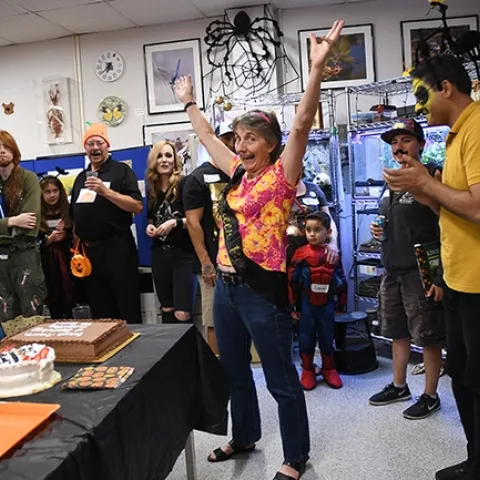
Lynn Kimsey, director of the Bohart Museum of Entomology, welcomes the crowd to the Halloween party. (Photo by Kathy Keatley Garvey)
Bug Squad: Article

Scary Insects and Lovable Critters at the Bohart Museum of Entomology

October 31, 2019
By Kathy Keatley Garvey
Scary critters with mandibles and lovable insects with antennae gathered at the Halloween party at the Bohart Museum of Entomology, UC Davi, hosted by the Friends of the Bohart. There was the bee family: the queen bee, the drone and the worker bee.
View Article
Primary Image
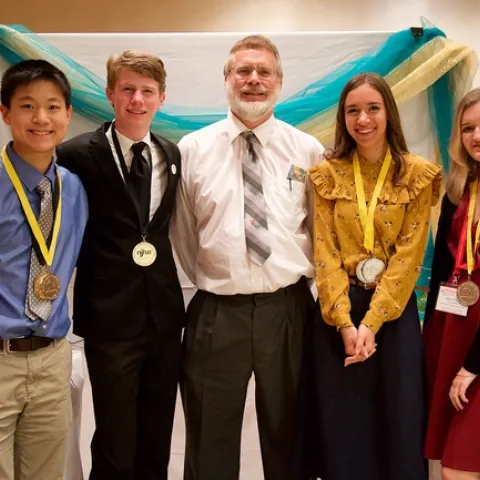
Karmjot Randhawa
ANR Employee News: Article

Names in the News

October 31, 2019
By Pamela S Kan-Rice
Randhawa to oversee UCCE in Fresno, Madera, Kings and Tulare counties Karmjot Randhawa joined ANR on Sept. 6, 2019, as the UC Cooperative Extension director for Fresno, Madera, Kings and Tulare counties.
View Article
Primary Image
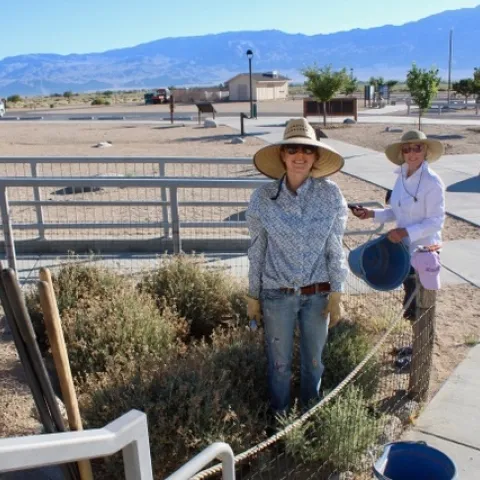
Ariel Bohar and Joanne Parsons tending the guayule patch.
The Backyard Gardener: Article

Manzanar's Guayule Project: An Update

October 31, 2019
The Manzanar Guayule project is well underway. Guayule is a type of USA native rubber plant which was grown at Manzanar during the war years.
View Article
Cooperative Extension, Sutter-Yuba Counties: Article

Reminder: Healthy Soils Field Day and Equipment Showcase

October 31, 2019
November 6, 2019 | 8:30 - 11:00 am Meridian, CA (click here for directions) 8:30 am Coffee and Registration 9:00 am Welcome & Project Overview 9:15 am Lightning Talks ~ Brief Presentation on soil health-related work in region 9:45 am Equipment Showcase and Cover Crop Management: What's worked.
View Article