

Steven Worker
4-H Youth Development Advisor
M.S. Community Development, University of California, Davis. 2007.
B.S. Computer Science, California Polytechnic State University. 2001
A.A. Liberal Arts, Allan Hancock College. 1998
Scholar and leader with 25 years of youth development research and program experience exploring how out-of-school-time learning environments, educators, and community partnerships support positive youth development, STEM learning, belonging, and equitable participation. Worker's scholarship spans informal STEM education, youth participatory action research, teenagers-as-teachers, volunteer educator development, and youth development. Worker develops and evaluates research-based curricula and educational programs while building regional partnerships that expand access to high-quality learning opportunities for young people.
4-H Youth Development Advisor, San Francisco North Bay
Marin, Sonoma, and Napa counties (since 2016)
Dr. Worker leads applied research and extension education focused on culturally relevant youth development, STEM learning, volunteer development, and equitable access to high-quality out-of-school-time learning. Through consultations, workshops, field demonstrations, and publications, he equips educators to deliver high-quality, inquiry-based learning and strengthens the region’s STEM ecosystem. His work consistently demonstrates new knowledge, increased educator competence, and more equitable youth participation, fulfilling the Cooperative Extension mission of improving community well-being through research, education, and service. Across all programs, he designs programs that honor culture and community, strengthen youth identity and belonging, and reduce barriers to participation for groups historically underserved in STEM.
Current Projects
Theme 1: Increase public engagement and confidence in science
- North Bay Science Discovery Day: A free community science festival connecting children and families with scientists, engineers, and hands-on learning, with the next event scheduled for May 2, 2027.
- Ag from Above × Ag for All: PI for agricultural drone and geospatial education for teens through curriculum development, educator training, youth programs, and research on learning and career exploration.
- Farm Robotics Academy: Coordinates the Bay Area region, supporting student teams as they investigate agricultural challenges using robotics, drones, sensors, and emerging technologies.
- North Bay 4-H STEM Academies: Develops and evaluates intensive learning experiences with college and community partners to strengthen youth skills, confidence, belonging, and educational and career interests; Tinker Academy, Drone Academy, Climate Connection Academy, iCode Camp.
- 2027 Youth–Women’s Fire Science Camp: Supports development of youth fire science and career education through curriculum planning, recruitment, and preparation for a residential training experience at Hopland Research and Extension Center.
- Science Literacy, Critical Thinking, and UC Science Connect: Chairs the program team with a 2026-2027 project involving development of a practical framework and evaluation measures addressing confidence in using science, and trust in science-based information.
Theme 2: Increase equitable access to 4-H and youth development
- Imagine Science Sonoma–Napa: Coordinates partnerships among 4-H, YMCA, and Boys & Girls Clubs to expand access to sustained STEM learning and support educator development.
- ResilientRoots: Empowering Youth for Environmental Learning: Leads curriculum development, educator support, and local implementation within a California–Maryland collaboration engaging middle-school youth in environmental learning.
- 4-H Expanded Learning Partnerships: Co-leads statewide work and research examining how partnerships with afterschool organizations expand youth participation and support effective program delivery.
- iCode: Identity Exploration Through Computer Science: Leads curriculum and research work examining how culturally relevant computer science experiences support computational thinking, ethnic-racial identity exploration, and positive youth development.
Theme 3: Improved quality of youth development programs and educator capacity
Teenagers-as-Teachers Research and Program Development: Studies adult coaching and organizational practices that support teen educators while developing practice resources and supporting the new Cultivating Character, Purpose, and Leadership initiative.
California 4-H Camp Evaluation and dAIta Parties: Research lead on statewide camp evaluation and studies how AI-assisted reports and facilitated interpretation help youth and adult camp teams use evidence in program decisions.
California 4-H Project Resources: Helps update project webpages emphasizing coherent learning progressions, cultural relevance, accessibility, and evaluation.
Current Issues in Out-of-School Time, Book 10: Serves as co-series editor to help develop The Youth Development Workforce, bringing together research, practice, and policy perspectives on the people supporting young people’s learning and development.
Temporary part-time appointments concurrent with this role included:
- Healthy Families and Communities Strategic Initiative Leader (2023-2025)
Provided academic leadership, representing and integrating work across youth development, nutrition and health, community development, and related applied research and extension programs. Served on UC ANR Program Council, supported cross-program coordination, and helped advance strategic priorities related to thriving communities, equity, health, and youth and family well-being. - Interim Assistant 4-H Youth Development Program Leader (2022-2024)
Provided statewide program leadership during a period of strategic renewal and organizational transition. Led the refresh of the UC 4-H Strategic Plan 2023–2028, contributed to statewide program alignment, and strengthened connections between county delivery, applied research, volunteer development, and statewide priorities. - Chair (2022) and Co-chair (2023) Academic Advancement Peer Review Committee
Led and facilitated the academic peer review process for advancement cases. Coordinated committee workflow and contributed to the integrity of ANR’s academic process.
Previous Experience
4-H Science, Technology, Engineering, and Math Academic Coordinator (2009-2016)
Provided statewide leadership for the California 4-H STEM Initiative, strengthening the capacity of 4-H staff, volunteers, and partners to deliver high-quality science, engineering, and technology learning. Coordinated professional development, curriculum development, program evaluation, resource development, and statewide STEM partnerships. Led or contributed to science education curricula, evaluation studies, grant-funded initiatives, and professional learning systems that supported inquiry-based and experiential STEM education across California 4-H.
State 4-H Program Coordinator (2001-2009)
Developed, coordinated, and evaluated statewide 4-H youth development programs in youth leadership, technology education, recognition systems, and major statewide events including the 4-H State Leadership Conference. Supported volunteer and staff development, managed program logistics and communications, contributed to statewide 4-H program infrastructure, and helped implement systems that strengthened youth participation, leadership pathways, and program quality across California 4-H. Developed 4-H Information System to support 4-H applications (ASP.NET).
California 4-H Alumnus (1991-1999)
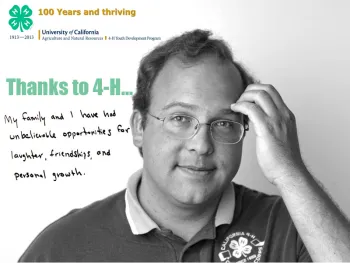
Worker is a 4-H alumnus from Santa Barbara County. He served as a 4-H All Star (1996-1998; 4-H County Ambassador), earned his Emerald Star (1995), was a 4-H camp counselor, attended the 1998 National 4-H Conference, and served as a State 4-H Diamond Star (1998-1999; renamed now as "4-H State Ambassador"). In 1998, Worker co-founded the 4-H Technology Leadership Team, a group of youth and adults working to integrate technology into 4-H programming.
University Service
- Science Literacy & Critical Thinking Program Team Chair (2019-2027)
- Publications Editorial Board (2026-2027) - Youth, Families, and Communities Program Area
- Academic Peer Review Committee (2025-2027)
- Academic Assembly Welfare & Benefits Committee (2024-2027)
Professional Affiliations
- American Educational Research Association (AERA): Out-of-School Time Special Interest Group
- International Society of the Learning Sciences (ISLS)
- National Association for Research in Science Teaching (NARST)
- National Association of Extension 4-H Youth Development Professionals (NAE4-HYDP) and the California 4-H Association (CA4-HA)
Honors and Awards
- Extension Committee on Organization and Policy and USDA National Institute of Food and Agriculture (2026) - Western Regional Individual Excellence in Extension Award: Building an equitable STEM learning ecosystem that expands youth pathways, belonging, and opportunity
- UC Cooperative Extension Distinguished Service Award (2026) - Outstanding Excellence in Extension Programming: Reaching New and Diverse Audiences: Recognized for a transferable Extension model that expands equitable 4-H access through public events, skill-building programs, and community partnerships.
- Western Extension Directors Association (2026) - Award for Excellence in Extension Programming-Individual: San Francisco North Bay STEM Learning Ecosystem Initiative
- National Urban Research and Extension Center - Research Fellowships (2023 & 2024): Computer science education curriculum development to support computational thinking and positive ethnic-racial identity.
- American Educational Research Association Out-of-School Time Special Interest Group - Scholar Award for Outstanding Research (2022)
- University of California 4-H Youth Development Program - 4-H Golden Clover Award (2022): 4-H Public Speaking & Communications
- National Association of Extension 4-H Youth Development Professionals
- Diversity and Inclusion: Expanding the 4-H Audience Team Award (2021)
- Meritorious Service Award (2018)
- Distinguished Service Award (2014)
- Achievement in Service Award (2006)
Public Service and Affiliations
- Co-Series Editor (since 2025): Current Issues in Out-of-School Time Book Series (board member since 2021) - Shares original research, practitioner insights, and policy analysis on themes relevant to out-of-school time learning, primarily in the United States context. Books are relevant for scholars, practitioners, funders, and policy makers, while centering youth agency and advancing theory, evidence, and practical wisdom in the field.
- Sonoma County Office of Education's Cal-Math/Science/Computer Science Project (2024-2026)
- Journal of Youth Development Associate Editor (2023-2027)
- Child Care Planning Council of Sonoma County (2021-2024)
- The Nature Lodge Board of Directors (2018-2026): To inspire, encourage and educate environmental stewards of today, for a more sustainable future.
Bibliography
Science, technology, engineering, and mathematics (STEM) learning
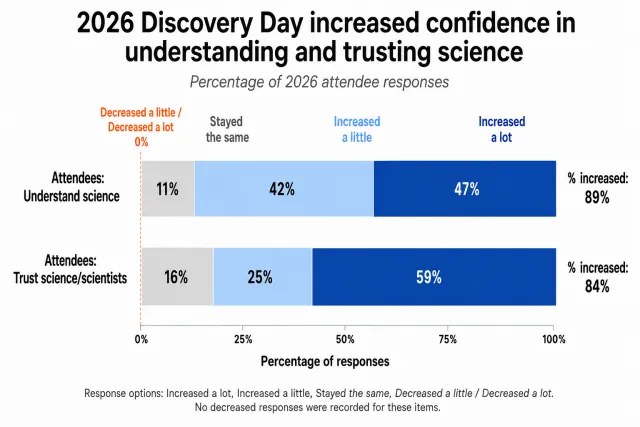
- Worker, S. M. (in press). An Extension-convened science festival for youth STEM engagement and regional STEM learning ecosystem development. Journal of Extension.
- Worker, S. M., Nayak, R., & Smith, M. H. (2026). 4-H Sustainable Polymers curriculum strengthens youth scientific literacy. California Agriculture: The Journal of UC Agriculture and Natural Resources, 80. https://doi.org/10.3733/001c.162704
- Worker, S. M., Nayak, R., & Moncloa, F. (2024). California 4-H computer science education pathway. Journal of Extension, 62(1), Article 9. https://doi.org/10.34068/joe.62.01.09
- Worker, S. M., McCambridge, J., Stevenson, A., Fields, J., Maille, A., Meehan, C. L., Mondl, A., Malone, C. W., & Smith, M. H. (2022). Sustainable polymers: New 4-H STEM curricula. Journal of Extension, 60(1), Article 5. https://doi.org/10.34068/joe.60.01.01
- Worker, S. M., Schmitt-McQuitty, L., Ambrose, A., Brian, K., Schoenfelder, E., & Smith, M. H. (2017). Multiple-methods needs assessment of California 4-H science education programming. Journal of Extension, 55(2), Article 10. https://doi.org/10.34068/joe.55.02.10
- Smith, M. H., Worker, S. M., Ambrose, A. P., & Schmitt-McQuitty, L. (2015). Including civic engagement as a component of scientific literacy. Science Education and Civic Engagement: An International Journal, 7(2), 23–27. https://seceij.net/articletype/pov/including-civic-engagement-scientific-literacy/
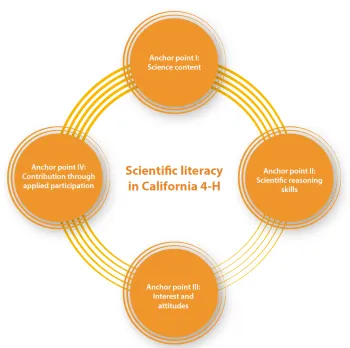
Smith, M., Worker, S. M., Ambrose, A., & Schmitt-McQuitty, L. (2015). Scientific literacy: California 4-H defines it from citizens’ perspective. California Agriculture, 69(2), 92-97. https://doi.org/10.3733/ca.v069n02p92
- Lewis, K. M., & Worker, S. M. (2015). Examination of attitude and interest measures for 4-H science evaluation. Journal of Extension, 53(3), Article 26. https://doi.org/10.34068/joe.53.03.26
- Worker, S. M., & Smith, M. H. (2014). Curriculum and professional development for OST science education: Lessons learned from California 4-H. Afterschool Matters, 20, 21–27. https://www.niost.org/Afterschool-Matters-Fall-2014/curriculum-and-professional-development-for-ost-science-education-lessons-learned-from-california-4-h
- Worker, S. M. (2014). Bers’s theory of positive technological development. Journal of Youth Development, 9(1). https://jyd.pitt.edu/ojs/jyd/article/view/80/66
- Worker, S. M. (2013). Embracing scientific and engineering practices in 4-H. Journal of Extension, 51(3), Article 4. https://doi.org/10.34068/joe.51.03.04
- Smith, M. H., Heck, K., & Worker, S. M. (2012). 4-H boosts youth scientific literacy with ANR water education curriculum. California Agriculture: The Journal of UC Agriculture and Natural Resources, 66(4), 158–163. https://doi.org/10.3733/ca.v066n04p158
Youth participatory action research
- Neas, S., Worker, S. M., Kok, C. M., & Espinoza, D. (2026). YPAR as process: Supporting youth development through youth participatory action research. Afterschool Matters, 40. https://www.niost.org/Afterschool-Matters-Winter-2026/ypar-as-process
- Worker, S. M., Espinoza, D., Kok, C. M., Neas, S., & Smith, M. H. (2023). Youth participatory action research: Integrating science learning and civic engagement. California Agriculture: The Journal of UC Agriculture and Natural Resources, 77(2), 74–82. https://doi.org/10.3733/ca.2023a0009
- Worker, S. M., Neas, S., Espinoza, D., Kok, C. M., & Smith, M. H. (2023). Youth science learning as/for community participation: Examples from youth participatory action research. Journal of Youth Development, 18(1), Article 3. https://doi.org/10.34068/JYD.18.01.03
Youth development with an emphasis on diversity and equity
- Mandjuano, E., Worker, S. M., Trzesniewski, K., & Leckey, S. (in press). 4-H Organizational Climate and Program Experience: Youth, Parent, and Volunteer Perspectives, 2017–2025. Journal of Extension.
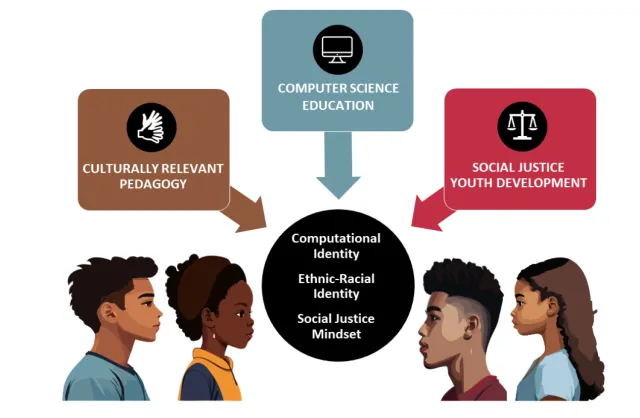
- Worker, S. M., Moncloa, F., & Mitchell-Hawkins, V. (2024). Integrating computer science education and ethnic-racial identity exploration within a social justice youth development framework. Journal of Youth Development, 19(3), Article 1. https://open.clemson.edu/jyd/vol19/iss3/1/
- Worker, S. M., Fábregas Janeiro, M. G., & Schmitt-McQuitty, L. (2021). Latino volunteerism in the 4-H youth development program. Journal of Human Sciences and Extension, 9(3), Article 13. https://doi.org/10.54718/FNTY6389
- Worker, S. M., Janeiro, M. F., & Lewis, K. M. (2020). Youth in 4-H Latino Initiative programs achieve similar outcomes to youth in 4-H community clubs. California Agriculture: The Journal of UC Agriculture and Natural Resources, 74(1), 40–45. https://doi.org/10.3733/ca.2019a0027
- Worker, S. M., Fábregas Janeiro, M. G., Díaz Carrasco, C. P., & Soule, K. E. (2019). University of California 4-H Latino Initiative: Experiences of bicultural and bilingual staff. Journal of Youth Development, 14(3), 31–44. https://doi.org/10.5195/jyd.2019.667
4-H Youth Development
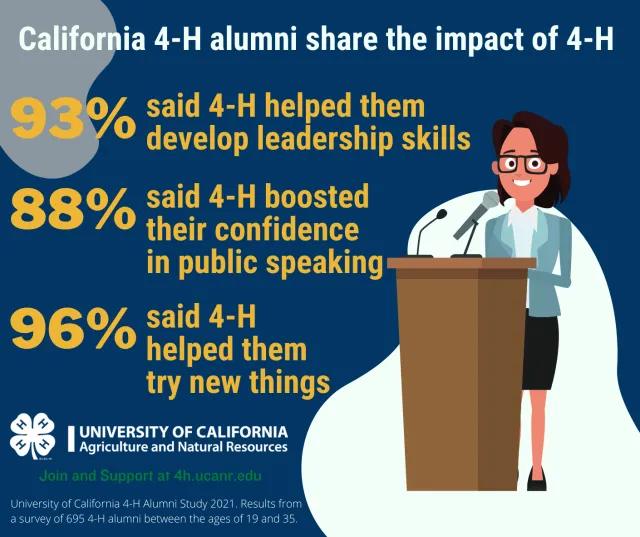
- Worker, S. M., Nayak, R., Iaccopucci, A. M., & Marshall-Wheeler, N. (2025). Early adult outcomes of 4-H program alumni: A propensity-matched comparative study. Journal of Youth Development, 20(3). https://open.clemson.edu/jyd/vol20/iss3/3
- Marshall-Wheeler, N., Nayak, R., Iaccopucci, A. M., & Worker, S. M. (2023). Long-term outcomes of early adult 4-H alumni. Journal of Extension, 61(2), Article 2. https://doi.org/10.34068/joe.61.02.02
- Lewis, K. M., Kok, C. M., Worker, S. M., & Miner, G. M. (2021). Exploring the relationship between program experience and youth developmental outcomes. Journal of Human Sciences and Extension, 9(3), Article 5. https://doi.org/10.54718/YKAF2288
- Worker, S. M. (2020). Complexity in 4-H youth enrollment: A response to Davy et al. (2020). California Agriculture: The Journal of UC Agriculture and Natural Resources, 74(3), 127–128. https://doi.org/10.3733/ca.2020a0025
- Worker, S. M., Iaccopucci, A. M., Bird, M., & Horowitz, M. (2019). Promoting positive youth development through teenagers-as-teachers programs. Journal of Adolescent Research, 34(1), 30–54. https://doi.org/10.1177/0743558418764089
- Neelon, M., Brian, K., Iaccopucci, A. M., Lewis, K. M., & Worker, S. M. (2017). Development of a health survey instrument for 5- to 8-year-old youths. Journal of Extension, 55(1), Article 2. https://doi.org/10.34068/joe.55.01.02
- Lewis, K. M., & Worker, S. M. (2016). Youth and adult perceptions of a new technology in California 4-H: The Online Record Book. Journal of Youth Development, 11(2), Article 6. https://open.clemson.edu/jyd/vol11/iss2/6/
- Lewis, K. M., Horrillo, S. J., Widaman, K. F., Worker, S. M., & Trzesniewski, K. (2015). National 4-H common measures: Initial evaluation from California 4-H. Journal of Extension, 53(2), Article 7. https://doi.org/10.34068/joe.53.02.07
- Worker, S. M. (2014). Evaluating adolescent satisfaction of a 4-H leadership development conference. Journal of Extension, 52(2), Article 9. https://doi.org/10.34068/joe.52.02.09
Public speaking
- Nayak, R., Worker, S. M., & Marshall-Wheeler, N. (2025). Youth public speaking self-efficacy survey tool. Journal of Extension, 63(1), Article 6. https://doi.org/10.34068/joe.63.01.06
- Worker, S. M., Nayak, R., Meng, Y., & Marshall-Wheeler, N. (2023). UC 4-H programs bolster youths’ public speaking confidence. California Agriculture: The Journal of UC Agriculture and Natural Resources, 77(1), 30–35. https://doi.org/10.3733/ca.2023a0003
- Marshall-Wheeler, N., Meng, Y., & Worker, S. M. (2022). Exploring public speaking self-efficacy in the 4-H presentation program. Journal of Extension, 60(4), Article 12. https://doi.org/10.34068/joe.60.04.12
Volunteer educator development
- Marshall-Wheeler, N., Worker, S. M., Miner, G. M., Miller, J., & Rodriguez, M. (2026). Elevating the quality of 4-H volunteer learning: Development of the UC 4-H Volunteer Educators’ Guide and training series. California Agriculture: The Journal of UC Agriculture and Natural Resources. https://doi.org/10.3733/001c.169383
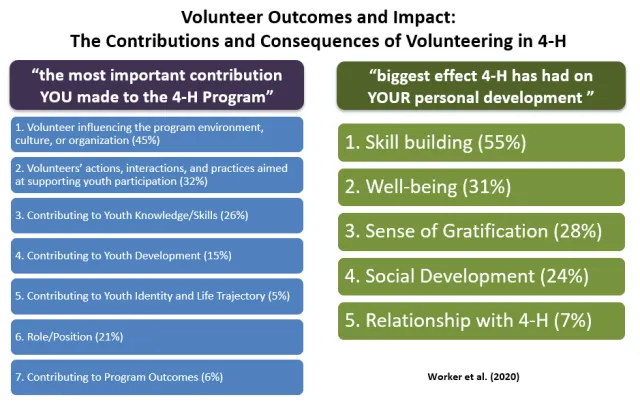
- Worker, S. M., Espinoza, D. M., Kok, C. M., Go, C., & Miller, J. (2020). Volunteer outcomes and impacts: The contributions and consequences of volunteering in 4-H. Journal of Youth Development, 15(4). https://doi.org/10.5195/jyd.2020.847
- Kok, C. M., Espinoza, D. M., Worker, S. M., Go, C., & Miller, J. C. (2020). Identification of priority skill areas for volunteer professional development. Journal of Youth Development, 15(4), 51–67. https://doi.org/10.5195/jyd.2020.876
- Schmitt-McQuitty, L., Worker, S. M., & Smith, M. H. (2019). Lesson study model of 4-H professional development: Data-driven improvements to educator practice. Journal of Youth Development, 14(1), 131–154. https://doi.org/10.5195/jyd.2019.693
- Smith, M. H., Worker, S. M., Schmitt-McQuitty, L., Meehan, C. L., Lewis, K. M., Schoenfelder, E., & Brian, K. (2017). Prevalent approaches to educator professional development in state 4-H programs. Journal of Extension, 55(4), Article 17. https://doi.org/10.34068/joe.55.04.17
- Worker, S. M. (2017). Volunteer educators bring their own ideas about effective teaching to a 4-H curriculum. California Agriculture: The Journal of UC Agriculture and Natural Resources, 71(4), 208–213. https://doi.org/10.3733/ca.2017a0021
Extension theory and methods
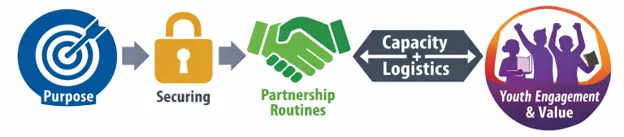
- Worker, S. M., Marshall-Wheeler, N. K., Bird, M., Lemmer, A., Velednitsky, S., Rodriguez, M., Belt, G., & Holmes, K. (in press). Building cross-organizational partnerships in afterschool: Lessons from a multi-site study. Afterschool Matters.
- Worker, S. M. (in press). Human-AI co-authoring model for Extension curriculum. Journal of Extension.
- Worker, S. M., Ouellette, K. L., & Maille, A. (2017). Redefining the concept of learning in Cooperative Extension. Journal of Extension, 55(3), Article 27. https://doi.org/10.34068/joe.55.03.27
- Smith, M. H., Worker, S. M., Meehan, C. L., Schmitt-McQuitty, L., Ambrose, A., Brian, K., & Schoenfelder, E. (2017). Defining and developing curricula in the context of Cooperative Extension. Journal of Extension, 55(2), Article 22. https://doi.org/10.34068/joe.55.02.22
- Worker, S. M. (2019). Development of an artifact-based evaluation framework for assessing 4-H learner outcomes. Journal of Extension, 57(1), Article 14. https://doi.org/10.34068/joe.57.01.14
- Worker, S. M., Hill, R. D., Miller, J. C., Go, C. G., & Boyes, R. J. (2015). Exploring the effectiveness of a retreat method for Extension staff. Journal of Extension, 53(6). https://doi.org/10.34068/joe.53.06.12
- Ching Young, J., Manton, L. M., Worker, S. M., & Martin, A. C. (2014). Effective, efficient online training in Cooperative Extension. Journal of Youth Development, 9(3). https://doi.org/10.5195/jyd.2014.51
Curricula - Environmental science and polymers
- Bird, M., Dixon, T., Marshall-Wheeler, N., & Worker, S. M. (2022). 4-H Water Wizards: Guided inquiry water education for grades 4–6. University of California, Agriculture and Natural Resources. https://ucanr.edu/site/uc-science-connect/4-h-water-wizards
- NSF Center for Sustainable Polymers. (2022). Sustainable polymers: Confronting the plastic crisis: A 4-H STEM curriculum for grades 9–12. University of Minnesota. https://www.4hpolymers.org/
- Henderson, J., Mondl, A., Stevenson, A., & Worker, S. M. (Eds.). (2020). Sustainable polymers: Taking action to solve the challenge of plastics: A 4-H STEM curriculum for grades 6–8. Center for Sustainable Polymers. https://www.4hpolymers.org/
- Horrillo, S. J., Bird, M., & Worker, S. M. (Eds.). (2019). Camp activities with a science twist: Enhancing your camp program with fun STEM experiences. Healthy Learning. https://healthylearning.com/camp-activities-with-a-science-twist/
- Keaney, A., & Worker, S. M. (2020). Service learning. In A. Stevenson, J. McCambridge, & A. Mondl (Eds.), Sustainable polymers: Plastics of the future for a green, clean world: A 4-H STEM curriculum for grades 3–5. Center for Sustainable Polymers. https://www.4hpolymers.org/
- Worker, S. M., & Henderson, J. (2017). Be a 4-H scientist! Materials in a green, clean world: 4-H polymer science curriculum for grades K–2. NSF Center for Sustainable Polymers. https://4hpolymers.org
- Smith, M. H., Worker, S. M., Kelly, M., Brogan, K., Cabrera, L., Chow, A., Devoto, L., Foster, S., Jones, B., Maxwell, B., McKenna, B., Salomon, A., Sanborn, A., Schafer, M., & Smith, A. (2010). There’s no new water! National 4-H Council. https://shop4-h.org/products/water-conservation-curriculum-theres-no-new-water
Curricula - Drones
- Worker, S. M. (in development). Educator guide: To prepare and support educators implementing SkyMapper and Dronovation [Curriculum]. University of California, Agriculture and Natural Resources. http://www.agfromabove.org
- Worker, S. M., Hogan, S., Caeton, N., Rodriguez, M., Lyons, A., & Audoin, F. (in development). Dronovation: Cultivating change with teens: Field project guide [Curriculum]. University of California, Agriculture and Natural Resources. http://www.agfromabove.org
- Worker, S. M., Hogan, S., Caeton, N., Rodriguez, M., Lyons, A., Audoin, F., & Isam, J. (in development). SkyMappers: Agricultural drones and GIS mastery [Curriculum]. University of California, Agriculture and Natural Resources. http://www.agfromabove.org
- Worker, S. M., Hogan, S., Caeton, N., Rodriguez, M., Lyons, A., & Audoin, F. (2025). SkyMappers: Agricultural drones and GIS mastery. University of California, Agriculture and Natural Resources. http://agfromabove.org/
Curriculum - Coding and Robotics
- Worker, S. M., Moncloa, F., Ullerich, C., & Soule, K. E. (Eds.). (2026). iCode curriculum: Identity exploration through computer science for middle school youth. University of California, Agriculture and Natural Resources and University of Maryland Extension. https://4hicode.org
- Mahacek, R., Worker, S. M., & Mahacek, A. (2011). 4-H robotics: Engineering for today and tomorrow – Junk drawer robotics. National 4-H Council. https://ucanr.edu/site/uc-science-connect/junk-drawer-robotics
Curricula - Youth leadership
- Worker, S. M., & Miner, G. M. (2013/2026). iGrow: Beyond Ready in Science facilitator guide [2nd Ed. Curriculum submitted for publication]. University of California, Agriculture and Natural Resources, 4-H Youth Development Program.
- Worker, S. M., Miner, G. M., & Horrillo, S. J. (2013/2023). iChampion/iThrive: Leadership, science & me. 4-H leadership development project. University of California, Agriculture and Natural Resources [2013]; National 4-H Council [2023]. https://ucanr.edu/site/uc-science-connect/ithrive-leadership-science-me
Toolkits, guides, fact sheets
- Worker, S. M., & Moncloa, F. (2025). STEM and social justice youth development. National Urban Research and Extension Center. https://nurec.extension.org/wp-content/uploads/2025/07/STEM_A1.pdf
- Worker, S. M., & Marshall-Wheeler, N. (2024). Educator fact sheets: Educator tip sheets for facilitating high-quality out-of-school time learning (UC ANR Publication 8737). University of California, Agriculture and Natural Resources. https://escholarship.org/uc/item/74z16130
- Marshall-Wheeler, N., Miner, G. M., Worker, S. M., Kok, C. M., Espinoza, D., & Miller, J. (2023). The UC 4-H volunteer educators’ guide: For volunteers facilitating 4-H educational experiences. University of California, Agriculture and Natural Resources. https://escholarship.org/uc/item/9zg5x8d0
- Smith, M. H., Worker, S. M., Meehan, C. L., McCambridge, J., Maille, A., Malone, C. W., Mondl, A., & Stevenson, A. (2023). Comparisons of professional development approaches for out-of-school time educators. University of California, Agriculture and Natural Resources. https://escholarship.org/uc/item/7q6522cj
- Worker, S. M., Kok, C. M., Vega, L., Moncloa, F., Fábregas Janeiro, M. G., & Gunn, M. (2022). Welcoming culturally diverse youth into 4-H: A handbook for 4-H professionals. University of California, Agriculture and Natural Resources. https://escholarship.org/uc/item/6j4421m2
- Worker, S. M. (2021). Supporting productive educator practices for out-of-school time (ANR Publication 8697). University of California, Agriculture and Natural Resources. https://escholarship.org/uc/item/4cx263wc
- Worker, S. M. (2021). Promoting positive youth development (ANR Publication 8698). University of California, Agriculture and Natural Resources. https://escholarship.org/uc/item/0v11r8dn
- Worker, S. M. (2021). Integrating experiential education into the digital realm (ANR Publication 8699). University of California, Agriculture and Natural Resources. https://escholarship.org/uc/item/6x1536xz
- Fábregas Janeiro, M. G., Worker, S. M., Soule, K. E., & Mariscal, D. (2019). Toolkits for engaging Latino youth in 4-H programs (ANR Publication 8640). University of California, Agriculture and Natural Resources. https://escholarship.org/uc/item/7tq9k9mp
Reports, monographs, book chapters, and conference proceedings
- Mandujano, E., Worker, S., & Trzesniewski, K. (2026, April 5). Exploring organizational climate in 4-H youth development from 2017 to 2025 [Paper presentation]. AERA Annual Meeting, Los Angeles, CA. https://doi.org/10.3102/2285260
- Worker, S., Nayak, R., Iaccopucci, A., & Marshall-Wheeler, N. (2025, April 20). Long-term outcomes of youth development programs: California 4-H alumni study [Paper presentation]. AERA Annual Meeting, Denver, CO. https://doi.org/10.3102/2181963
- Worker, S. M., Soule, K., Koundinya, V., Lyons, A., Oppliger, K., Obrist, D., & Smilowitz, J. T. (2025, April 9). University of California Division of Agriculture and Natural Resources employees’ use and perception of generative artificial intelligence: Survey results from data collected October to December 2024 [Internal report]. University of California, Division of Agriculture and Natural Resources. https://ucdavis.box.com/s/p95elrvdlvsioyda35kkbwc8c3zzhhiq
- Marshall-Wheeler, N., Worker, S., Meng, Y., & Nayak, R. (2023, April 13). Exploring public speaking self-efficacy in the 4-H youth development program [Paper presentation]. AERA Annual Meeting, Chicago, IL. https://doi.org/10.3102/2007381
- Espinoza, D., Neas, S., Worker, S., & Kok, C. M. (2022, April 22). Youth participatory action research and manifestations of critical consciousness: The role of positionality [Paper presentation]. AERA Annual Meeting, San Diego, CA. https://doi.org/10.3102/1886977
- Worker, S., Kok, C. M., Espinoza, D., Miller, J., & Go, C. (2020, April 14). Volunteer outcomes: The consequences of volunteering in a youth development program [Paper presentation]. AERA Annual Meeting, San Francisco, CA. https://doi.org/10.3102/1569629 (Conference canceled)
- Iaccopucci, A., Worker, S., Bird, M., & Horowitz, M. (2018, April 11). Exploring what teens describe as their contributions in teenagers-as-teachers programs [Paper presentation]. AERA Annual Meeting, New York, NY. https://research.allacademic.com/meta/p1300764_index.html
- Worker, S. M., & Ching, C. C. (2016). Examining tensions among youth, adults, and curriculum as co-designers in 4-H STEM learning through design programs. In C. K. Looi, J. L. Polman, U. Cress, & P. Reimann (Eds.), Transforming learning, empowering learners: The International Conference of the Learning Sciences (ICLS) 2016 (Vol. 1, pp. 322–329). International Society of the Learning Sciences. https://repository.isls.org/handle/1/132
- Worker, S. M., Mahacek, R. L., Wheeler, T. D. M., & Frerichs, S. W. (2015). Engineering for everyone: 4-H’s Junk Drawer Robotics curriculum. In C. I. Sneider (Ed.), Engineering curricula PreK–5: Choosing and using the best instructional materials for your students (pp. 191–202). Corwin. https://ucanr.edu/sites/default/files/2025-06/2015%20-%20Sneider%20book%20-%20Engineering%20Curricula%20-%204-H%20JDR.pdf
- Worker, S. M. (2014). Design-based learning in a community-based youth program: Affordances for youth learning and development. In J. L. Polman, E. A. Kyza, D. K. O’Neill, I. Tabak, W. R. Penuel, A. S. Jurow, K. O’Connor, T. Lee, & L. D’Amico (Eds.), Learning and becoming in practice: The International Conference of the Learning Sciences (ICLS) 2014, Volume 3. International Society of the Learning Sciences. https://archive.isls.org/conferences/icls/2014/downloads/ICLS%202014%20Volume%203%20(PDF)-wCover.pdf
- Worker, S. M. (2012). History of science education in the 4-H Youth Development Program [Monograph]. University of California, Agriculture and Natural Resources. https://4-hhistorypreservation.com/eMedia/Reports/CA4H_135384.pdf
- Worker, S. M., & Mahacek, R. (2013). 4-H out-of-school-time STEM education. Children’s Technology and Engineering, 18(2), 16–20. https://ucanr.edu/sites/default/files/2025-06/4H%20OST%20STEM%20Education%20-%20JDR%20-%20CTE%2018-2.pdf
- Mahacek, R., & Worker, S. M. (2011). Extending science education with engineering and technology: Junk Drawer Robotics curriculum. In A. Subramaniam, K. Heck, R. Carlos, & S. Junge (Eds.), Advances in youth development: Research and evaluation from the University of California Cooperative Extension 2001–2010 (pp. 46–57). University of California Agriculture and Natural Resources. https://ucanr.edu/sites/default/files/2025-06/2012%20-%20Chapter%207%20-%20Junk%20Drawer%20Robotics%20Curriculum.pdf