A Natural Solution for California's Herds: African Catfish Peptides

California's cattle producers and agricultural communities are all too familiar with the rising challenge of antibiotic resistance, making common bacterial infections harder to treat in livestock. But imagine a future where we could tackle these infections with a natural, powerful alternative. Our research points to just that: antimicrobial peptides (AMPs) found in African catfish.

We're really excited about these peptides because African catfish thrive in pathogen-rich freshwater, naturally producing these robust immune compounds in their skin mucus as a defense. This natural origin makes them highly appealing alternatives to synthetic drugs.

Predicted Safety and Potent Action

One of the most compelling aspects of these AMPs is their predicted safety for mammals. Our initial computer analyses suggest that various catfish AMPs are generally recognized as safe (GRAS). We predict they'll be absorbed in the human intestine without causing liver, brain, or heart toxicity. Furthermore, lab tests on a promising peptide, NACAP-II, confirmed it was non-hemolytic, meaning it didn't damage rabbit red blood cells—a strong indicator of its potential safety for mammalian cells.

Beyond safety, these peptides demonstrate effectiveness against problematic bacteria. One study revealed NACAP-II's strong activity against Extended-Spectrum Beta-Lactamase (ESBL)-producing Escherichia coli—a critical concern for both animal and human health due to its resistance to many common antibiotics. Another peptide, ACAP-IV, also showed antibacterial activity against E. coli and Staphylococcus aureus. We believe these AMPs work by directly disrupting bacterial cell membranes, a mechanism that makes it harder for bacteria to develop resistance compared to how they resist traditional antibiotics.

Primary Image
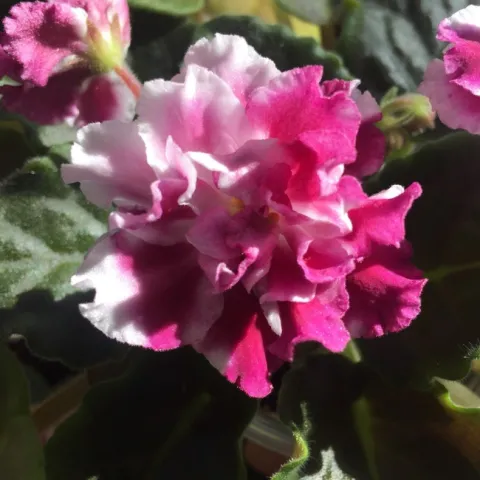
'Frosty Cherry' African Violet (photo by Jennifer Baumbach)
Under the Solano Sun: Article

By the Numbers

January 28, 2020
Number of active Master Gardeners (MGs) Statewide 6124 Number of active MGs in Solano Co.
View Article
Glenn County: Article

Almond- January 2020

January 28, 2020
In this issue: Almond Orchard Management Considerations New EPA Paraquat Restrictions Young Orchard Weed Management Honey Bee Colonies, Pollination, Bee Safety, and Beekeeper Responsibilities 2020 Sacramento Valley Winter Tree Crop Extension Meetings Fungicide Efficacy Tables Navigating Irrigation T...
View Article
Primary Image
camellia flower
HOrT COCO-UC Master Gardener Program of Contra Costa: Article

Saving 50 Year Old Camellias

January 28, 2020
Advice for the Home Gardener From the UC Master Gardener Program Help Desk of Contra Costa County Client's Request: An underground rodent (vole? Mole?) has attacked the roots of my Camellia bushes, causing one of them to lean severely. These bushes are original landscaping to our mid-50s rancher.
View Article
Primary Image
soil healthy symposioum
Topics in Subtropics: Article

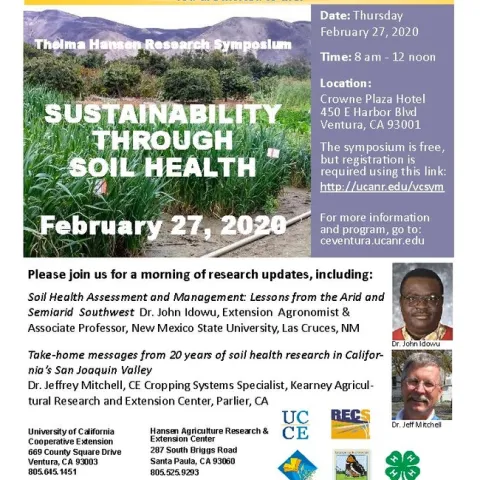
Healthy Soil Symposium

January 27, 2020
By Ben A Faber
Come and hear some new ideas to improve soils in Ventura County. Register Here: https://ucanr.edu/survey/survey.cfm?surveynumber=29019 For more information: ceventura.ucanr.
View Article
Primary Image
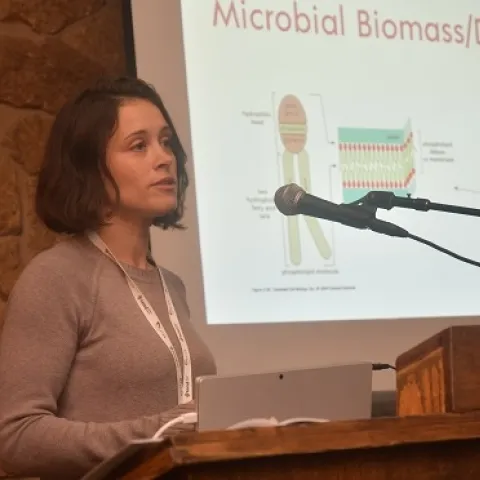
Jessica Chiartas, UC Davis PhD candidate, sharing information on soil health and preliminary findings from the CIG farm soil monitoring effort, January 24, 2020
Conservation Agriculture: Article

Scott Park, Phil Foster, Paul Muller, Nate Siemens, Will Allen, and Jessica Chiartas discuss reduced disturbance organic production at the 2020 ECOFARM Conference in Asilomar, CA, January 24, 2020!

January 27, 2020
By Jeffrey P Mitchell
January 24, 2020 Asilomar, CA Recent efforts of the CIG (Conservation Innovation Grant) project that several CASI farmers are conducting were showcased in two workshops that were conducted at this year's ECOFARM Conference held on January 24th in Asilomar, CA to packed audiences that included over o...
View Article