
Bees, wasps, flies, oh, my!
Many non-insect enthusiasts often misidentify insects. A honey bee become a fly, a wasp becomes a bee, and a fly becomes a wasp or bee.
So organizers of the Bohart Museum of Entomology's recent open house on "Bees and Their Mimics" helped set the record straight. Doctoral candidates Alexia "Lexie" Martin and Abigail "Abby" Lehner of the UC Davis Department of Entomology and Nematology originated the idea and organized the event.
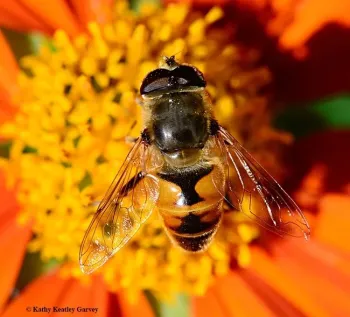
One of their displays pointed out some of the identifying characteristics of bees, wasps and flies.
Bee:
- Usually thick-bodied
- Typically has pollen collecting hairs on legs or abdomen, but not always
- Often has stout legs
- Four wings
- Long, slender antennae
- No silver hairs on face
Wasp:
- Usually skinny-bodied
- No pollen collecting hairs on legs or abdomen
- Thin, spiny legs
- Four wings
- Long slender antennae
- Often has silver hairs on face
Fly:
- Usually thick-bodied
- No pollen collecting hairs on legs or abdomen
- Large eyes that take up most of the head
- Two wings
- Short antennae
- No silver hairs on face
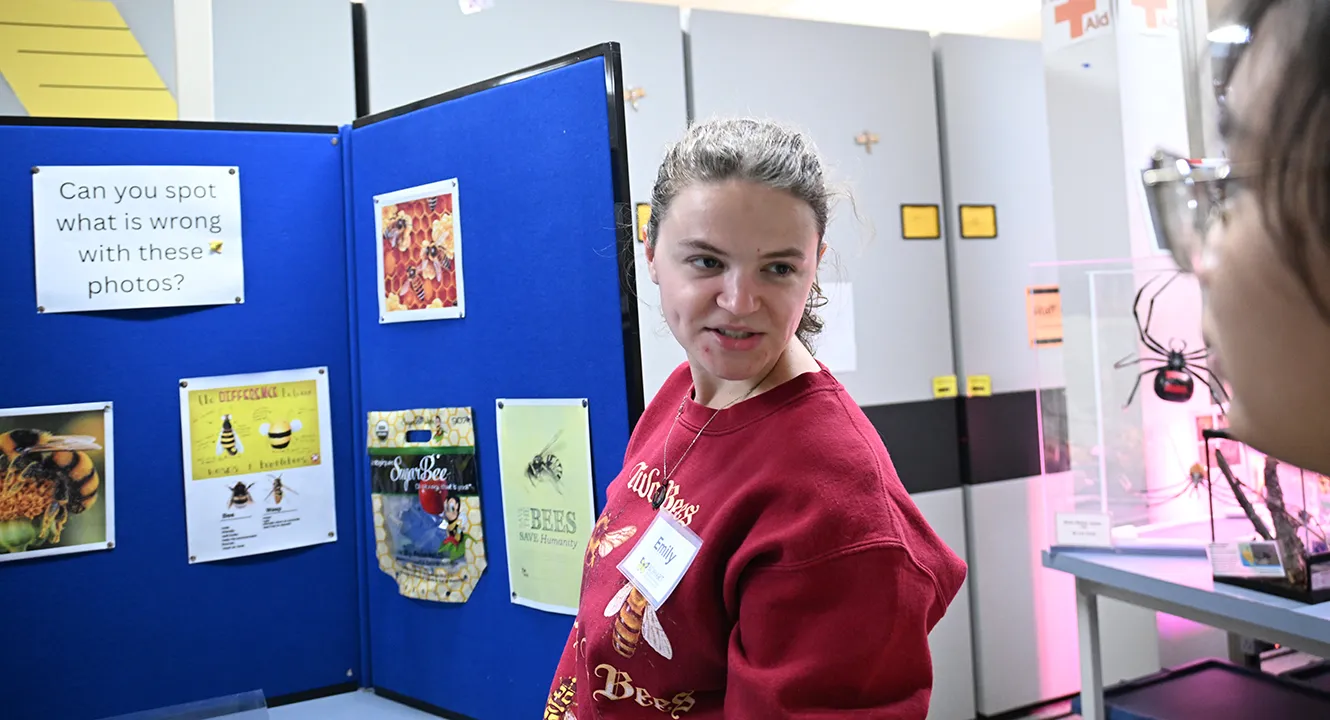
One display showed examples of what news media and advertisers commonly misidentify. UC Davis graduate student Emily Pearson of the lab of pollination ecologist Neal Williams, professor of demonstration, fielded the questions.
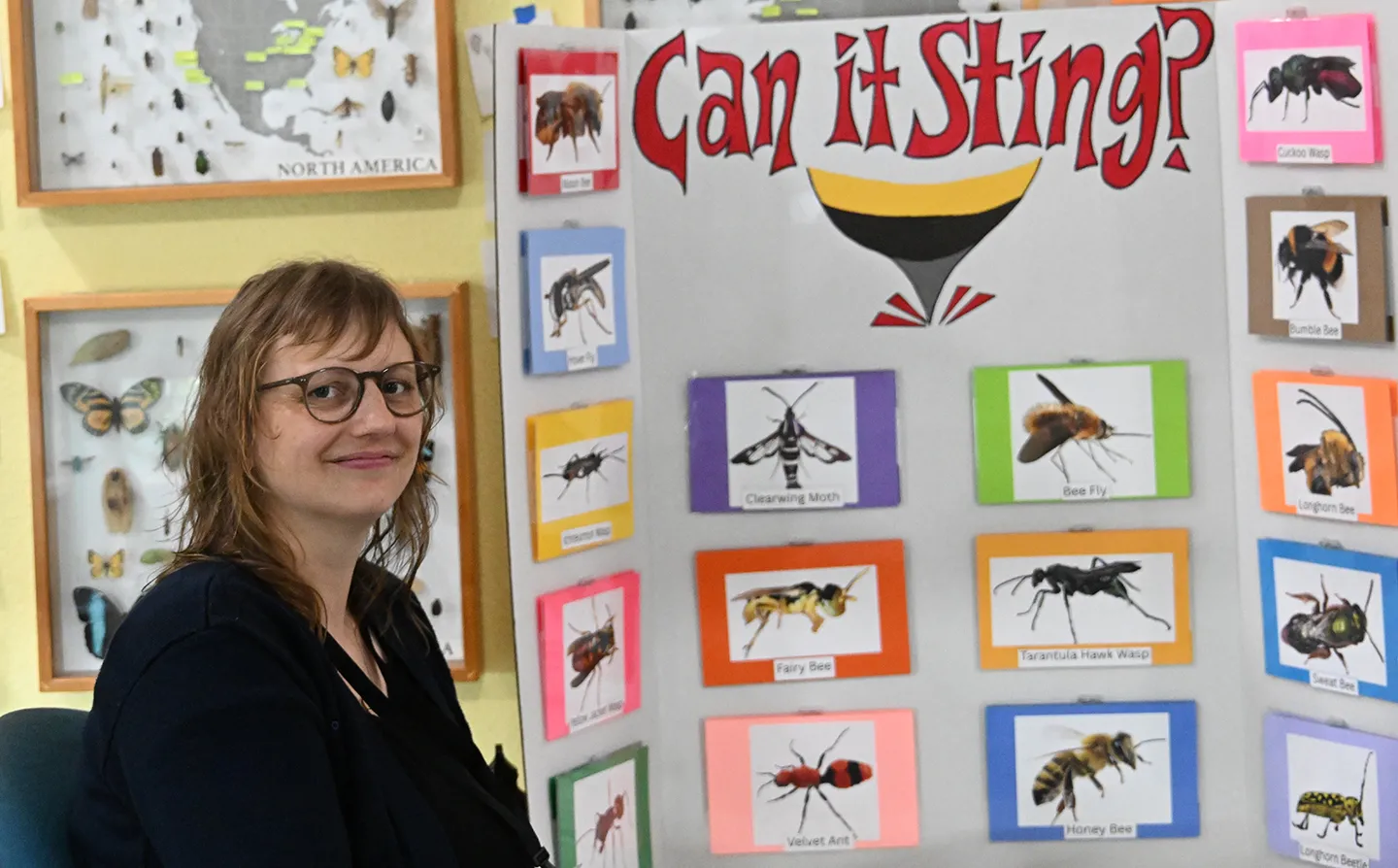
At another display, postdoctoral researcher Aramee Diethelm of the Elizabeth Crone lab, UC Davis Department of Evolution and Ecology, asked folks "Which insects can sting?" The display included assorted bees, wasps and syrphid or hover flies. "Can that one sting?" she asked, pointing to a honey bee. "Yes," they said. No, not that one. The image showed a male honey bee, a drone. Only the females sting. Boy bees don't sting.
The Bohart Museum of Entomology, home of eight million specimens, is located in Room 1124 of the Academic Surge Building, 455 Crocker Lane, UC Davis. It includes a live petting zoo (Madagascar hissing cockroaches, stick insects, taranatulas and more) and an insect-themed gift shop, includng T-shirts, hoodies, jewelry, books, posters, stuffed toy animals and insect collecting equipment. For more information, access the website or email bmuseum@ucdavis.edu.
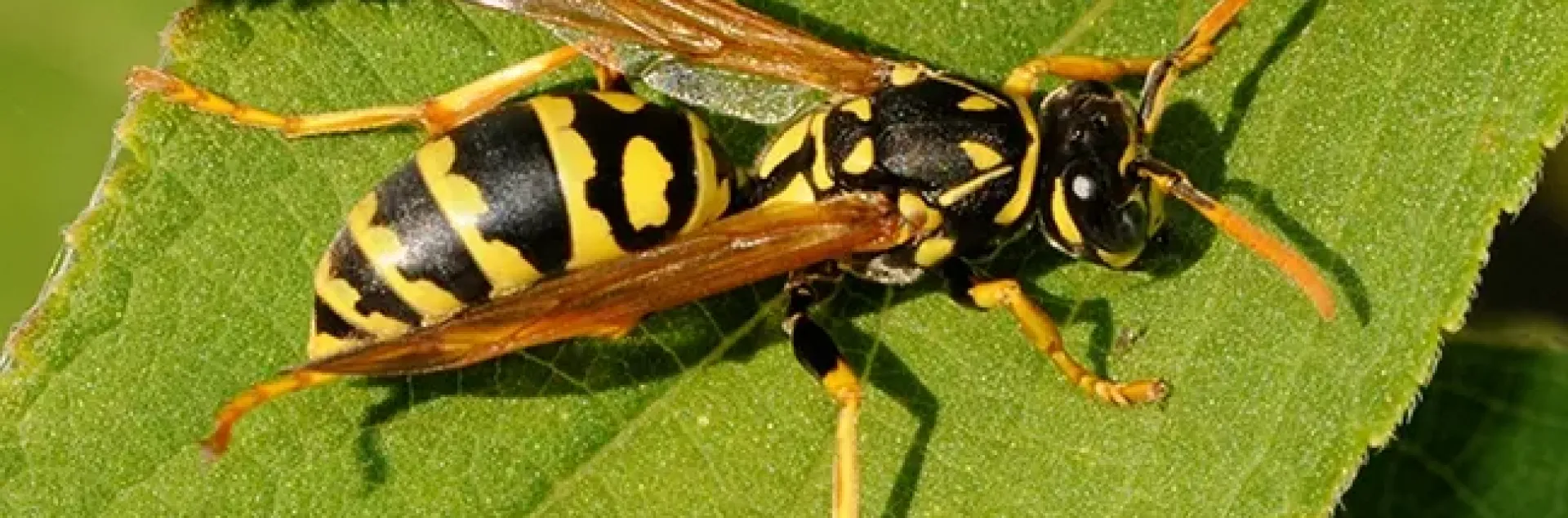
Cover image: European paper wasp, Polistes dominula. (Photo by Kathy Keatley Garvey)