Bug Squad

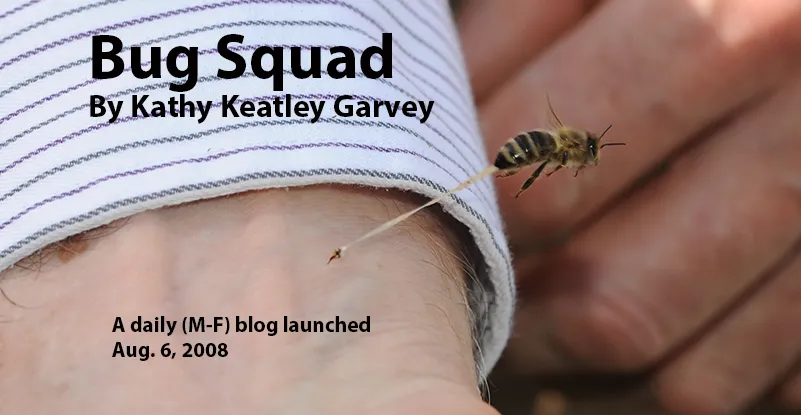
A daily (M-F) blog launched Aug. 6, 2008 and about the wonderful world of insects and those who study them. (Photo by Kathy Keatley Garvey)
Primary Image
Honey bee geneticist Robert E. Page Jr. poses with his wife Michelle (right) and Helene Dillard, dean of the UC Davis College of Agricultural and Environmental Sciences at a 2022 ceremony honoring him as the recipient of the CA&ES Distinguished Emeritus Award. (Photo by Kathy Keatley Garvey)

Honey Bee Geneticist Rob Page Knows How to Answer This Question

March 6, 2023
If you ask honey bee geneticist Robert E. Page Jr. what his favorite honey is, he'll point to his wife, Michelle. She--and any others near them--will smile every time! Fact is, Rob Page is our favorite honey bee geneticist, and he was just named the recipient of the 2023 C. W.
View Article
Primary Image
A sand field cricket (Gryllus firmus), and a horsehair worm (Paragordius varius). (Photos courtesy of Amy Worthington)

Host and a Parasite: Battle of Sand Field Crickets vs. Horsehair Worms

March 3, 2023
If you were a sand field cricket, you would not like horsehair worms. "The horsehair worm (Paragordius varius) is a long-lived parasite that infects arthropods, including the sand field cricket, Gryllus firmus," says biologist Amy Worthington, assistant professor, Creighton University, Omaha, Neb.
View Article
Primary Image
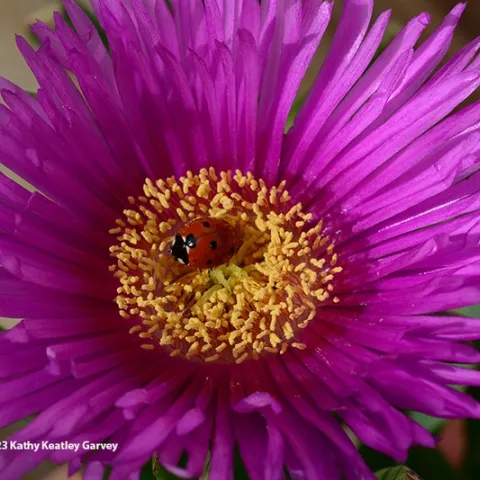
A lady beetle nestled in an ice plant blossom. (Photo by Kathy Keatley Garvey)

'A Lady in Red': Petal Pusher?

March 2, 2023
It wouldn't make the news, even if it were a "Slow News Day." "Lady in Red Climbs Neon-Pink Petals in Search of Aphids." Lady beetles, aka ladybugs, are coming out of their winter hibernation now and they're hungry. Aphid-hungry. We spotted this lady beetle Feb.
View Article
Primary Image
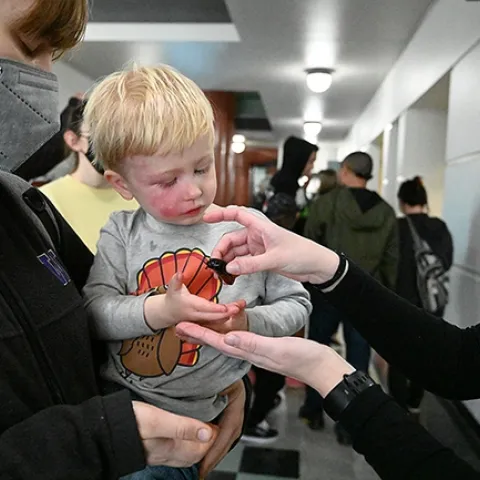
Finn Jensen, 2 1/2, awaits the placement of a Madagascar hissing cockroach in his hand. (Photo by Kathy Keatley Garvey)

Hissers: Big, Bold and Beautiful

February 28, 2023
Madagascar hissing cockroaches, aka hissers, are big, bold and beautiful. Just ask the scientists at the Bohart Museum of Entomology, UC Davis, who rear them in their petting zoo.
View Article