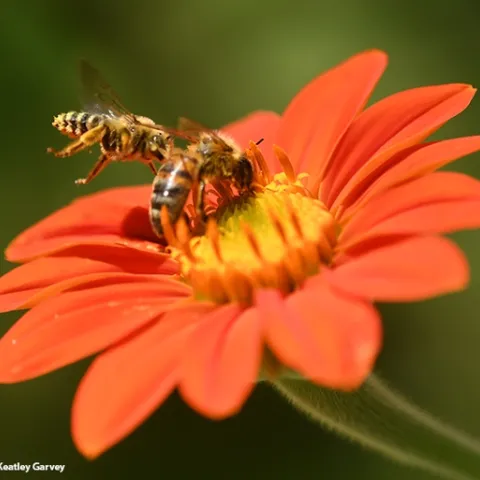
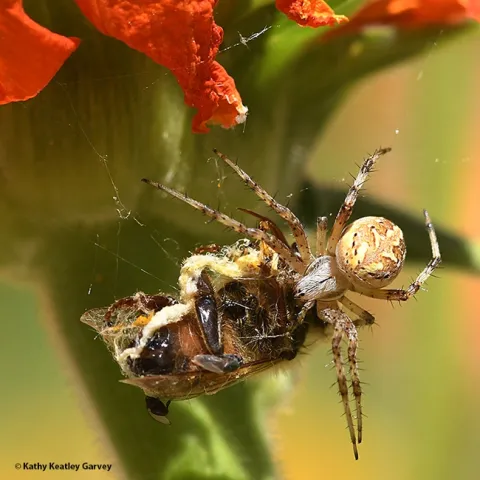
So, here you are, a honey bee nectaring on a Mexican sunflower, Tithonia rotundifola. All's right with the world, at least in your world. You're sipping nectar to take home to your colony and suddenly...a buzz.
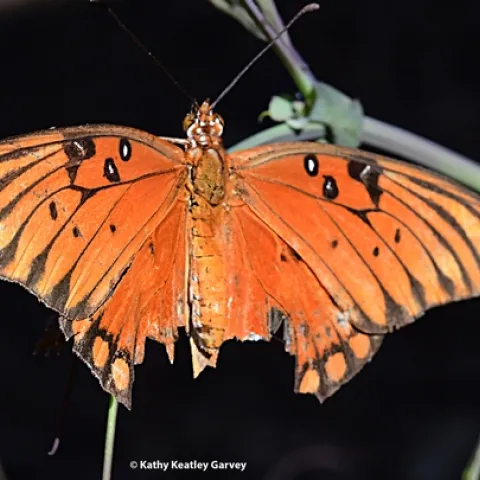
Interviewer: "Hey, Gulf Fritillary! What happened to you? Something take a chunk out of your wings?" Miss Gulf Frit: "I dunno. I was just fluttering around the passionflower vine and something grabbed me." Interviewer: "Do you have any idea what happened?" Miss Gulf Frit: "Sorry, no.
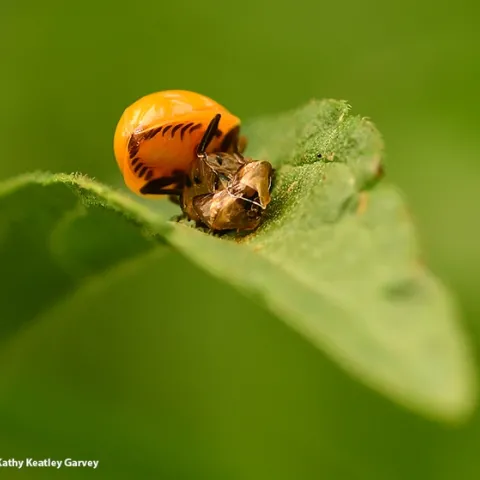
If you're an entomologist, an agriculturist, a gardener or an insect enthusiast, you've probably seen the life cycle of a lady beetle, aka ladybug: from the egg to the larva to the pupa to the adult.
The spider failed to snag a butterfly, so it went for Plan Bee. That would be the honey bee, Apis mellifera. The bee is usually foraging for nectar and pollen and not that aware of her surroundings, especially a cunning and very hungry spider.
A fantastic line-up awaits those eager to attend the UC Davis Department of Entomology and Nematology's in-person and virtual seminars. Topics include earwigs, green roofs, fruit flies and nematodes.