Bug Squad

A daily (M-F) blog launched Aug. 6, 2008 and about the wonderful world of insects and those who study them. (Photo by Kathy Keatley Garvey)
Primary Image
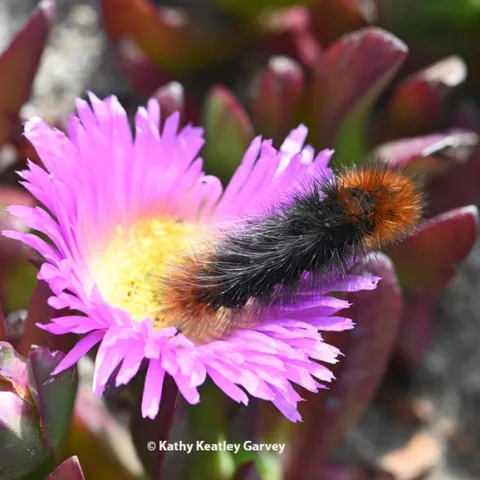
A wooly bear caterpillar on ice plant at Bodega Head. This insect is Arctia virginalis, formerly known as Platyprepia virginalis. (Photo by Kathy Keatley Garvey)
Bug Squad: Article

The Wooly Bears of Bodega

June 11, 2024
Ever seen the wooly bear caterpillar, Arctia virginalis, formerly known as Platyprepia virginalis? It's found in low elevations in western North America, from southern Monterey Bay, across Nevada and southern Utah to Colorado, and north to southern British Columbia.
View Article
Primary Image
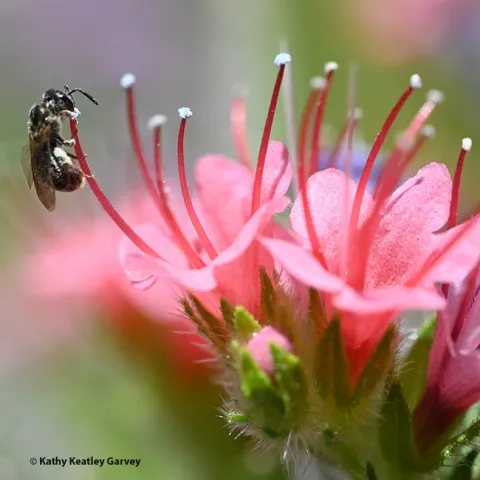
A sweat bee, possibly Halictus tripartitus, foraging on pollen on a tower of jewels, Echium wildpretii, in a Vacaville garden. (Photo by Kathy Keatley Garvey)
Bug Squad: Article

Finding Pollen on Echium During National Pollinator Month

June 10, 2024
It's National Pollinator Month, and what better time to find a tiny speck of a bee on a seven-foot tower of jewels, Echium wildpretii? This is a sweat bee of the family Halictidae, the second largest family of bees, comprised of some 4500 species.
View Article
Primary Image
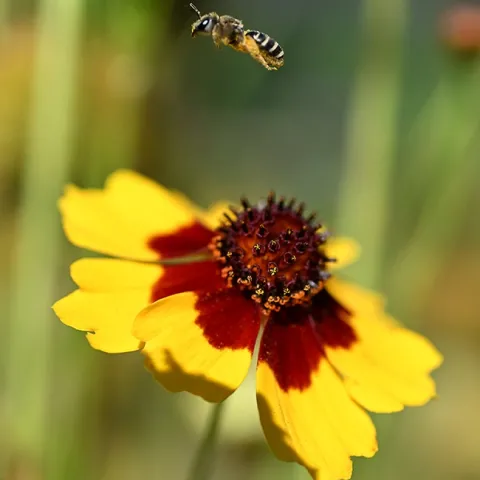
A sweat bee, genus Halictus, sailing over a Coreopsis in a Vacaville pollinator garden. June is National Pollinator Month. (Photo by Kathy Keatley Garvey)
Bug Squad: Article

It's Pollinator Month: No Sweat?

June 7, 2024
In the sweltering heat of Solano County (100 degrees) during National Pollinator Month, how about an image of a sweat bee, genus Halictus, a tiny bee that's often overlooked in the world of pollinators. It's a social bee that nests in the soil.
View Article
Primary Image
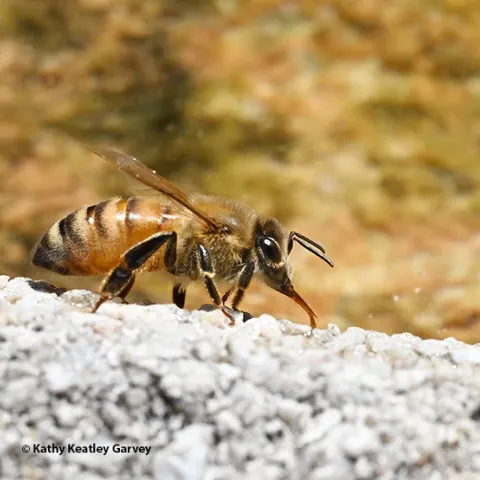
A honey bee, its proboscis extended, collects water from the edges of a birdbath. (Photo by Kathy Keatley Garvey)
Bug Squad: Article

The Water Girls

June 6, 2024
If you're struggling with triple-digit temperatures, think about the honey bees. They need to collect water for their colony to cool the hive so their brood can develop. And for other purposes. Just call them "The Water Girls." Lately the bees have taken a liking to our birdbath.
View Article