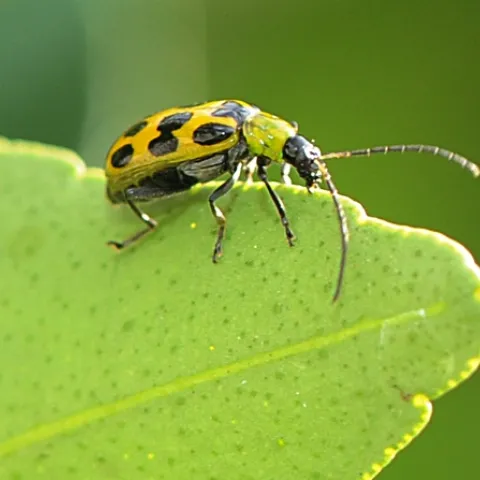
You usually see them crawling around, but never about to fly. The Western spotted cucumber beetles (Diabrotica undecimpunctata) is one of California's most common insects. And though quite attractive in coloring, it's a major agricultural pest.
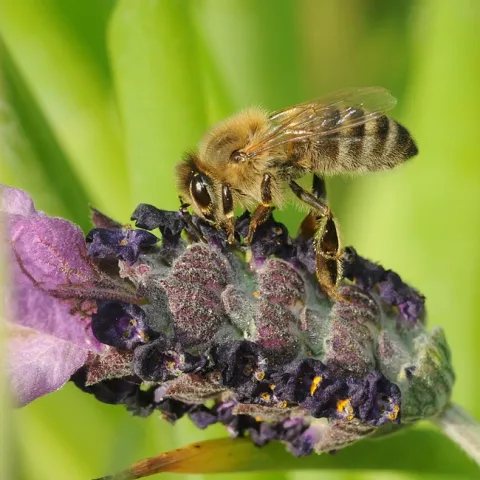
Things are buzzing over at the Robert Mondavi Wine and Food Science on the University of California, Davis campus. The RMI folks are gearing up for the big Honey! event, set for 9 a.m. to 6:30 p.m., Friday, Oct. 21 in the UC Davis Conference Center.
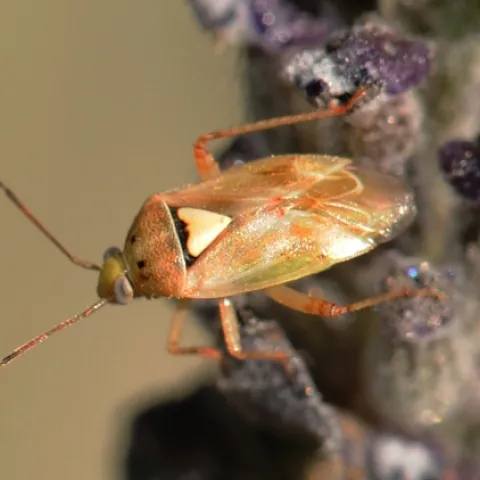
If you've ever grown strawberries, you're probably familiar with what the lygus bug does. This major agricultural pest is one of the causes of those cat-faced strawberries you see in your garden or in the field. Cat-faced? Think misshapened, deformed or irregularly shaped berries.
Honey in the morning Honey in the evening Honey at suppertime Be my little honey And love me all the time... So sang the McGuire Sisters in their 1958 hit tune, "Sugartime." And so will sing the Honeybee Trio of Vacaville at the Honey! event on Friday, Oct. 21 in the UC Davis Conference Center.
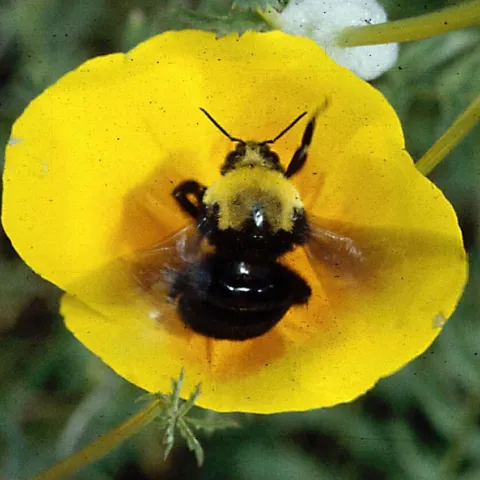
It's good to see so many people looking for the critically imperiled Franklin's bumble bee, which the U.S. Fish and Wildlife Service may soon list as endangered and provide protective status.