Bug Squad

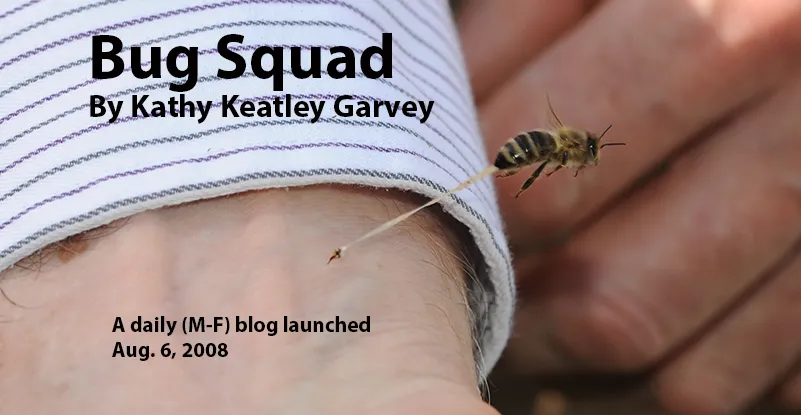
A daily (M-F) blog launched Aug. 6, 2008 and about the wonderful world of insects and those who study them. (Photo by Kathy Keatley Garvey)
Primary Image
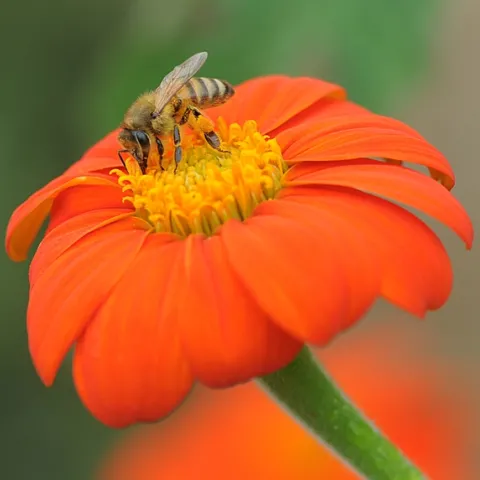
Honey bee foraging on a Mexican sunflower. (Photo by Kathy Keatley Garvey)

In Between the Rains

October 4, 2011
Mexican sunflowers. Gaillardia. The Hagen-Dazs Honey Bee Haven at the Harry H. Laidlaw Jr. Honey Bee Research Facility on Bee Biology Road at the University of California, Davis, is awash with autumn colors, despite the persistent rains.
View Article
Primary Image
Pollen-laden honey bee foraging on a pink African daisy. (Photo by Kathy Keatley Garvey)

In the Pink: A Backyard Safari

October 3, 2011
You don't have to travel to Africa to go on safari. You can go on a "bug" safari in your own backyard. And you can stay as little or as long as you like without incurring such costs as air travel, hotel stays, and food expenses.
View Article
Primary Image
This grasshopper, aka locust, is a banded-winged grasshopper, family Acrididae. (Photo by Kathy Keatley Garvey)

The Locusts Are Coming!

September 30, 2011
The locusts are coming! The locusts are coming! No, not the one below, a banded-winged grasshopper (family Acrididae and subfamily Oedipodinae) that we spotted west of the UC Davis campus--and identified by Steve Heydon, senior museum scientist at the Bohart Museum of Entomology.
View Article
Primary Image
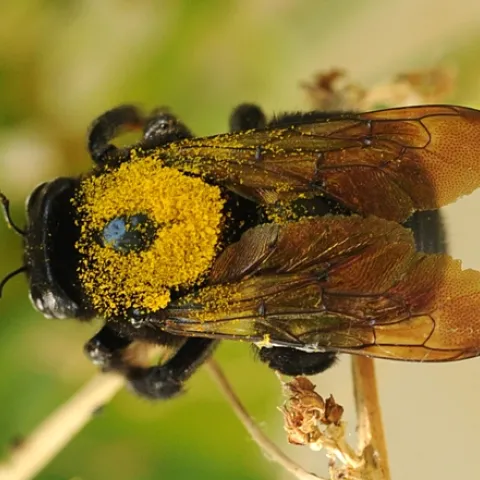
Female Valley carpenter bee, caught in flight, dusted with gold pollen. (Photo by Kathy Keatley Garvey)

Pardon My (Gold) Dust

September 29, 2011
A gold rush of sorts. When the female Valley carpenter bees forage among the passion flowers (Passiflora), they turn from solid black to a mixture of gold and black. The pollen on their head, thorax and abdomen stands out like magical gold dust, as if sprinkled by the Good Fairy.
View Article
Primary Image
Buckeye spreads it wings on an African daisy. (Photo by Kathy Keatley Garvey)

Shall We Prey?

September 28, 2011
The California Buckeye (Junonia coenia), with its bold eyespots and white bars, is an easily recognizable butterfly. The problem: getting close enough for a photo and then patiently waiting for it to open its wings. At the first indication of danger, it flutters away.
View Article