Bug Squad

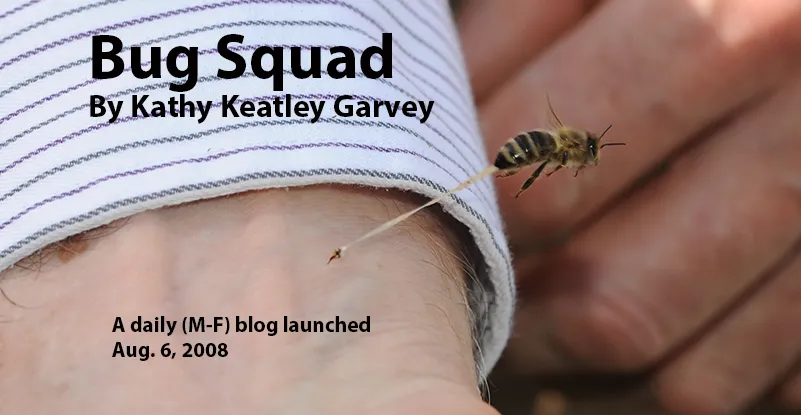
A daily (M-F) blog launched Aug. 6, 2008 and about the wonderful world of insects and those who study them. (Photo by Kathy Keatley Garvey)
Primary Image
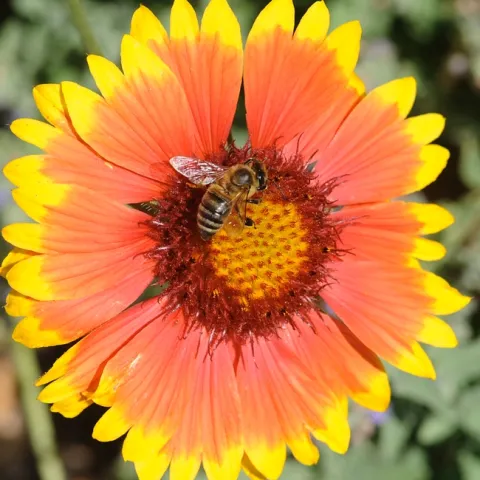
Honey bee on gallardia. (Photo by Kathy Keatley Garvey)

The Places to 'Bee'

August 11, 2011
The places to "bee" for beekeepers in September and November are the Big Island of Hawaii and the not-so-little-city of Rohnert Park, Calif. The Western Apicultural Society, founded by UC Davis scientists in 1978, has scheduled its annual conference for Sept.
View Article
Primary Image
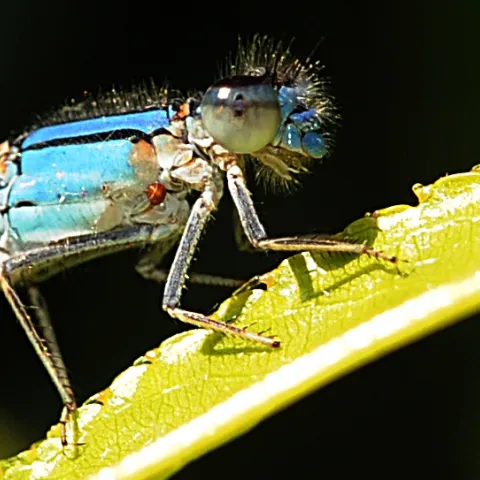
Blue damselfy resting on nectarine leaf. (Photo by Kathy Keatley Garvey)

Up Close and Personal

August 10, 2011
Up close and personal, those blue damselflies (suborder Zygoptera, order Odonata) look prehistoric. Fact is, they were here before the dinosaurs. These needlelike insects add an iridescent presence as they fly awkwardy over our fish pond, catching prey.
View Article
Primary Image
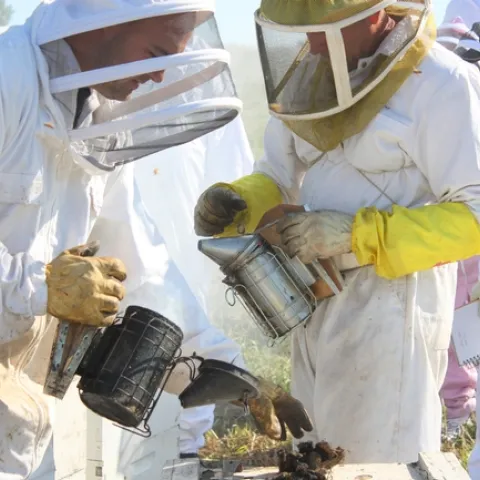
Beekeeper John Miller (right, with yellow gloves and smoker) tending his hives. Copyrighted photo, 2010, by Melody Owen, used with permission.

The Beekeeper's Lament

August 9, 2011
The Beekeeper's Lament: How One Man and Half a Billion Honey Bees Help Feed America should be required reading for anyone interested in honey bees, crop pollination and migratory beekeepers. Award-winning journalist Hannah Nordhaus tells the story of migratory beekeeper John Miller of Gackle, N.D.
View Article
Primary Image
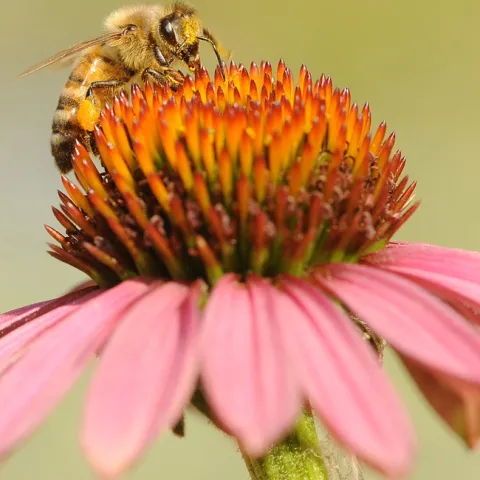
Honey bee on purple coneflower. (Photo by Kathy Keatley Garvey)

Nothin' Like a Cone

August 8, 2011
There's nothing quite like a cone--no, not an ice cream cone. A purple coneflower. The purple coneflower (Echinacea purpurea, family Asteraceae), looks like royalty in the Hagen-Dazs Honey Bee Haven at the University of California, Davis.
View Article
Primary Image
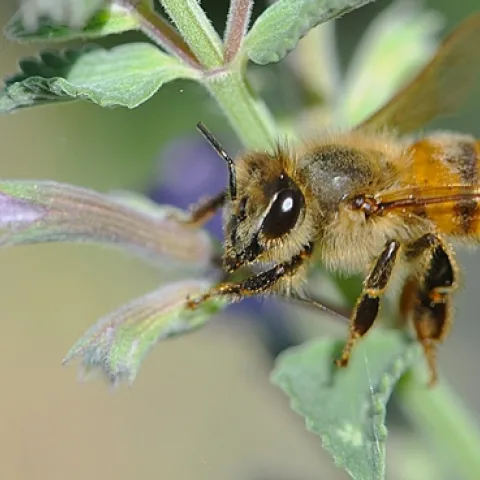
Honey bee working the catmint (Nepeta). (Photo by Kathy Keatley Garvey)

Cooperative Bee

August 5, 2011
If you want to attract honey bees in your garden, you can't go wrong by planting catmint (genus Nepeta). Honey bees like the mints. So do cabbage white butterflies, wool carder bees, carpenter bees and hover flies, among other insects. Nepeta is easy to grow.
View Article