Bug Squad

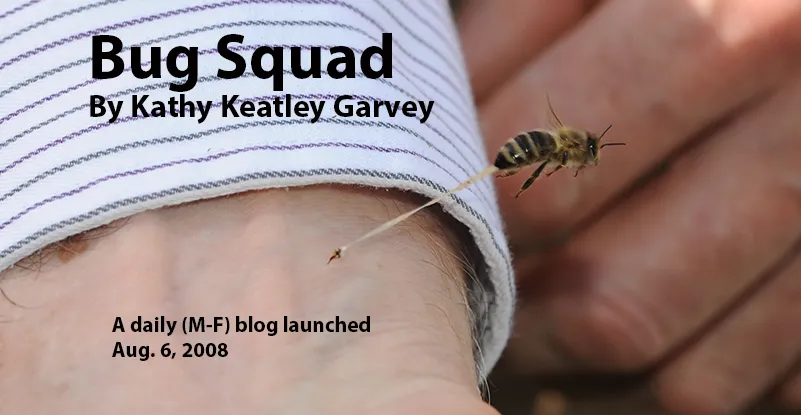
A daily (M-F) blog launched Aug. 6, 2008 and about the wonderful world of insects and those who study them. (Photo by Kathy Keatley Garvey)
Primary Image
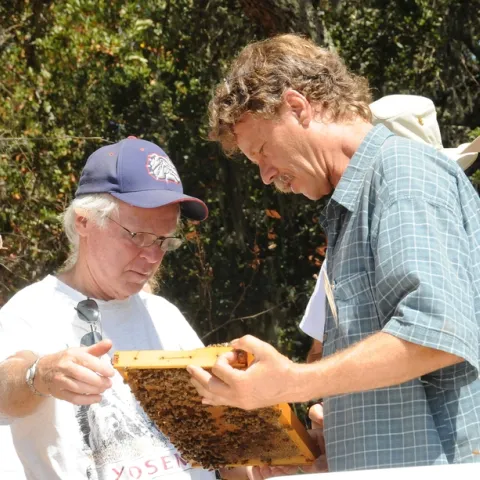
eekeepers Bill Cervenka (left) of Half Moon Bay and Randy Oliver of Grass Valley check out a frame in Healdsburg during a bee conference. (Photo by Kathy Keatley Garvey)

Honey Bees Still in Trouble

July 28, 2011
Honey bees are still in trouble. University of California scientists hammered home that point tonight during the PBS NewsHour program on the colony collapse disorder (CCD) and the declining bee population.
View Article
Primary Image
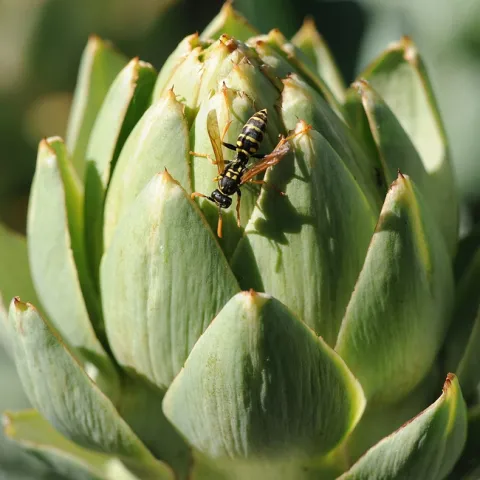
uropean paper wasp hunting for prey on an artichoke. (Photo by Kathy Keatley Garvey)

Hunting for Prey

July 27, 2011
Be careful when you're harvesting an artichoke. You might find a European paper wasp (Polistes dominula) hunting for a little protein, such as ants, flies and tiny bees to carry back to its nest.
View Article
Primary Image
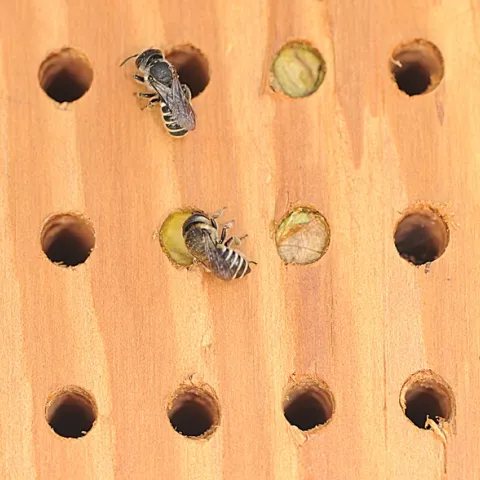
Two leafcutting bees (Megachile spp.) at their bee condo. (Photo by Kathy Keatley Garvey)

Ten Tenants

July 26, 2011
Ten tenants. That's how many tenants are occupying our wooden bee block, aka "bee condo." It's "home, sweet home" for leafcutting bees (Megachile spp.).
View Article
Primary Image
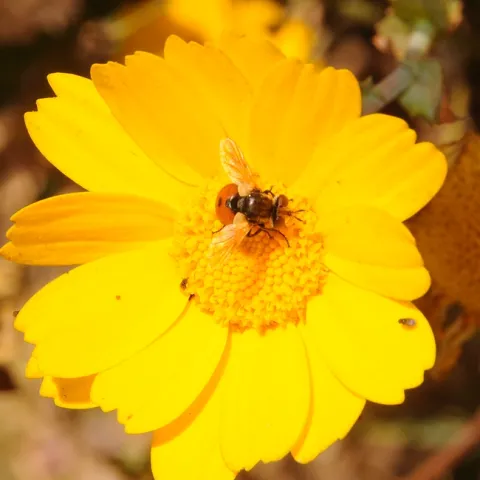
Short fat fly (genus Gymnosoma) on coreopsis at Fort Bragg. (Photo by Kathy Keatley Garvey)

Now That's a Fly!

July 25, 2011
Oh, to go through life being called a "short fat fly." Such is the case with a specific tachinid fly (family Tachinidae, genus Gymnosoma), which we spotted on a coreopsis (aka tickseed) growing along a Fort Bragg cliff. It's an odd-looking fly. Its abdomen resembles a ladybug or lady beetle.
View Article
Primary Image
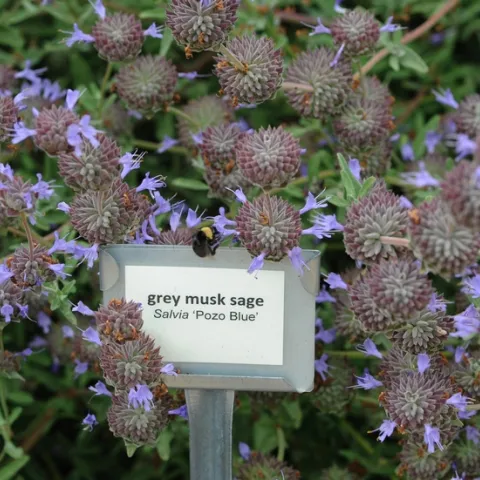
Black-faced bumble bee "posing" on grey musk sage. (Photo by Kathy Keatley Garvey)

Tracking a Black-Faced Bumble Bee

July 22, 2011
Every once in a while you see it. And it's a real treat--especially when it's a bee garden that's synonomous with treat. We tracked the black-faced bumble bee (Bombus californicus) in the Hagen-Dazs Honey Bee Haven, a half-acre bee friendly demonstration garden at the Harry H. Laidlaw Jr.
View Article