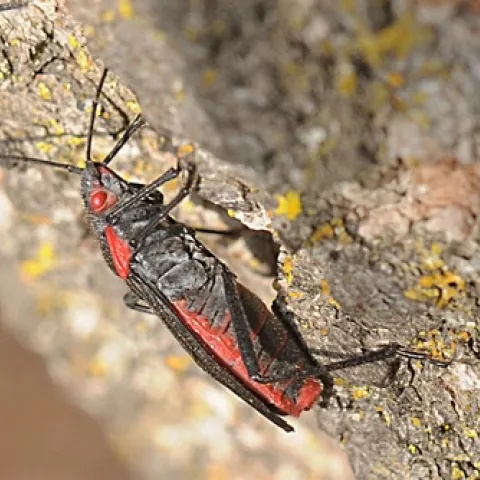
For being "retired," Hugh Dingle is one busy scientist. Dingle, an emeritus professor in the UC Davis Department of Entomology, recently returned to Davis after living in Australia for seven years and doing research at the University of Brisbane, Australia.
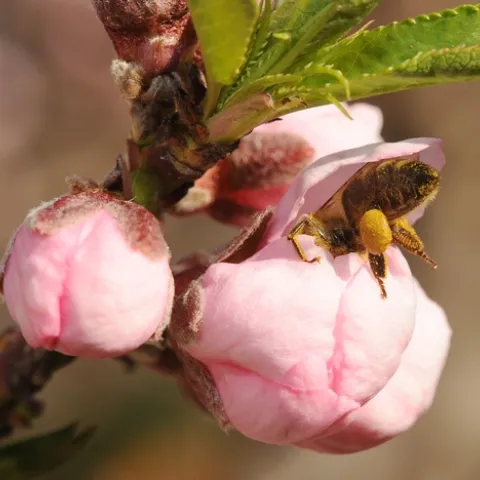
Cool temperatures and honey bees do not a good team make. Since honey bees don't forage until temperatures hit 50 to 55 degrees, we haven't seen many bees gathering pollen from our nectarine trees. If you love nectarines, there's a lot to love.
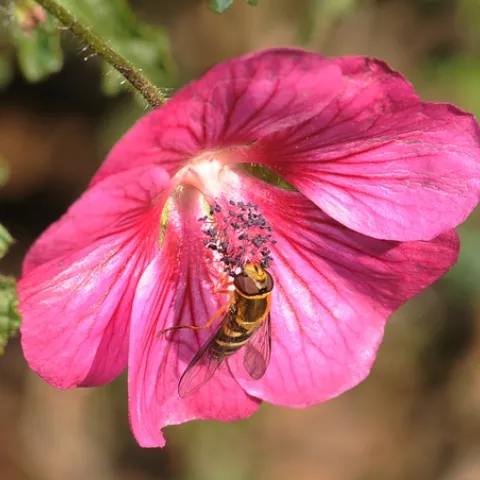
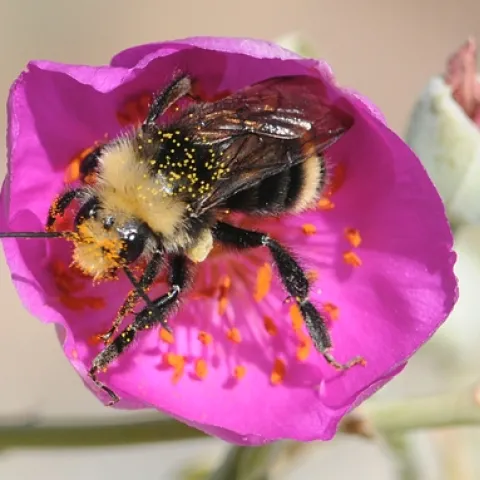
It's not just honey bees that forage among the cape mallows in the Hagen-Dazs Honey Bee Haven at the Harry H. Laidlaw Jr. Honey Bee Research Facility at the University of California, Davis. The brilliant magenta flowers also draw assorted other insects. Such as flies...hover flies.
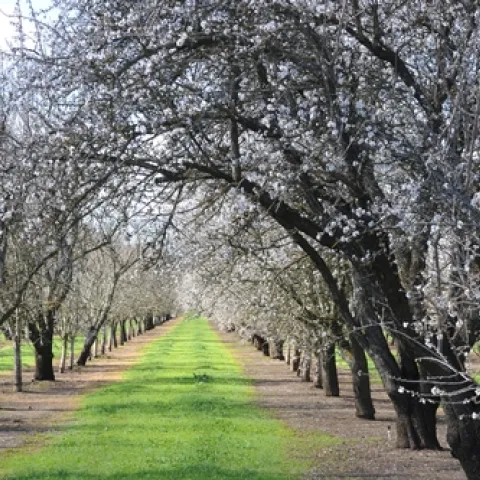
No thanks to the recent storms, almond orchards are encountering Nature's Extreme Makeover--from fluffy popcorn blossoms to tattered petals reminiscent of bottom-of-the-bag kernels. Still, there's something spectacular about driving down a rural road in Dixon, Calif.
So you want to attract native pollinators to your garden. The Xerces Society for Invertebrate Conservation, based in Portland, Ore., has just published a 380-page book, Attracting Native Pollinators, that encourages you to do just that.