Bug Squad

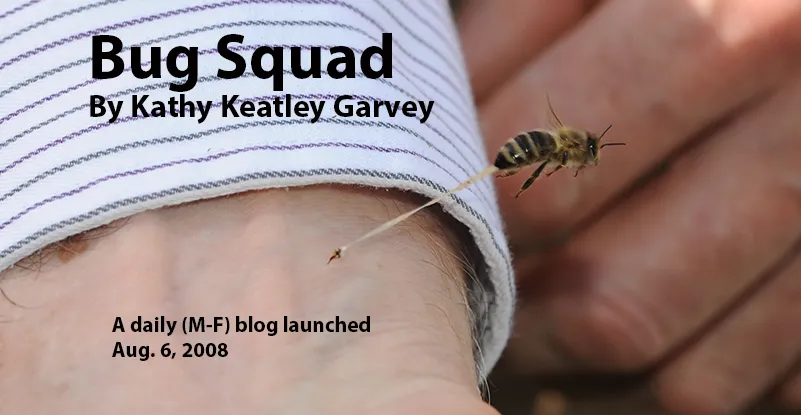
A daily (M-F) blog launched Aug. 6, 2008 and about the wonderful world of insects and those who study them. (Photo by Kathy Keatley Garvey)
Primary Image
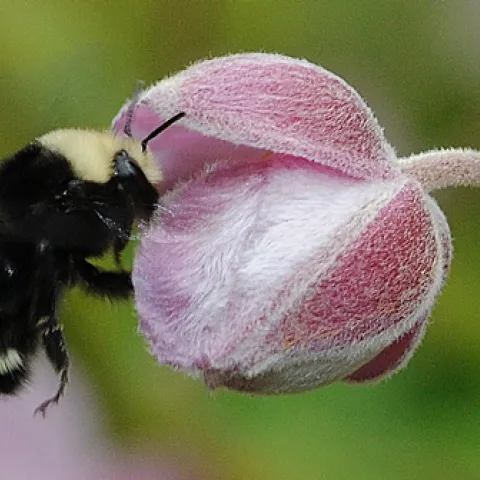
WORKER BUMBLE BEE on anemone. This is a female yellow-faced bumble bee (Bombus vosnesenskii), as identified by native pollinator specialist Robbin Thorp, emeritus professor of entomology at UC Davis. (Photo by Kathy Keatley Garvey)
Bug Squad: Article

Give Us an A, B, and C

September 6, 2010
"A" is for anemone, "B" is for bumble bee and "C" is for coneflower. A visit to the Oregon state capitol grounds in Salem last Tuesday found scores of yellow-faced bumble bees (Bombus vosnesenskii) working the anemones and purple coneflowers.
View Article
Primary Image
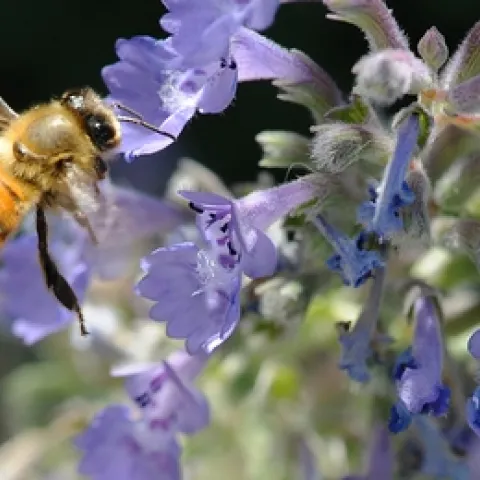
HONEY BEE heads for catmint (Nepeta). Catmint is one of the plants in the Häagen-Dazs Honey Bee Haven that attracts honey bees, native bees, butterflies and assorted other insects. (Photo by Kathy Keatley Garvey)
Bug Squad: Article

Mint Condition

September 3, 2010
When the Hagen-Dazs Honey Bee Haven's grand opening celebration takes place on Saturday, Sept. 11, visitors can expect to see scores of flowers, including the ever-popular catmint (Nepeta). Honey bees love the mints. So do bumble bees, carpenter bees, butterflies and assorted other insects.
View Article
Primary Image
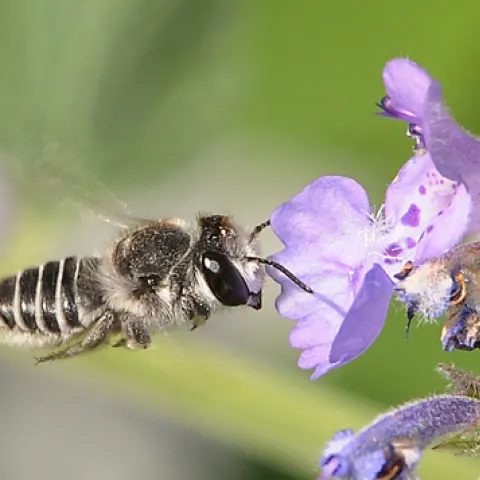
CAUGHT IN FLIGHT, a leafcutter bee heads toward a catmint flower (Nepeta). (Photo by Kathy Keatley Garvey)
Bug Squad: Article

Catching Up with a Leafcutter Bee

September 2, 2010
Leafcutter bees (Megachile spp.), so named because they cut leaves and petals to line their nests, are smaller than the honey bees but move faster. These native bees are easily recognizable by the black-white bands on their abdomen. Catching them in flight requires a lot of patience.
View Article
Primary Image
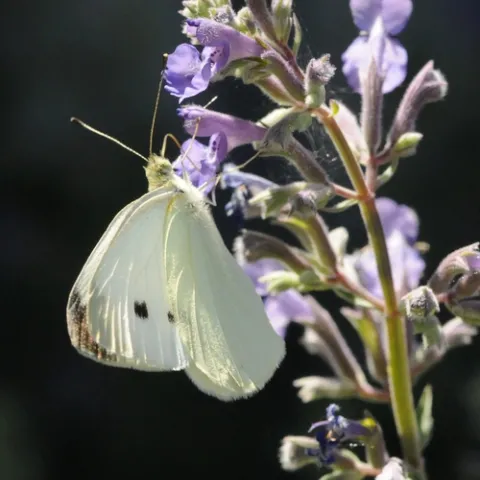
CABBAGE WHITE butterfly glows in the late afternoon sun as it nectars on catmint (Nepeta). (Photo by Kathy Keatley Garvey)
Bug Squad: Article

Lovely Indeed

September 1, 2010
If we were to describe the cabbage white butterfly (Pieris rapae) in one word, it would be "lovely." Especially when it nectars from catmint (Nepeta) in the early evening, as the sun drops low in the horizon.
View Article
Primary Image
A DEAD MOTH, a Greater Wax Moth, collected outside a bee hive. (Photo by Kathy Keatley Garvey)
Bug Squad: Article

Sneaky Moth

August 31, 2010
The female Greater Wax Moth (Galleria mellonella) is a sneaky creature. She flies around bee hives at night and when the opportunity presents itself--as it often does--in she goes to lay her eggs. The egg hatch into larvae, which munch and crunch just about everything in sight.
View Article