Bug Squad

A daily (M-F) blog launched Aug. 6, 2008 and about the wonderful world of insects and those who study them. (Photo by Kathy Keatley Garvey)
Primary Image
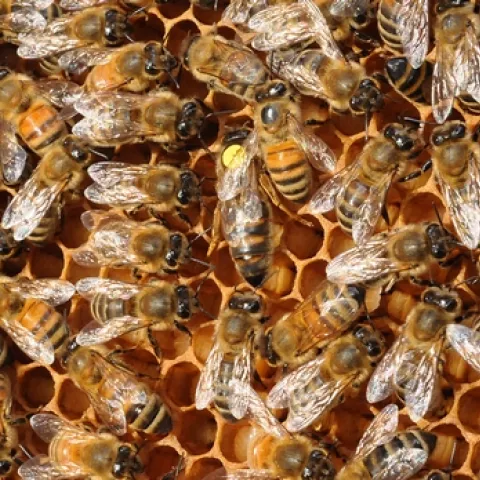
QUEEN BEE (with the dot) is surrounded by worker bees (sterile females). (Photo by Kathy Keatley Garvey)
Bug Squad: Article

If I Had a Hammer...

March 19, 2010
The number of new housing developments throughout the country continues to shrink as we struggle with the throes of a deep recession. That's with human housing, not in a healthy honey bee hive. The bees are busy building up their colonies, just as they do every spring.
View Article
Primary Image
PATCH OF TIDY TIPS, California native wildflower, planted on the UC Davis campus, behind the Laboratory Sciences Building. If you look closely in the patch, you'll see scores of insects, including honey bees, hover flies, mason bees, ladybugs--and assassin bugs. (Photo by Kathy Keatley Garvey)
Bug Squad: Article

Assassins in the Tidy Tips

March 18, 2010
If you see a patch of California native wildflowers known as "Tidy Tips," look closely. The yellow daisylike flower with white petals (Layia platyglossa) may yield a surprise visitor. You may see an assassin. An assassin bug.
View Article
Primary Image
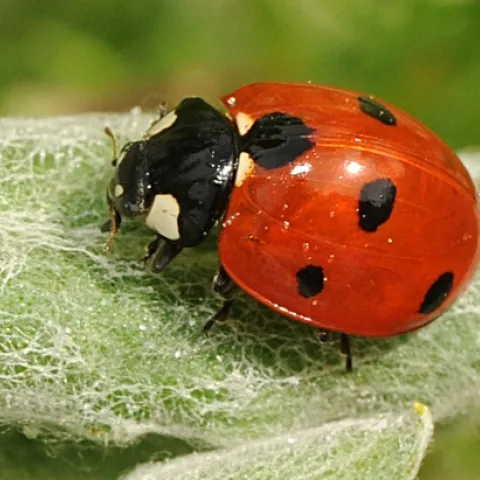
SEVEN-SPOTTED LADYBUG crawls along a leaf in a UC Davis flower garden. (Photo by Kathy Keatley Garvey)
Bug Squad: Article

The Hunters Are Back

March 17, 2010
The hunters are back. Ladybugs, aka ladybird beetles, are searching for aphids and other soft-bodied insects. If you see a ladybug (family Coccinellidae), odds are you'll see her prey, the plant-sucking aphids.
View Article
Primary Image
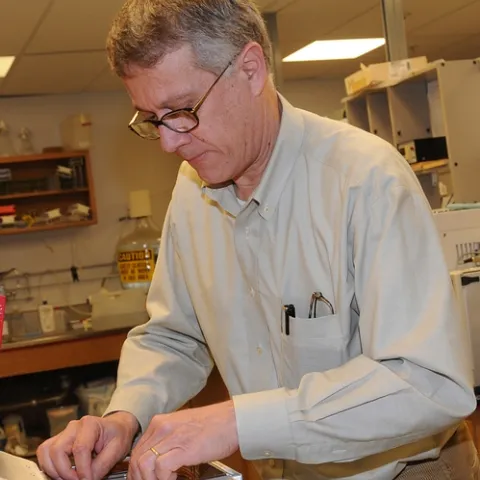
CHEMICAL ECOLOGIST Walter Leal working in his UC Davis lab. His lab revealed the secret mode of the insect repellent DEET in groundbreaking research published in 2008.(Photo by Kathy Keatley Garvey)
Bug Squad: Article

'The Treacherous Scent of a Human'

March 16, 2010
It's a killer, pure and simple. But the issue is as complex as it comes. The malaria mosquito, from the genus Anopheles, infects some 350 to 500 million people a year, killing more than a million. Most are young children in sub-Saharan Africa.
View Article
Primary Image
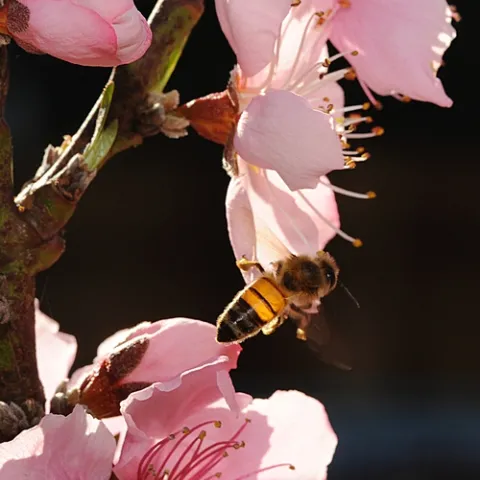
THIS HONEY BEE nectaring a backyard nectarine tree looks like stained glass. (Photo by Kathy Keatley Garvey)
Bug Squad: Article

Our Little Agricultural Workers in the Big Apple

March 15, 2010
If you've ever strolled the streets of New York, you probably noticed a few honey bees here and there. Not the HIVES (they're illegal), but the BEES. Tomorrow, the New York Department of Health and Mental Hygiene will vote on whether city residents can keep bees in the Big Apple.
View Article