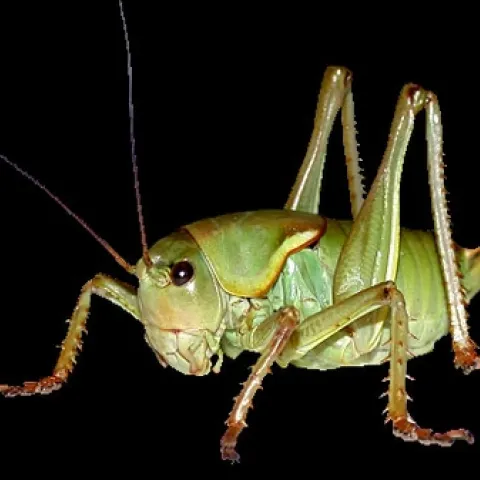
When the Department of Entomology at the University of California, Davis, launches its winter noonhour seminar series on Wednesday, Jan. 6, crickets will be first in line.
The swamp sunflower that graces the entrance to the Harry H. Laidlaw Jr. Honey Bee Research Facility, University of California, Davis, does quadruple duty. It's stunningly beautiful. It's strong and sturdy. It's a late bloomer. And the honey bees love it.
Honey! Say that at the American Honey Producers' Association (AHPA) convention Jan. 5-9 in Sacramento, and it's not a term of endearment. It's an occupation, a calling and a passion. This is their 41st annual convention and the talk is serious about the declining honey bee population.
It's being hailed by environmental groups as "a victory for the bees." A U.S. federal judge has ruled that the insecticide, spirotetramat, must be pulled from the shelves because it could be dangerously toxic to America's declining honey bee population. Starting Jan.
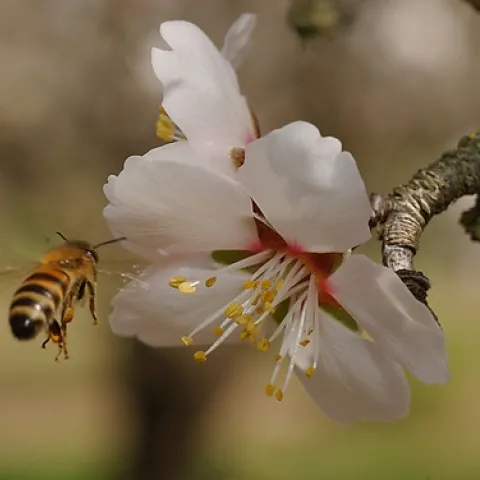
Soon beekeepers from around the country will be trucking their bees to California for the annual almond pollination. California has some 700,000 acres of almonds, with each acre requiring two hives for pollination. But an article in the Dec.