Bees engage us. They fascinate, charm and inspire us. Last Sunday morning, as the temperature climbed from 40 to 50 degrees, the honey bees joined us in our garden. They buzzed in and out of the autumn blossoms, gathering pollen and nectar.
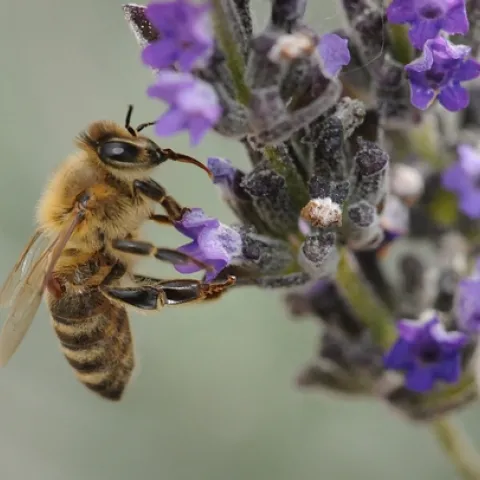
What's wrong with this photo? A honey bee is nectaring a lavender, right? Right. But if you look closely, you'll see a Varroa mite--a parasite--attached to her. Varroa mites, considered the No.
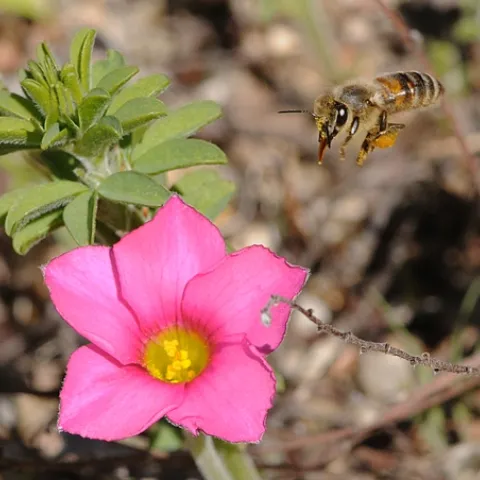
A recent visit to the UC Berkeley Botanical Garden found honey bees making a...yes...beeline...for the pink oxalis (Oxalis herta), a native of South Africa. Some folks consider oxalis, especially yellow oxalis, a "weed.
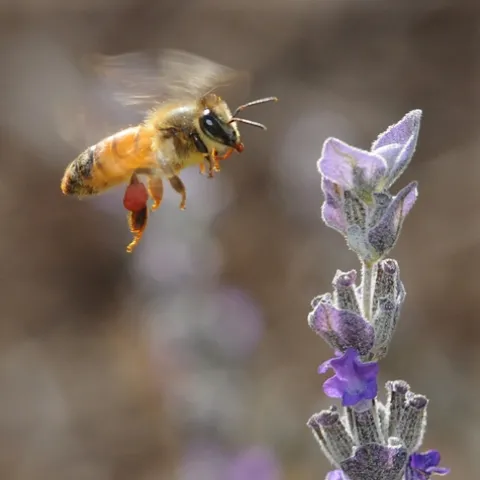
The honey bees are hungry. There are fewer flowers blooming this time of the year, so the bees are foraging for what they can. This morning the bees were all over the lavender (Lavandula) in our yard.
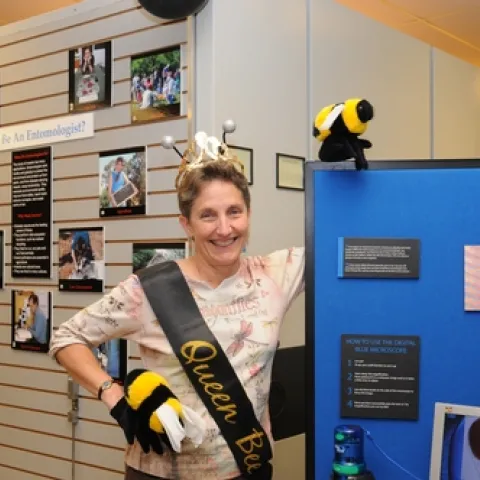
Pollination Nation. That's the title of a new display at the Bohart Museum of Entomology, University of California, Davis. It's quite timely and appropriate because of the beleaguered bees.