Bug Squad

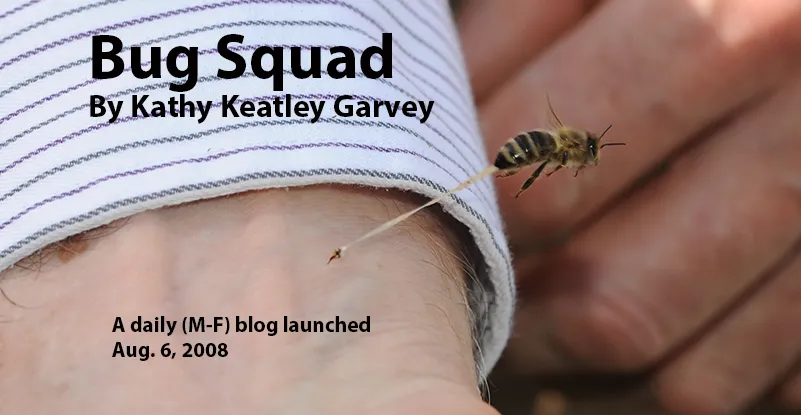
A daily (M-F) blog launched Aug. 6, 2008 and about the wonderful world of insects and those who study them. (Photo by Kathy Keatley Garvey)
Primary Image
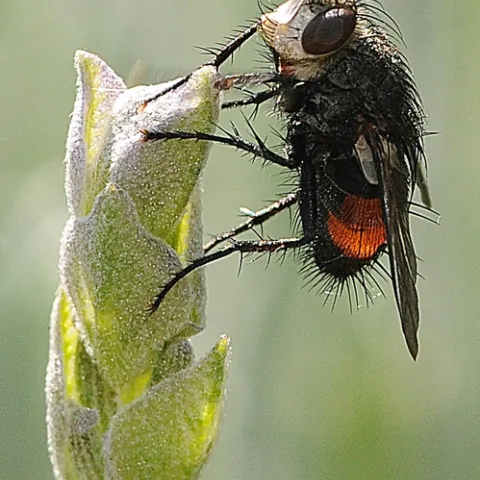
UP ON TOP--A tachinid rests on top of a lavender. This is a female of a Peleteria species, a common genus in southwestern United States. The genus is characterized by two prominent setae in front of the lower part of the eye.(Photo by Kathy Keatley Garvey)

Tiptoeing Through the Lavender

September 29, 2009
Ever seen a tachinid tiptoeing through the lavender? The tachinids are parasitic flies that lay their eggs in hosts such as Lepidoptera (butterfly) caterpillars. As larvae, they live in and kill their hosts. As adults, they sip nectar and other plant juices.
View Article
Primary Image
HONEY BEE pauses after nectaring the purple Penstamon and begins to extend her tongue. (Photo by Kathy Keatley Garvey)

Tongue in Cheek

September 28, 2009
The honey bee nectaring the Penstemon, aka Beardtongue, in Tomales, Calif., didn't seem to mind my presence. Perfect. The amber-colored bee was foraging among the purple two-lipped flowers.
View Article
Primary Image
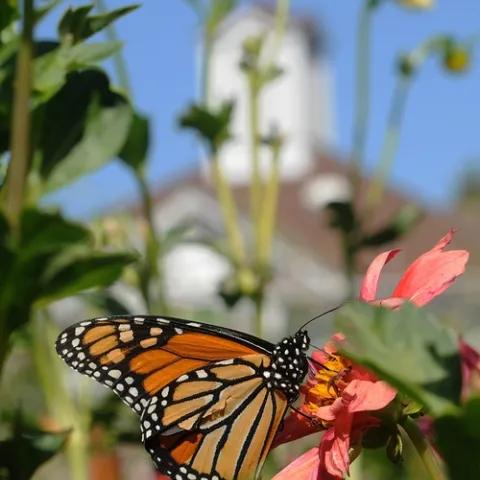
MONARCH BUTTERFLY nectaring in the Luther Burbank Gardens, Santa Rosa. The Luther Burbank home is in the background. (Photo by Kathy Keatley Garvey)

It's in the Antennae

September 25, 2009
Surprise: it's in the antennae! Neurobiologists at the University of Massachusetts Medical School have long wondered how monarch butterflies (Danaus plexippus) can migrate from across eastern North America to a specific grove of fir trees in Mexico.
View Article
Primary Image
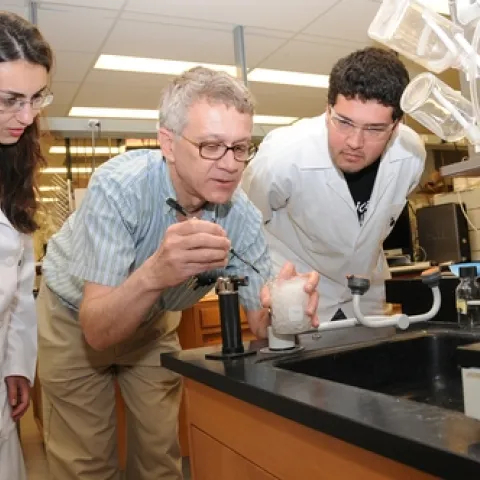
CHEMICAL ECOLOGIST Walter Leal (center) works with Aline Guidolin (left) and Diogo Vidal, two young scientists from Brazil. (Photos by Kathy Keatley Garvey)

Ag Ambassadors from Brazil

September 24, 2009
Two highly talented and enthusiastic university students from Brazil have joined the Walter Leal lab in the Department of Entomology, University of California, Davis, as part of a unique and growing international agricultural exchange program. The program is known as SUSPROT.
View Article
Primary Image
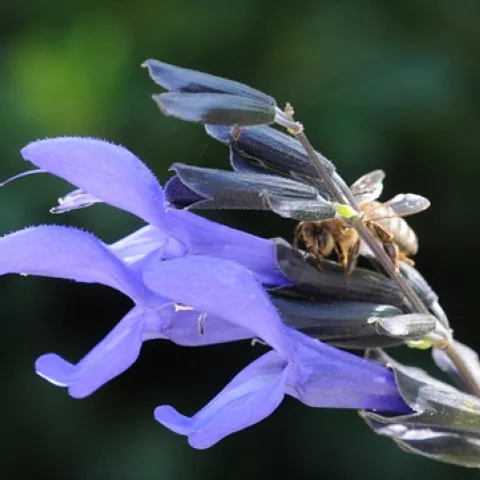
HONEY BEE nectars from a blue sage, Salvia guaranitica, shortly after a carpenter bee pierced the calyx. (Photo by Kathy Keatley Garvey)

Sage Advice

September 23, 2009
Sage advice: If you're thinking of planting a bee friendly garden, think sage. Also commonly known as salvia, this bee friendly plant belongs to the mint family, Lamiaceae. The Salvia genus includes some 900 species, so your choices are good.
View Article