Bug Squad

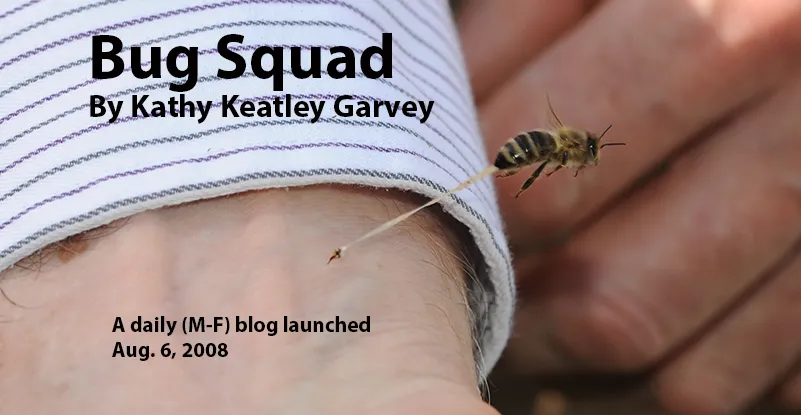
A daily (M-F) blog launched Aug. 6, 2008 and about the wonderful world of insects and those who study them. (Photo by Kathy Keatley Garvey)
Primary Image
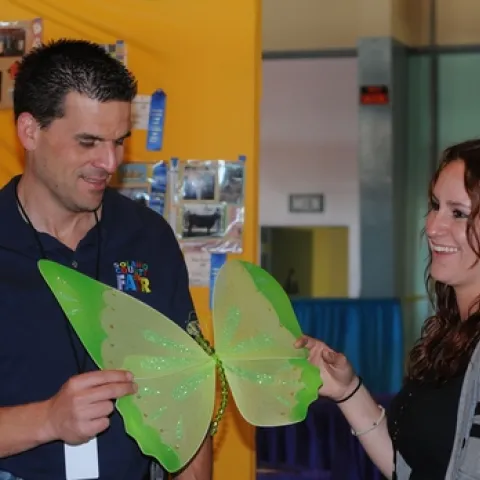
BUTTERFLIES abound at the Solano County Fair. Here assistant fair manager Chad Cabral (left) and Elisa Seppa, superintendent of McCormack Hall, look over a butterfly decoration. (Photo by Kathy Keatley Garvey)

Nature Meets Art

July 21, 2009
Butterflies, dragonflies, ladybugs and honey bees. What exists in nature is replicated in art. We sculpt them, draw them and paint them. We create their images on everything from clothing and jewelry to quilts and stepping stones.
View Article
Primary Image
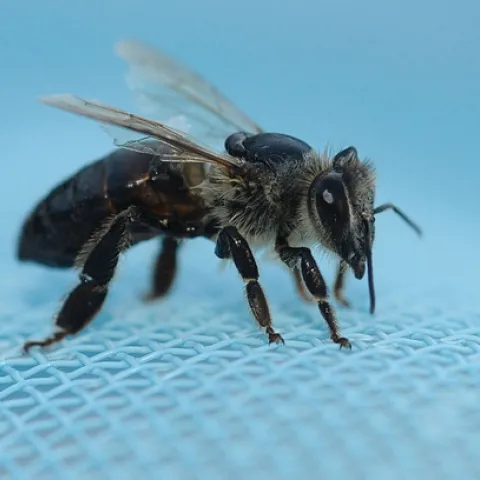
CARNIOLAN HONEY BEE, a dark bee, is drenched from falling into a swimming pool. She is magnum black. (Photo by Kathy Keatley Garvey)

Gone Fishin'

July 20, 2009
It's not just two-legged humans that take a dip in the pool. So do six-legged honey bees searching for water. When temperatures soar, honey bees scramble to collect water for their colony. They release droplets of water in the hive as their hardworking sisters fan their wings to "cool it.
View Article
Primary Image
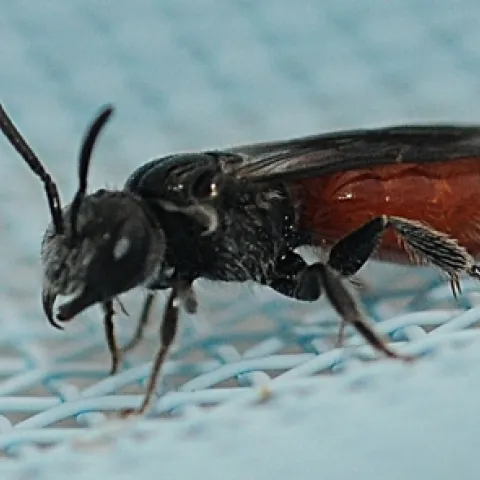
THIS GNAT-SIZED insect with a red abdomen is a female cuckoo sweat bee from the genus Sphecodes. Fished out of a swimming pool, it is crawling around on a net. (Photo by Kathy Keatley Garvey)

Seeing Red

July 17, 2009
Its triple-digit hot and youre relaxing in a swimming pool when suddenly you realize you have company. A knat-sized insect with a red abdomen lands next to you. It looks like a wasp. No, it looks like a bee.
View Article
Primary Image
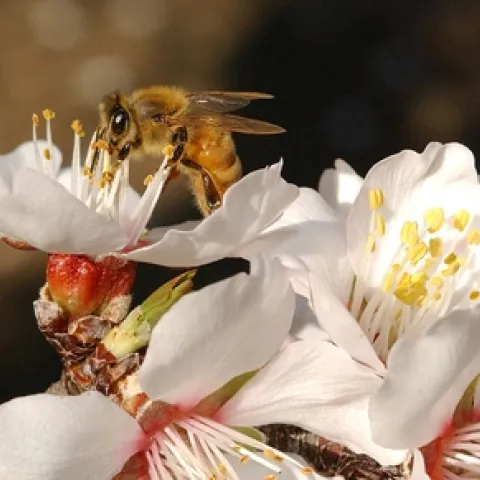
HONEY BEE nectars an almond blossom. This is one of the photos appearing on Cooperative Extension's newly launched Bee Health Web site. California's 700,000 acres of almonds require two hives per acre for pollination. (Photo by Kathy Keatley Garvey)

Bee-utiful Work!

July 15, 2009
Honey bees--what do you know about them? Do you know what the queen bee, worker bees and drones do? Do you know why bees swarm? Do you want to learn to be a beekeeper? Or, if you already are a beekeeper, how do you keep your hives healthy? If you're a researcher, what are your colleagues doing?
View Article