

By Laurel Condro
Gardening is a great way to stay fit and interact with nature. We can explore our creativity and learn about the environment. Throughout our lifespan, we may experience physical limitations or need to modify our garden to share our hobby with someone with special needs. With adaptations, gardening can be accessible for everyone.
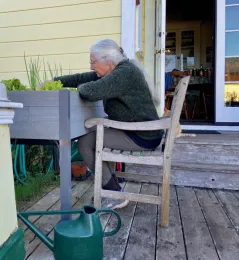
Adaptive and adaptable address the challenges individual gardeners face and the physical barriers a garden may present. Adaptive gardening is more specific to how a gardener can modify tools and actions to accommodate their body’s needs. Adaptable gardening focuses more on gardening design and how a garden can be changed to be more accessible.
Adaptive and adaptable gardening both mean inclusive gardening, creating a garden that allows people of all ages and abilities to enjoy and participate in gardening. People with visual challenges, hearing challenges, people with cognitive impairment or mental illness, people with physical disabilities, kids and other gardeners can benefit from adapting the way they interact with their gardens.
Working in a garden requires physical fitness, strength and endurance. It can also be stressful on our bodies, causing pain. Adaptive gardening includes the use of ergonomic tools, protecting our backs, and maintaining our ability to garden as we age. Modifying behaviors including adding a stretch routine, taking more frequent rests, or having a water bottle with us during gardening are all adaptive techniques. Placing a strategic bench in the garden is an adaptable way to change the garden environment to rest prior to exacerbation of symptoms that limit or prohibit gardening.
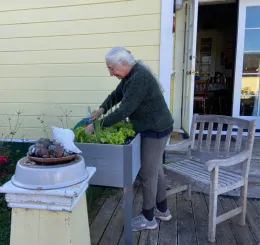
Raised beds are an example of a modification that can serve many different purposes. If you want to have children involved in gardening, you may want to add some child height raised beds that they can tend. Easy access raised beds are 3 feet or more in height. The width should be no more than 4 feet for adults and 3 feet for children. Variations in height can allow the gardener to work sitting or standing. Raised beds can be modified to allow a person in a wheelchair to roll under the raised bed for easy access.
Changing terrain in your garden is an adaptable way to improve accessibility for people with physical challenges. A smooth hardscape will have fewer trip hazards. For people in wheelchairs pathways should be at least 36 inches in width. Railings on steps and ramps may help to safely access uneven terrain for people with mobility and visual impairment. Stairs can also be modified with ramps. The general rule is for 1 inch of rise you will need 12 inches of ramp length. Consult a landscaper or contractor with knowledge of ADA requirements.
To create a garden for people with visual challenges you can consider adding sounds like chimes that help a person locate themselves in the garden. Creating a sensory garden can include scented plants like herbs or scented geraniums and textured plants like lamb’s ears. Plants can be used for orientation for people who rely more on nonvisual cues while being fun and beautiful for everyone.
For people with depression, mental illness and dementia, gardening can improve quality of life. Research links gardening to benefits including sleep improvement, increased hope, happiness, reduction of symptoms of depression, stress, and anxiety. For people with cognitive impairments gardening can provide a joyful purpose and teach routine: watering, weeding, identifying the growing plant from the plants that need to be removed.
Garden modifications can be large or small. If a person has extremely limited mobility or space, a garden can be as simple as a potted flower or a window box, or a single potted plant on the steps. Herbs can be grown indoors on a windowsill.
Many garden projects can be DIY. Gardening on a budget can allow someone to enjoy homegrown produce and flowers. A few packets of seeds can empower a person to become more self-sufficient. Some garden centers have spare pots in free piles. Another simple DIY project is creating compost which relies on readily available kitchen scraps and paper or grass clippings that can then be mixed in with plant soil.
Adapting your garden, tools and practices allows greater ease, satisfaction and longevity. Planning your garden for accessibility allows you to use your creativity to meet your individual needs and allow friends and family to enjoy your garden regardless of their challenges.
Please stay tuned to Gardening for Life as we dive deeper into specific modifications in future newsletters.
Resources
Accessible Gardening: Garden Ergonomics West Virginia University
Gardening to Heal University of Florida Extension
Live Well in the Garden, Adaptable Gardening UC ANR
A Gardener for Life UC ANR
Having trouble sleeping? Try gardening. Oxford University News blog
Cultivating Mental Wellness: The Impact of Community Gardens on Emotional Resilience Rutgers New Jersey Agricultural Experiment Station
Photo Credits: Primary Image by Linda Bartlett, Public Domain, Wikimedia Commons; All other images courtesy of the author, Laurel Condro, UC Master Gardener of Humboldt and Del Norte Counties.