Entomology & Nematology News

Primary Image
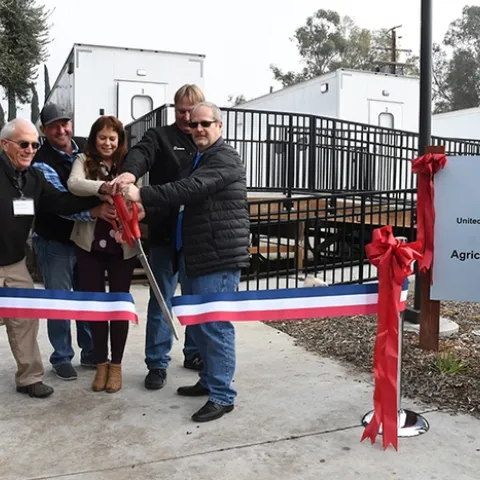
From left are almond pollination consultant Robert Curtis of Carmichael, retired director of agricultural affairs, Almond Board of California; queen bee breeder Brad Pankratz of Can-Am Apiaries, Orland; queen bee breeder Jackie Parks-Burris of Jackie Park-Burris Queen Bees, Palo Cedro and a past president of California State Beekeepers' Association; Darren Cox of Logan, Utah, past president of American Honey Producers; and Kelvin Adee of Bruce, S.D., president of American Honey Producers. (Photo by Kathy
Entomology & Nematology News: Article

Historic Occasion: USDA-ARS Bee Lab Opens on UC Davis Campus

January 14, 2020
On a day too cold for honey bees to fly and nearly too cold for bundled dignitaries to speak, officials celebrated the opening of the newly constructed USDA-ARS bee research facility on Bee Biology Road, UC Davis campus.
View Article
Primary Image
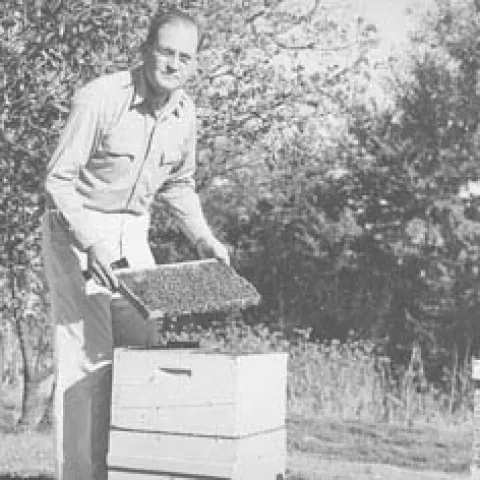
Harry H. Laidlaw Jr., the father of honey bee genetics. The facility, Harry H. Laidlaw Jr. Honey Bee Research Facility, is named for him.
Entomology & Nematology News: Article

Brief History of the UC Davis Bee Biology Program

January 14, 2020
(Collaborative history of the UC Davis bee biology program.) George Haymaker Vansell (1892-1954) was a student at UC Davis who eventually helped with the instruction of entomology and apiculture beginning in 1920 and ending in 1931.
View Article
Primary Image
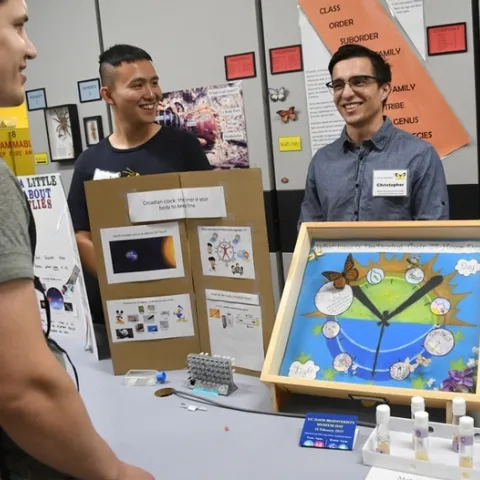
At last year's Bohart Museum open house on student research, graduate student Yao Cai (left) and undergraduate Christopher Ocoa, both of the Joanna Chiu lab, chatted with visitors about their fruit fly and monarch research. (Photo by Kathy Keatley Garvey)
Entomology & Nematology News: Article

Bohart Museum Open House: From Ants to Bats to Monarchs

January 10, 2020
How do fruit flies tell time? How do monarch butterflies know when to migrate? How can assassin flies overcome prey much larger than they are? How do bark beetles wreak havoc in our forests? What insects do bats eat?
View Article
Primary Image
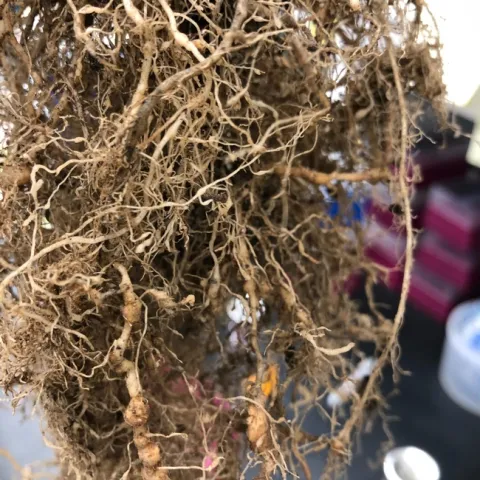
These tomato roots have been infected with southern root-knot nematodes (Meloidogyne incognita). The microscopic roundworms form galls or "knots" where they feed, ultimately stunting the plants and reducing yield.(Image by Murli Manohar, a senior research associate at BTI)
Entomology & Nematology News: Article

How Plants Speak 'Nematode Language' for Self-Defense

January 10, 2020
UC Davis nematologist Valerie Williamson participated on the research team led by the Boyce Thompson Institute (BTI), Ithaca, N.Y., that revealed how plants manipulate nematode pheromones to repel infestations.
View Article
Primary Image
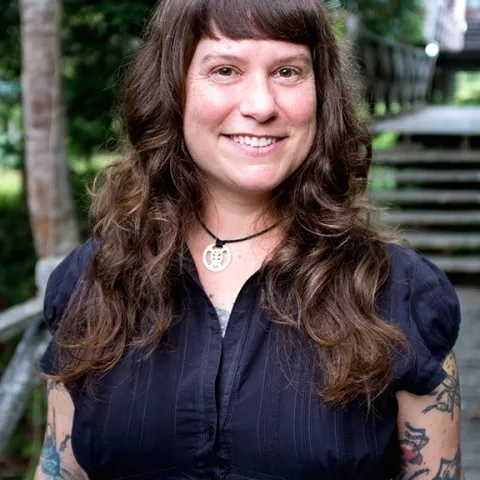
Noted entomologist Corrie Moreau (Photo by Roberto Keller-Perez)
Entomology & Nematology News: Article

Ant Specialist Corrie Moreau of Cornell to Speak on 'Evolution of Ants'

January 10, 2020
Noted entomologist and ant specialist Corrie Moreau will present a UC Davis Department of Entomology and Nematology seminar, "Piecing Together the Puzzle to Understand the Evolution of the Ants: Macroevolution to Microbiomes" from 4:10 to 5 p.m., Wednesday, Jan.
View Article