Forest Research and Outreach Blog

Primary Image
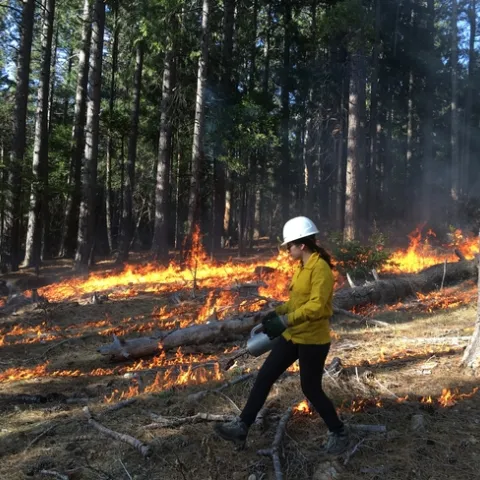
Lighting a prescribed fire. Photo courtesy of Susie Kocher, UC ANR
Forest Research and Outreach Blog: Article

Should I burn? Consider a Prescribed Fire Go/No-Go Checklist Before You Begin

February 18, 2022
By Kimberly C Ingram
Private forest landowners in California are increasingly interested in using prescribed fire for vegetation management. When properly done, prescribed fire can be used effectively in many different vegetation types, at different times of the year and under different weather conditions.
View Article
Forest Research and Outreach Blog: Article

Lessons on wildfire resilience from a 4,000-acre forest lab

February 2, 2022
Reposted from the UC Berkeley News In his years managing California woodlands, Rob York has come up with a few quick and easy ways to gage whether a forest is prepared for wildfire. The first question I like to ask is, Can you run through the forest?' York says.
View Article
Forest Research and Outreach Blog: Article

Just what is a ‘resilient’ forest, anyway?

January 20, 2022
Reposted from UC ANR news What does a resilient forest look like in California's Sierra Nevada? A lot fewer trees than we're used to, according to a study of frequent-fire forests from the University of California, Davis.
View Article
Primary Image
riparian area with fuels treatment
Forest Research and Outreach Blog: Article

Fuels Management in Creeks and Streambeds

December 10, 2021
By Kimberly C Ingram
There is increasing concern about fire hazard from fuels accumulation in riparian areas and what forest landowners can do to manage these areas. Riparian vegetation and forests have ecological importance in terms of water quality and quantity, and wildlife and aquatic habitat.
View Article
Forest Research and Outreach Blog: Article

Study shows climate-driven forest fires on the rise

November 22, 2021
Reposted from UC Merced News Credit: CalFire Firefighters in the 2021 Monument Fire in Shasta-Trinity National Forest An upside of the increase in forest fires in the West is that they reduce the amount of fuel available for other burns.
View Article