


California native plants can add beauty to your garden, reduce your water use and support the native wildlife. All good! This blog discusses why native plants are important, the communities in which they naturally grow and how that knowledge can guide your plant selection.
Why California Native Plants are Important
The California Floristic Province, or CFP, consists of most of California (70% of California is included; desert regions are excluded), as well small portions of Baja California and southern Oregon and a sliver of western Nevada. It’s considered a biodiversity hotspot, because it holds many plant species that are found nowhere else and those plants are under threat. Sixty-one percent of the almost 3500 vascular plant species in the CFP are endemic to the CFP, meaning they occur nowhere else in the world. (A vascular plant has a system of veins that conducts water and nutrients throughout the plant.) The threats facing plants in the CFP include urbanization, introduction of invasive species, reduction of suitable habitat and others.
Native plants are plants that have developed over hundreds or thousands of years in a particular region or ecosystem, prior to humans or their animals entering it. The National Resources Conservation Service talks about these plants being “a part of the balance of nature.”
These plants co-evolved with the birds, insects and other wildlife to meet one another’s needs. So overall native plants meet the needs of wildlife more efficiently than introduced plants. While native plants still grow in our natural areas, natural areas have diminished and continue to diminish and have become highly fragmented. Planting natives in our own planting areas gives wildlife a place to thrive in between. Some non-native plants also host wildlife, but overall the natives provide more benefits to our native wildlife - particularly birds and insects.
Because of their long history in the region, many native plants are adapted to our summer-dry climate and can survive periods of drought. Also, they generally don’t require fertilizers, pesticides or high levels of maintenance.
Non-natives that grow well in our area (such as many originating from Australia and South Africa) can sometimes out-compete native plants, take over natural communities and eliminate the natives. This can happen because the diseases, pests, foraging animals or weather that restrained them in their native range are absent here. Non-native plants are considered invasive if they:
- Are fast growing and easy to spread, by producing lots of seeds that travel widely by wind, water, animals or even shoe soles.
- Are tough and adaptable, growing in many different environments and soil types.
- Have no natural enemies, remaining unharmed by local animals, insects, and diseases.
Plant Communities
A plant community in nature is a group of plants that typically grows together in similar environmental conditions. Your local plant community is a good guide to the plants that will thrive in your geographic area, and are likely to attract local insects and other wildlife. Growing plants that naturally exist in the native plant communities where your garden is located increases your odds of success.
There are a variety of definitions of plant communities. This post uses a composite of the broad definitions used in Calscape and the more regional book Plants of the San Francisco Bay Region, by Beidleman and Kozloff, which treats our Alameda county in more detail. The most common natural plant communities in Alameda County follow:
Coastal Prairie, Scrub and Forest
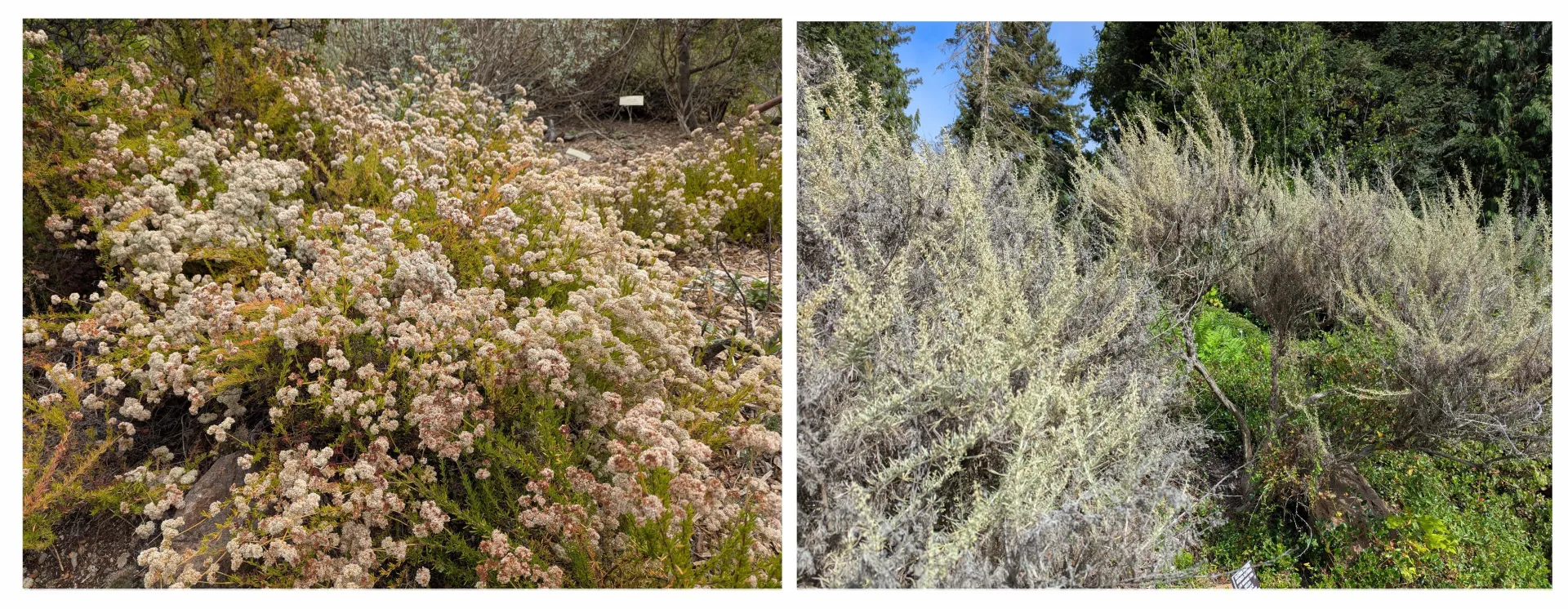
One or both of the coastal prairie and coastal scrub communities are found in Albany, Berkeley, Castro Valley, Fremont, Hayward, Oakland, Newark, San Leandro, San Lorenzo, Union City. All of these communities grow relatively close to the coast, in areas where temperatures are moderated by fog, and tend to be interspersed with one another.
In the prairie, the plants are mostly grasses and wildflowers, including California and Idaho fescue, bluedicks, yellow mariposa lily and Douglas iris. In the scrub, the plants are grassland plants plus low shrubs sometimes called “sub-shrubs”. Characteristic plants include sages, buckwheats, and sagebrush. In Oakland and Berkeley, Oak Woodland also mixes into this open coastal scrub.
Chapparal
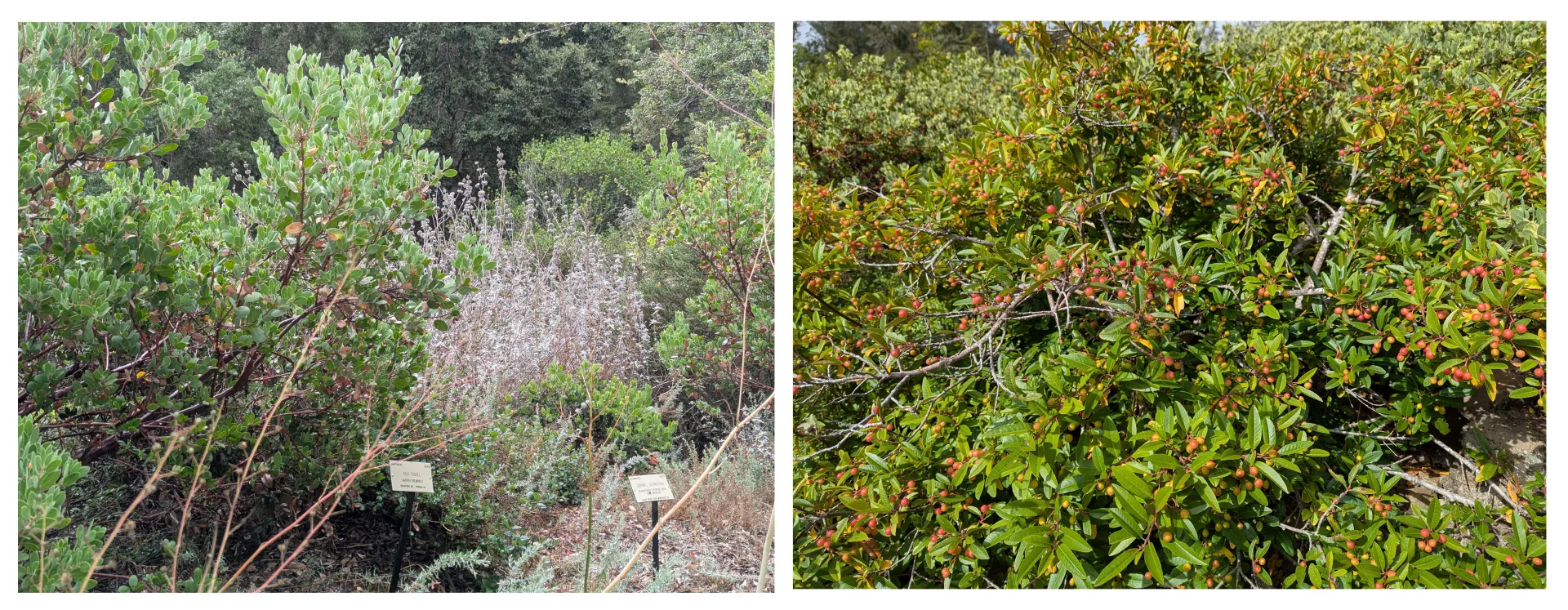
This community thrives in steep, hot, dry areas with shallow, well-drained, even rocky soil. Chaparral can be found in many areas of the county, but is most common east of the East Bay hills. Characteristic plants are toyon, chamise, and the majority of manzanitas.
Grassland

Native grasslands were once common in our inland valleys, including parts of the Pleasanton and Livermore areas, but are no longer abundant. Their plants include perennial bunchgrasses and sedges, and many wildflowers, like checkerbloom, blue-eyed grass and white mariposa lily.
Valley and Foothill Oak Woodland
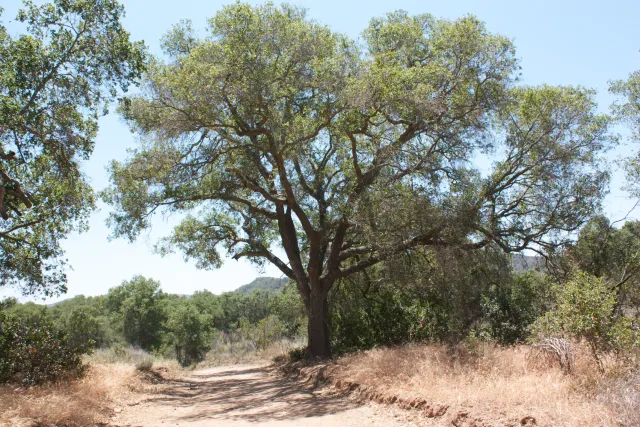
Alameda County’s Valley and Foothill Woodlands are located primarily in East County at an elevation from 300 to 3500 feet. They include several species of oaks, including valley oak, coast live oak, and canyon live oak, and also include buckeye, toyon and shrubs. These woodlands have many gaps in their canopies, so they offer a variety of microhabitats formed by the patterns of shade and sun. Oak woodlands are also threaded among other plant communities in Oakland and Berkeley.
Forests
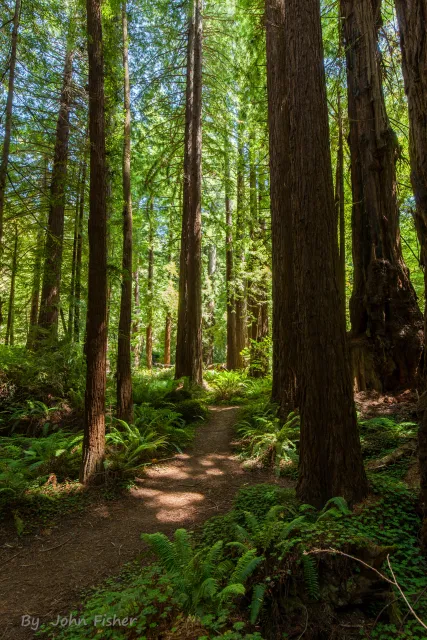
We have both mixed evergreen forest and redwood forest in Alameda County. Unlike woodland, forest has a dense canopy with few gaps. Our redwood forests are in the Berkeley and Oakland Hills; this community is of course dominated by redwood trees, but it also includes smaller plants that need a cool, damp and shady environment, like Redwood Sorrel, Western Sword Fern and Rhododendron. Those two cities, plus Castro Valley, also host mixed evergreen forest, with both evergreen and deciduous trees and shrubs. Common plants are california bay, tan oak, big leaf maple, coast live oak, coffeeberry and oregon grape.
Wetlands
Alameda County’s year-round wetlands occur within one of the communities described above, but in the different habitat found right along rivers and streams. These riparian plants require the reliable presence of water at or near the surface. The community includes western sycamore, seep monkeyflower and Fremont cottonwood.
Plant Communities and Selecting Natives
Determining your location’s plant community gives you an idea of plants likely to do well in your garden, but there is more flexibility than you might think. Many favorite native plants or their close relatives grow in more than one community. Most native gardens will end up including one or more species from each of these genera: sage, manzanita, buckwheat and ceanothus, which is sometimes called California lilac. Each of these genera contain many different species that meet many different needs. Here is one from each “staple” group and some extras.
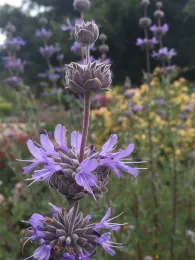
Cleveland Sage
Salvia Clevelandii
Cleveland Sage is found in Coastal Scrub and Chaparral communities. Its tubular flowers draw hummingbirds; it also attracts butterflies, bees and moths. It is evergreen, deer resistant, 3 to 4 feet tall and 8 feet wide, and flowers in spring and summer. This sage grows in full sun and partial shade. Once established, it should receive no summer water. Smaller Cleveland Sage cultivars ‘Winnifred Gilman’ and ‘Alan Chickering’ may fit into your garden space more easily.
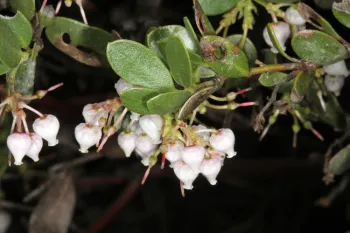
Vine Hill Manzanita
Arctostaphylos densiflora
Vine Hill Manzanita is also found in Coastal Scrub and Chaparral. Hummingbirds are attracted to the small flowers, and the plant supports birds and butterflies. The plant is evergreen, 3 feet tall and 6 feet wide, and flowers in winter and spring. Near the coast, the plant does better in sun; inland, it can thrive in sun or part shade. Once established, it should be watered no more than twice a month. It can be pruned in late summer to manage its size and shape.
Red-flowered Buckwheat
Eriogonum grande var. Rubescens
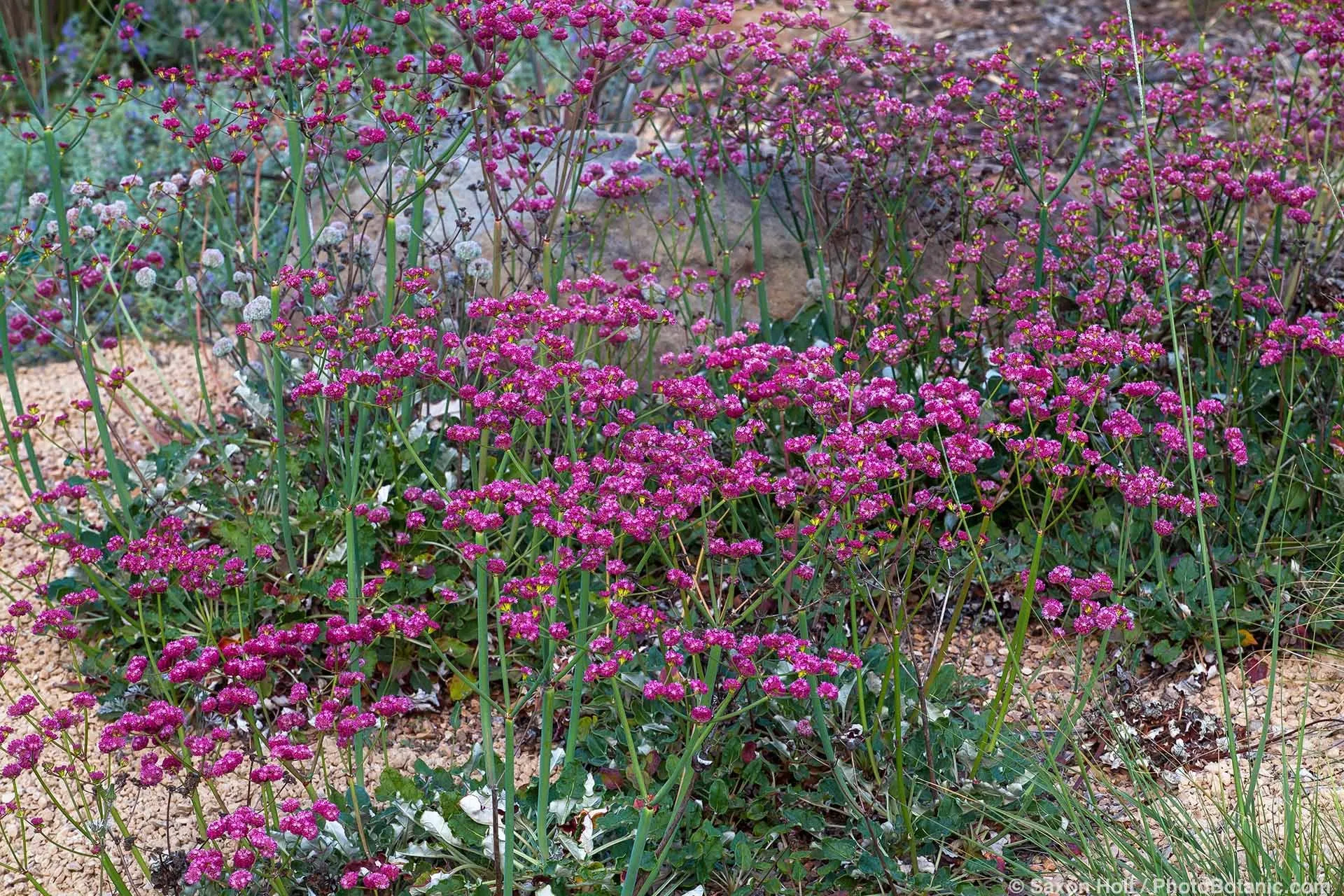
This brightly colored buckwheat is found in chaparral and coastal scrub. It is attractive to many types of pollinators, particularly butterflies. The plant is evergreen, compact, between 8 and 18 inches fall and 3 feet wide. It blooms over spring, summer and fall and is deer resistant. Once it is established, it does best in full sun with a small amount of summer water.
Blueblossom Ceanothus
Ceanothus thyrsiflorus
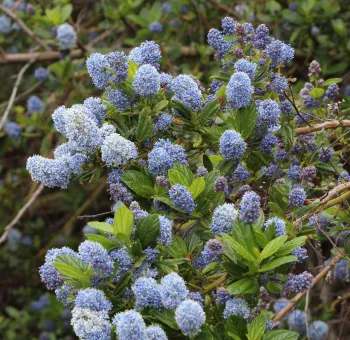
Blueblossom ceanothus can be found in chaparral, mixed evergreen forest, coastal scrub, and redwood forest, mostly along the coast. Its flowers bloom in late winter and early spring, making them an important early source of food. Bees are especially attracted to the flowers; the seed capsules are eaten by birds and small mammals. In nature, its form and size vary dramatically from mounded shapes only 2 -3 feet tall to more upright shrubs up to 30 feet tall. In its inland range, it prefers partial shade. Near the coast, it prefers more sun and dry locations. In the garden, do not irrigate the plant in summer once established; irrigated ceanothus are usually short-lived.
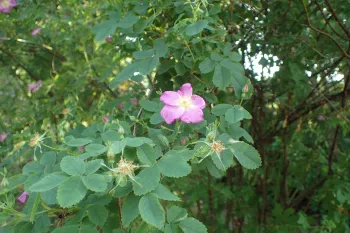
California Wildrose
Rosa Californica
This native rose can be found in grassland and chaparral. It attracts butterflies and other pollinators. It can live in full sun, partial shade or deep shade, but will bloom more with more sun. It grows 8 to 10 feet tall and 10 feet wide and will tolerate annual pruning if needed. Summer irrigation is needed, but once established, a maximum of 3 times per month.
Bush (or Sticky) Monkeyflower
Diplacus aurantiacus
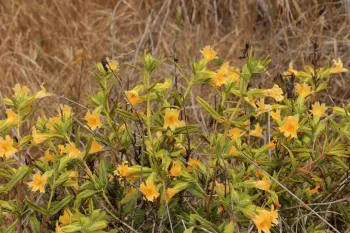
Bush monkeyflowers can be found in chaparral, coastal scrub, and oak woodland. The orange and yellow flower blooms in winter, spring and summer and attracts hummingbirds and bees. The plant is deer resistant and is 4 to 5 feet tall and 5 feet wide. It grows in full sun or partial shade. Deadheading will increase flowering. Once established, summer watering should be limited to 1 to 2 times per month.
Other Factors in Choosing Native Plants
While plant community is important, it is not the only consideration. Other factors to consider:
Climate
Generally, California has wet winters and warm, dry summers, but there is lots of temperature and other climate variability throughout the state. A plant community may live in various parts of our state, with significantly different climates. The Sunset climate zones take into account many climate factors: length of growing season, timing and amount of rainfall, winter lows, summer highs, wind, and humidity. You can use these Zones to determine what’s likely to be successful here.
Sun
Plants, including native plants, have different needs for sun exposure. You can measure how much sun is in various parts of your garden by taking a photo each hour during daylight. It is likely that your garden will have different amounts of sun in different seasons and that some parts will be sunnier than others. Full sun means 6 or more hours of direct sunlight daily; partial shade means 4 to 6 hours a day and deep shade means less than 3 hours of sun a day..
Soil Type
Soil is typically classified as clay, loam or sand, with lots of intermediate categories. Different native plants need different soil. One way a home gardener can determine their own soil type is the soil ribbon test, explained by this video from UC Davis.
Watering
California native plants generally need much less water than many non-natives. When adding natives to an existing irrigated garden, you may need to make adjustments for many natives, moving them away from or changing the locations watered by the existing irrigation system. The California Native Plant Society has a great online resource on watering (and not watering) California native plants.

Year-Round Color
Unlike many non-native plants, many natives go relatively dormant in the summer. But it’s not hard to find a combination of natives that together can provide year-round blooms. Manzanitas bloom in winter, and ceanothus in early spring. Red-flowered buckwheat blooms in spring, summer and fall. California fuchsia provides vibrant orange flowers in the dog days of summer and early fall. This resource has lots of good ideas on keeping your garden interesting throughout the year.
That’s a Lot to Consider. How Can I Find Plants That Will Work in My Garden?
Your best online friend for choosing California native plants for your garden is Calscape.org. CalScape is a service of the California Native Plant Society, and uses information from the Jepson Herbarium at UC Berkeley. CalScape provides information about the plant, including its size, form, when it is dormant, color of flowers and flowering season. It also provides information for using it in a garden, including sun, soil and water needs, ease of care, cold tolerance, brief maintenance info and Sunset Zones that are appropriate for it. CalScape also adds information on its natural setting, and the plant communities of which it is a part!
The California Native Plant Society Gardening pages has great links to design tips, prepping and planting, and getting the right plant to the right place.
If you like your information in paper format:
- Plants and Landscapes for Summer-Dry Climates by the East Bay Municipal Utility District has beautiful photos, good horticultural information and a helpful plant catalog. It includes non-natives as well as natives, but the catalog tells you which is native using a cute California map icon. You can find this in many libraries and there is an abbreviated online version on the EBMUD website
- Plants of the San Francisco Bay Region. Beidleman and Kozloff, Revised Edition, 2003
- There are many, many books on gardening with California native plants and gardening. Many libraries have excellent selections of California native plant books. Two to get you started:
- Growing California Native Plants, Second Edition. By Schmidt and Greenberg, 2012
- California Native Gardening: A Month-by-Month Guide. By Popper, 2012 Using our native plant year, starting in October, Popper describes the tasks of each month.
To see native plants in real life, try these gardens:
- East Bay Regional Park Botanic Garden, in Tilden EBRP, Berkeley. The Tilden garden has 10 acres entirely devoted to California native plants.
- University of California Berkeley Botanical Garden, which has a section on California natives.
- From the Master Gardeners of Alameda County: Quarry Lakes Demonstration Garden, in Fremont, the Livermore Demonstration Garden, and the Lake Merritt Trials Garden.
October is prime time for planting California natives. Time to get out in the garden and put this information to use!
Resources
Calscape.org - online hub for information on native plants. A project of the California Native Plant Society
California Native Plant Society Gardening and Horticulture Pages
Las Pilitas Nursery in-depth information on California native plant gardening from a native plant nursery founded in 1979.
Planting California natives Blog post with tips on planting natives from the Master Gardeners of Alameda County
Want to Learn More?
This blog post is brought to you by the Help Desk of the UC Master Gardeners of Alameda County. Subscribe to our blog!
More Help
If you can't find what you're looking for, we're here to help! Visit our Help Desk page to submit your question and see additional ways you can reach us.