

About California's Deserts
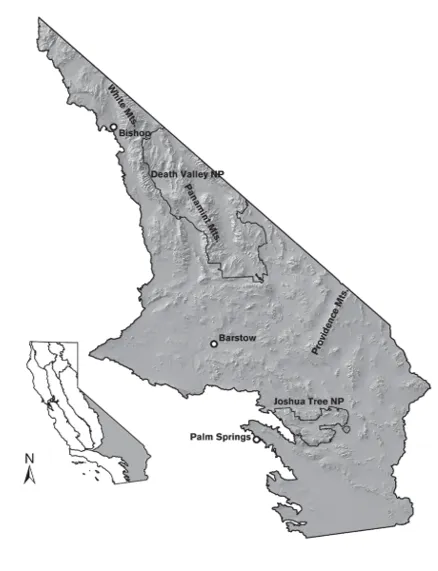
California’s deserts extend from the east slope of the Sierra Nevada to the California border and is characterized by basin and range topography, with steep isolated mountain ranges. Elevations in the southeastern deserts range from almost 300 ft below sea level in Death Valley to over 14,000 ft in the White Mountains. The region includes five deserts: the Mojave, Sonoran, and Colorado Deserts; Southeastern Great Basin; and Mono section.
In California’s deserts, plant communities change with increases in elevations. Generally, low elevations are hot and dry with sparsely spaced drought-tolerant plants. Mid-elevations have plants that survive drought but not extreme drought. High-elevations are cooler with cold winters where forest species dominate such as firs and pines.
Most of the desert bioregion is arid and has low relative humidity due to being in the rain shadows of the Sierra Nevada, San Gabriel, San Bernardino, and San Jacinto mountain ranges. Precipitation increases locally with increasing elevation, especially over ~6100 ft. Between July and early September, afternoon thunderstorms resulting from the North American Monsoons can develop, concentrating over high terrain in the Colorado and Sonoran deserts. Generally, years that are drier and warmer than normal have larger and more widespread fires.
Precipitation varies annually with differing effects on fuels and thus, fire frequency and extent. Drought can also promote fire spread by increasing the dead woody fuel cover caused by shrub and tree mortality. During years with high precipitation, fine fuel loads may be elevated (especially from invasive grasses) increasing the risk of large wildfires.
Lightning frequency is higher in this bioregion than any other bioregion in California. Most lightning occurs between July to September as a result of the North American Monsoons and summer storms drifting into the Great Basin and Mono sections. While high lightning frequency may have led to a high frequency of natural ignitions, fire spread was historically limited due to the lack of fuels.
Fire History of California's Deserts
Indigenous Burning
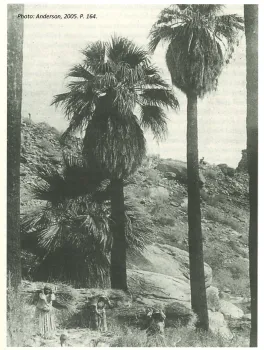
Historically, intentional ignitions from Indigenous people contributed to the frequent presence of fires in these landscapes. The California deserts are the ancestral lands of many Indigenous tribes that still steward these lands today, including the Cahuilla, Eastern Mono, Northern Paiute, Tubatulabal, and Western Shoshone tribes to name a few. Tribes burn for many reasons, including: managing pinyon pine nut resources—an important food source for many tribes in the region, helping convert Colorado river floodplains for farming, promoting high water yield, promoting the growth of food and fiber plants at springs and seeps, including California fan palm oases, and cultural and ceremonial purposes. To learn more about other Indigenous tribes in the California Desert region, visit https://native-land.ca/.
Historic Fire Occurrence
The fire history of California’s deserts is not as well-known. While high lightning frequency may have led to a high frequency of natural ignitions, fire spread was historically limited by low fuel availability. The introduction of livestock from Euro-American settlers generally reduced perennial plant cover, particularly perennial grasses. These effects on vegetation may have led to reduced fire behavior and spread in cooler desert regions. Generally settlement coupled with the forceful removal of Indigenous fire practitioners led to a reduction in the presence of fire in the region.
In the last 50 years, the amount of perennial plants has slowly increased and annual plants has dramatically increased. The increase of fine fuels has led to the presence of larger fires (> 6,000 acres) in the region. Some of the largest fires in the region can be attributed to nonnative annual grasses such as cheatgrass (Bromus tectorum) and red brome (Bromus madritensis) quickly spreading fire to older pinyon-juniper woodlands and shrubs. Additionally the impacts of climate change and increase in human-caused ignitions in the region has altered the frequency and intensity of fires.
Fire Ecology of California's Deserts by Ecoregion
Fire in Low- an Mid-Elevation Deserts
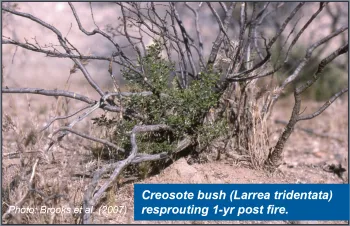
Low-elevation deserts have the lowest fire frequency within the bioregion due to low surface fuel loads and continuity. Most shrub species do not survive after being completely consumed by fire due to a large dead fuel component and drought-adaptive features—such as thin bark, shallow roots, and small leaves, but fires are often patchy and of low intensity, with plants surviving in unburned islands. Lower fire temperatures between plants and higher temperatures beneath woody shrubs likely result in higher seedbank mortality for annual plants that thrive beneath woody shrubs.
Though lightning strikes can be common due to summer storms, they do not always result in wildfire spread in low elevation deserts. Fire behavior and historic fire regimes were affected mainly by the ephemeral production of find fuels from annual plants. Years of high winter and spring precipitation can increase the continuity of fine fuels by stimulating the growth of annual plants that fill interspaces and allow fire to spread between more established perennial plants. Increasing human-caused ignitions coupled with changes in fine fuel loads and continuity due to the invasion of nonnative annual grasses have driven increasingly frequent, large, and severe fires. While some species, like creosote bush, can resprout following fire, native plants in this zone, altogether, tend to be slow to re-establish following fire. It may take centuries for vegetative communities to recover, making fire prevention and management of nonnative annual grasses critical for preserving these ecosystems.
In mid-elevation deserts, surface fuel loads can be higher and more continuous, resulting in higher intensity fire with more top-kill. Although native perennial vegetation may be sufficient to carry fire during extreme fire weather conditions in this zone, again, the introduction and proliferation of nonnative annual grasses have altered fire regimes by increasing fire size and frequency.
Fire in High-Elevation Deserts
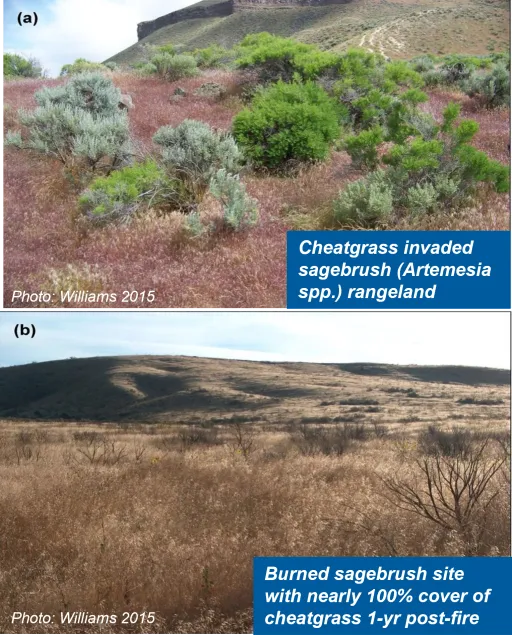
In high-elevation deserts, the highest fuel loads and fuel continuity occur where sagebrush scrub and chaparral dominate and in closed pinyon-juniper woodlands. Because high-elevation fuels are woodier, they are more difficult to ignite but can result in larger, more intense fires under extreme weather conditions.
Relatively high fuel loads result in high fire intensity, but plant mortality rates vary widely among species. High plant cover and prevalence of steep slopes facilitate the spread of fire. Fires can occur almost any year in sagebrush steppe, but the probability of wildfire increases when precipitation and woody fuel moisture are low or when precipitation and fine fuel loads (cheatgrass and native forbs) are high. As with the low- and mid-elevation zones, the introduction of nonnative annual grasses has significantly altered the fire regimes of vegetation throughout this zone.
Historically, the fire regime of sagebrush-dominated ecosystems in the high desert was characterized by relatively large, patchy to complete fires at long fire return intervals that allowed time for sagebrush to recover. However, the introduction of nonnative annual grasses—especially cheatgrass—among other factors, threatens big sagebrush ecosystems and approximately 50 percent of sagebrush rangelands in the western US have been lost since the 1800s. Similar to the impacts of red brome on fire return intervals in the mid-elevation desert zone, cheatgrass readily invades following fires, shortening fire return intervals and spurring conversion from sagebrush to nonnative annual grassland.
In pinyon-juniper woodlands, fire spread is associated with low fuel moisture, low relative humidity, and high winds. Fires spread through woody and herbaceous surface fuels and occasionally torch woodland fuels, especially younger trees. The historic fire regime for this plant community was characterized by relatively large, patchy to complete moderate severity fires with long fire return intervals.
Fire in Montane Ecosystems
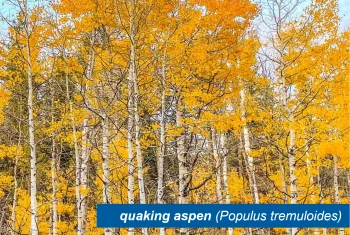
There are four general vegetation types in the desert montane zone: (1) Mixed-conifer forests (primarily in the Mono section), (2) Bristlecone/Limber pine forests (in the Mono and southeast Great Basin sections), (3) quaking aspen stands (in the Mono section), and (4) small areas of sparse-herbaceous alpine fellfield above timberline (in the White Mountains).
Surface fuel loads and continuity can be very high, facilitating fire spread, although vertical continuity of ladder fuels and horizontal continuity of canopy fuels (trees) are often insufficient to carry fire from surface grasses and shrubs into the crowns of trees. Historically, in mixed-conifer forests, fire return intervals were short and intensity and severity were low to moderate. The dominant conifer species in this zone all evolved with these fire regimes; which allowed them to develop various fire-adaptive traits. Mixed-conifer forests have undergone significant changes in structure and composition following the onset of fire suppression, historic logging practices, and climate change. Contemporary forest stands with increased stand densities and fuel accumulation are more susceptible to mortality from drought, disease, insects, and other fires. As a result, there is greater potential for high-severity fire due to large amounts of dead fuels.
Fire in Desert Riparian Areas
Fire frequency can be high compared to other ecological zones in the southeastern deserts region due to high surface fuels and the prevalence of humans in these areas. Though fuel loads are continuous and fuel loads are high, these fuels are often too wet to burn. Fires in these areas may not spread as rapidly unless under extreme weather conditions. Species in this zone are generally resilient to fire due to periodic fire coupled with flooding. Species, such as Fremont cottonwood, honey mesquite, and willows typically resprout after being top-killed.
Additional Resources
Check out these resources below to learn more about fire ecology and history in California's Deserts!
- Brooks, M.L., R.A. Minnich, and J.R. Matchett. 2018. Southeastern Deserts Bioregion. In van Wagtendonk, J. W., N. G. Sugihara, S. L. Stephens, A. E. Thode, K. E. Shaffer, J. A. Fites-Kaufman (Eds.), Fire in California’s Ecosystems. 353-380.
- van Wagtendonk, J. W., N. G. Sugihara, S. L. Stephens, A. E. Thode, K. E. Shaffer, J. A. Fites-Kaufman. 2018. Fire in California’s Ecosystems (2nd ed.). University of California Press. https://www.ucpress.edu/books/fire-in-californias-ecosystems/hardcover.