
Barry honored with Conservation Impact Award

California Rangeland Trust presented Sheila Barry, UC Cooperative Extension livestock and natural resources advisor for the Bay Area, with its 2025 Conservation Impact Award.
The Conservation Impact Award honors an individual who is not a rancher but has made a significant contribution to rangeland conservation in California. Through decades of research, education and outreach, Barry has helped bridge understanding between urban and rural communities, advancing the public’s appreciation of the ecological and social value of grazing and working rangelands.
“Sheila’s research has helped connect people from all walks of life to the land,” said Rangeland Trust CEO Michael Delbar. “Her leadership has strengthened collaboration between ranchers, conservationists, and communities, ensuring that rangelands remain a vital part of California’s landscape.”
During Barry’s 30-year UC ANR career, her research has highlighted the ecological benefits of grazing, from reducing wildfire fuels to supporting biodiversity and maintaining healthy soils. She has also studied public perceptions of grazing and applied that knowledge to developing innovative outreach tools – such as interpretive train signs and educational programs – that resonate with diverse audiences.
“Through her work Sheila has brought ranchers, conservationists and the public together, building trust and collaboration that strengthen the future of rangeland conservation. Her impact on California’s landscapes and communities is both profound and enduring,” California Rangeland Trust wrote in a handout.
She received the award during California Rangeland Trust’s A Western Affair 2025, held on Oct. 4 at Rancho Santa Barbara near Santa Ynez in Santa Barbara County. The gathering brought together 400 supporters, landowners and partners to honor California’s ranching heritage and the families who conserve and care for the land.
Aguilar honored with Nature Champion Award for compost system work
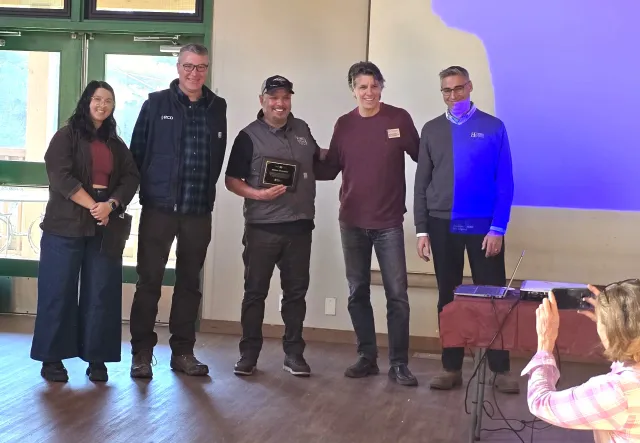
San Mateo Resource Conservation District honored ranch foreman Augustin Aguilar on Dec. 12 with its Nature Champion Award for his compost system work at UCCE Elkus Ranch Research and Extension Center in Half Moon Bay.
The San Mateo Resource Conservation District created the Nature Champion Award to recognize people whose experience and knowledge of what works turn an idea into practice.
Aguilar earned the award for his work on the construction and successful implementation of an Aerobic Static Pile (ASP) composting system at the ranch.
With its many farm animals, Elkus Ranch generates several hundred pounds of manure and spent bedding every week. Composting harnesses microbial activity to transform this waste material into a stabilized, soil-building resource. The ASP system saves labor by periodically blowing air into the pile through perforated pipes, eliminating the need for regular mechanical turning. At the ceremony, both Aguilar and Ranch Coordinator Amy Bono praised the improvement in compost quality that the ASP system has enabled.
Project funding was secured through the efforts of San Mateo RCD conservation technical advisor Doug Millar, working with San Mateo County sustainability specialist Jack Steinmann and others. This project is the first to be funded under California Assembly Bill 2346, which expands the range of eligible investments that local jurisdictions can count toward their state-mandated targets for procuring recovered organic waste products like compost.
Read more at https://ucanr.edu/blog/organic-materials-management/article/nrc-nature-champion-award.
Statewide Programs and REC Operations team visits Sierra Foothill REC
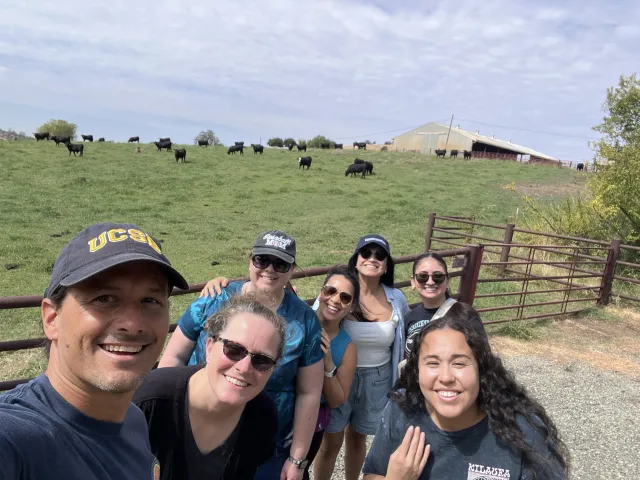

The Statewide Programs and REC Operations team took a field trip to the UC Sierra Foothill Research and Extension Center in September.
“Dustin Flavel, Nikolas Schweitzer and Michele Flavel gave us a presentation on the history of the REC, showed us active research sites, and we went on a tour of some of the more notable locations at the REC,” said Andrea Rayray, research administrator in Statewide Programs and REC Operations.
“The SWPR team really enjoyed our time out at Sierra Foothill,” she said. “It helped us see our part in the work that’s being done at the RECs. To see projects in action, understand why projects and acreage is billed the way they are and get to experience a day in the life of the REC’s was really informative.”
The Statewide Programs and REC Operations team is looking forward to visiting more UC ANR colleagues to see their work.
UC ANR participates in CSAC
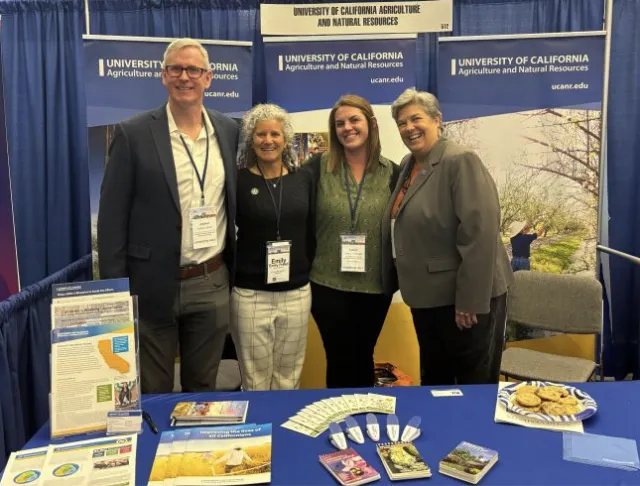
Vice President Glenda Humiston attended the California State Association of Counties annual meeting Dec. 1-5 in San Jose.
“I heard, again and again, CSAC attendees express great respect and gratitude for the UCCE advisors in their communities and for colleagues across UC ANR,” Humiston said.
She was joined by Andrew Miller, area director for UCCE in Contra Costa and Alameda counties; Lauren Cartwright, area director for UCCE in Marin, Napa, Sonoma counties; Emily Freed, area director for UCCE in Monterey, San Benito and Santa Cruz counties; and Anne Megaro, director of government and community relations and interim director of the new UC ANR Policy Institute.
“We participated in the Agriculture, Environmental and Natural Resources Committee meetings, connected with local officials from throughout the state to understand current and discuss future discussions around federal funding impacts and how ANR can continue to be a local resource,” said Cartwright.
Freed said, “I am so proud of the new connections the four of us made at the conference and the in-person conversations we were able to have with our existing county partners. Together, we strengthened the UC ANR and UC Cooperative Extension network across California.”
UCCE Riverside, Orange and San Bernardino holiday potluck celebrates creativity
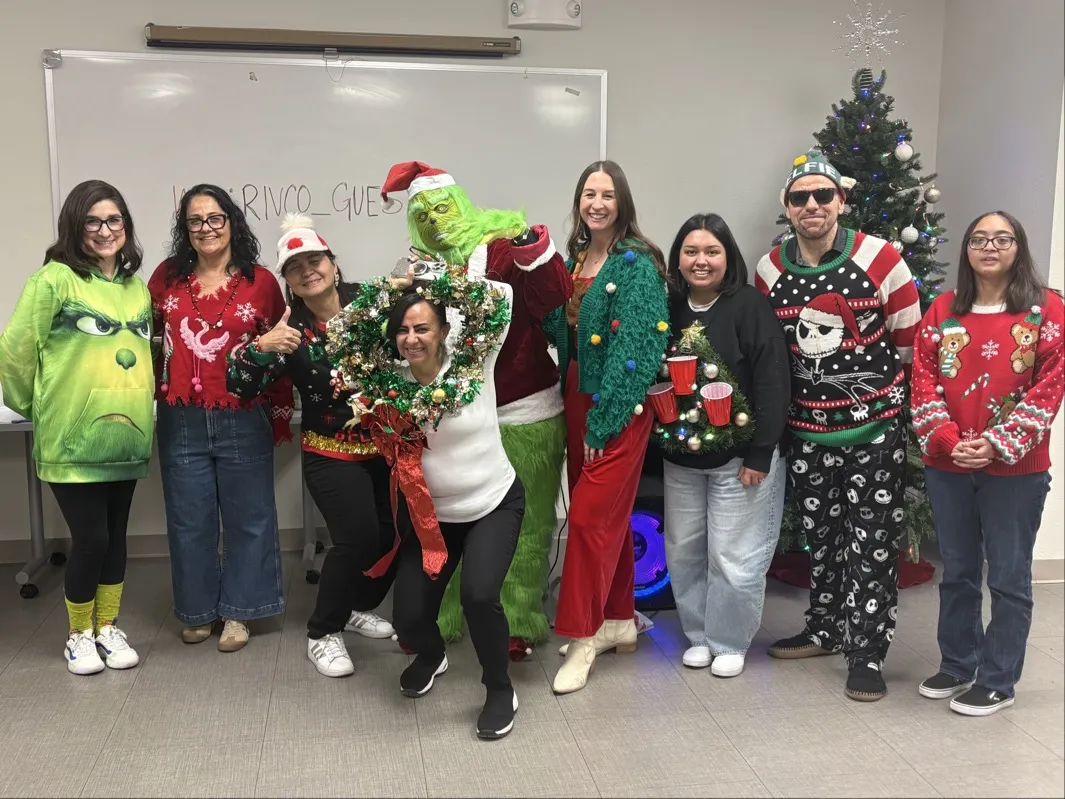
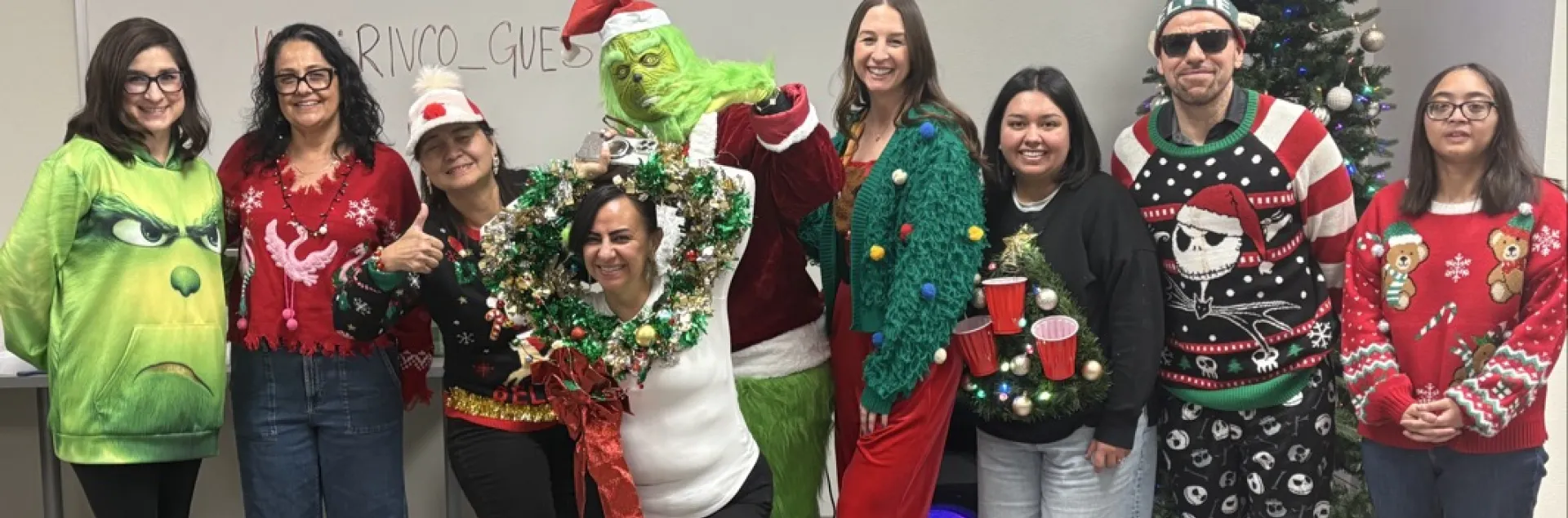
On Dec. 12, UC Cooperative Extension staff from Riverside, Orange and San Bernardino celebrated the holiday season with a potluck feast, Secret Santa gift exchange and light-hearted competition.
UCCE director Rita Clemons and South Coast REC interim director Lindsay Pedroncelli kicked off the event in Riverside by sharing statistics from their counties, recapping the year a la Spotify Wrapped. Some of their achievements: South Coast REC hosted 200 events, meetings and workshops in 2025. Volunteers in the three counties served nearly 100,000 hours, with an estimated value of over $3 million.
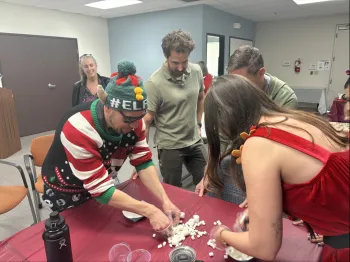
Next, games began. After dividing into teams, groups were challenged to dress one of their members as a snowman, using assorted accessories, wigs, hats and streamers. That was followed by a tournament-style contest to pick up marshmallows with your hands clenched inside plastic cups.
After the potluck lunch, everyone exchanged gifts with the upmost civility. No stealing was allowed! Instead, presents were swapped according to directions from a big foam die the group took turns rolling.