

Are you hanging out beneath the mistletoe? Or know someone who is? Maybe Mommy kissing Santa Claus?
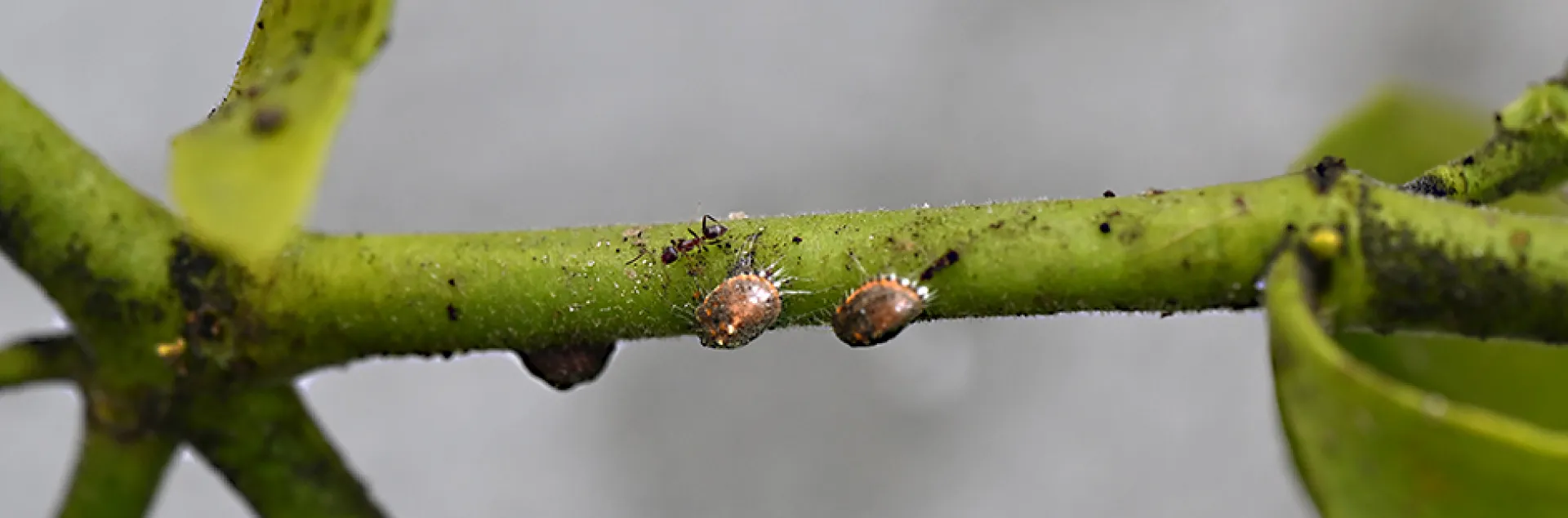
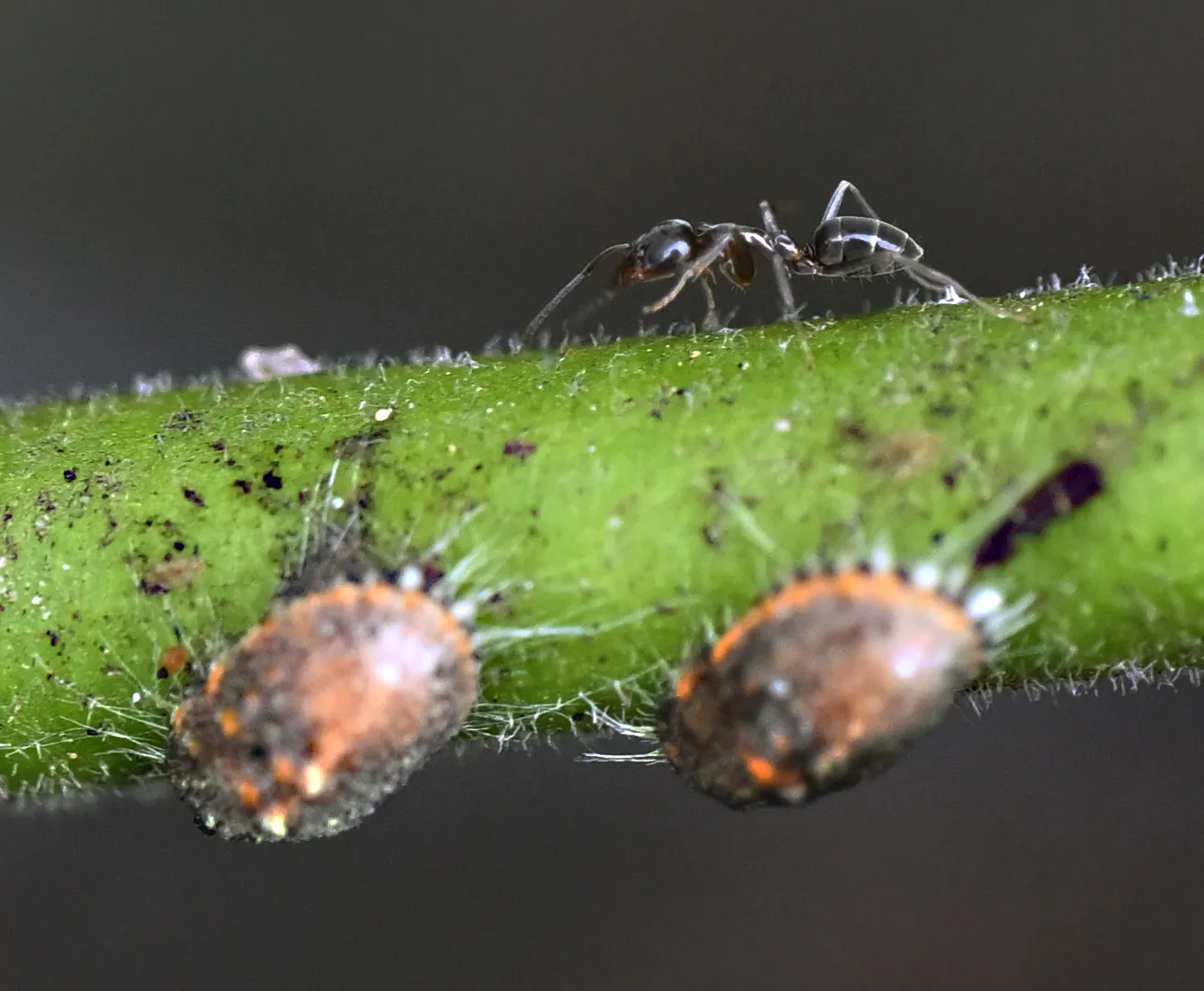
Scales and ants may be hanging out, too.
The two insects maintain a classic mutualistic symbiosis in which ants "farm" scale insects for their sweet honeydew. It's a beneficial arrangement: scales get protection, and ants get a sugary food source.
And you previously thought that mistletoes mean only romance?
Actually mistletoe is a toxic plant. And It's a parasite of plants. Scientists know it as "an obligate hemiparasitic plant in the order Santalales." Mistletoes attach a structure called a "haustorium" to the host plant and steal water and nutrients.
"Mistletoes are parasitic plants that absorb both water and nutrients from a host tree," according to the UC Statewide Integrated Pest Management Program's Pest Note. "Healthy trees can tolerate a few branches infected with mistletoe. However, if the infestation is severe, trees can weaken, have stunted growth or dead branches, or die completely. Symptoms are magnified on trees already stressed by drought or disease. Remove branches at least a foot below the mistletoe attachment before it produces seeds that will infest other limbs and trees."
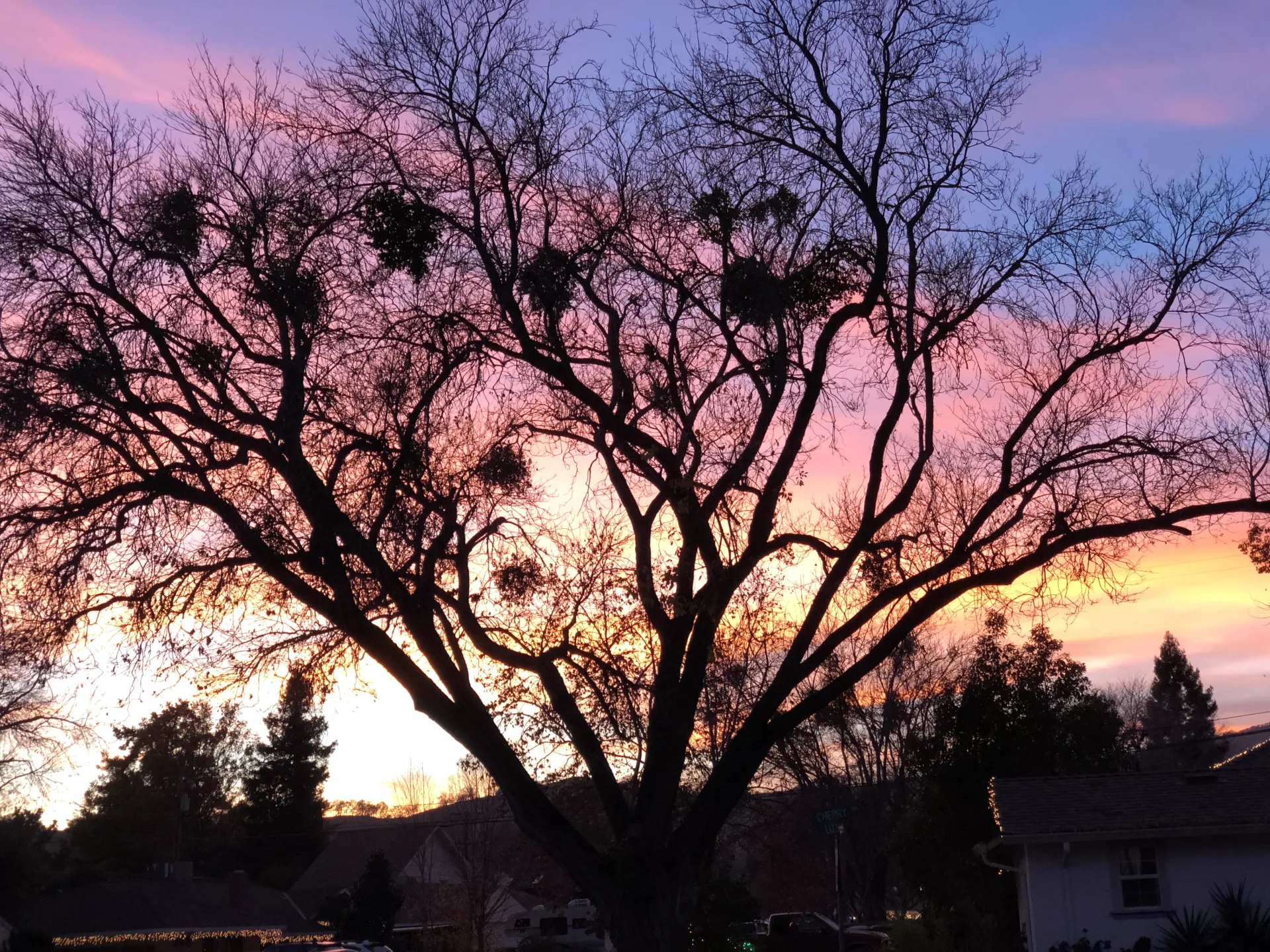
"A severe infestation of broadleaf mistletoe," UC IPM continues, "may occur on an individual tree because when birds spend significant time feeding on berries, they will subsequently spread seeds and new mistletoe plants throughout the canopy. Also, seeds may fall from mistletoe plants in the upper part of the tree, creating new infestations on the lower branches. The rapidity with which mistletoe spreads appears to be related to the proximity and severity of established infestations. Newly planted trees can become quickly infested if they are growing near older, heavily infested trees."
Meanwhile, we happened today upon a twig of freshly dropped mistletoe on a sidewalk by a Vacaville church. Closer examination revealed ants and scales. Professor Phil Ward of the UC Davis Department of Entomology and Nematology, identified the ants as Argentine ants (Linepithema humile).
Argentine ants are NOT the good guys and girls. They're invasive. Native to northern Argentina, Uruguay, Paraguay, Bolivia and southern Brazil, they form massive super colonies and outcompete and displace our native ants and disrupt the ecosystem.
So, bottom line, ants and scales form relationships under the mistletoe, too. Sort of...
Cover image: Ant and scale insects sharing a mistletoe. (Photo by Kathy Keatley Garvey)