

When you sit down at your Thanksgiving table today, thank the bees.
“A substantial portion of the meal is pollinated by the honey bee,” the late Extension Apiculturist Eric Mussen (1944-2022), a member of the UC Davis Department of Entomology faculty and a noted authority on honey bees, told us.
Cole crops, such as cabbage, Brussel sprouts, kale, spinach, chard, and broccoli, are pollinated by bees.
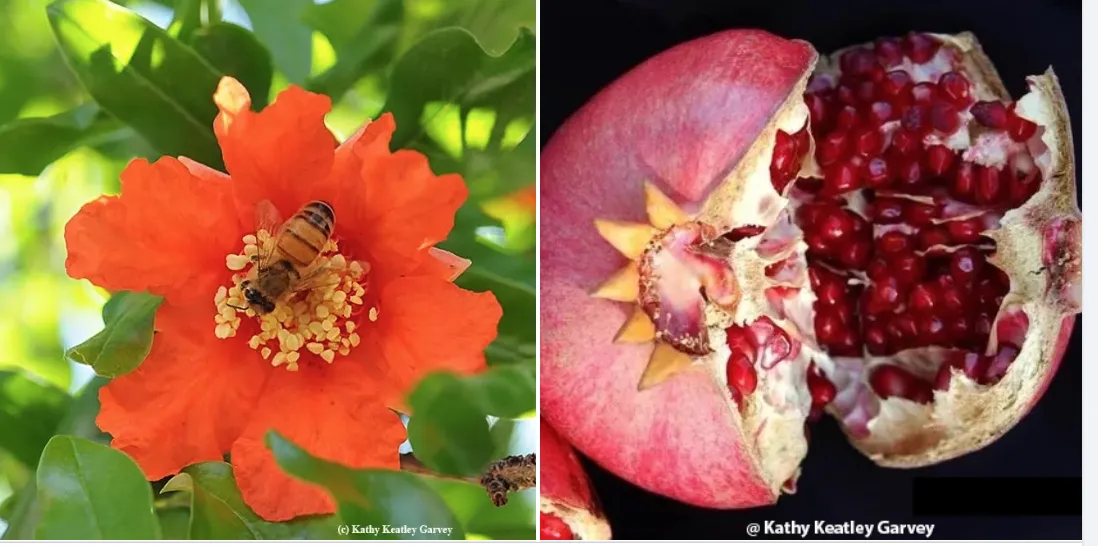
Fruits such as pomegranates, blackberries, apples--and more--are pollinated by bees.
Squash bees specialize in pollinating squash, but the generalists--the honey bees--do, too.
Almonds often garnish parts of the meal, and those, too, are pollinated by bees--along with macadamia nuts.
Even milk and ice cream are linked closely to the honey bee. Cows feed on alfalfa, which is pollinated by honey bees (and other bees). Ice cream ingredients usually include fruits and nuts, other bee favorites.
And the turkey? If it eats sunflower seeds--and it does--sunflowers are pollinated by bees.
Vegetarians can also be thankful. Bees visit soybeans (made into tofu for tofu turkey and other meatless dishes). “And bees can make a honey crop foraging on lima beans,” Mussen told us.
And don’t forget the honey: honey-glazed carrots, honey rolls and honey-baked ham…
Hap-bee Thanksgiving!