
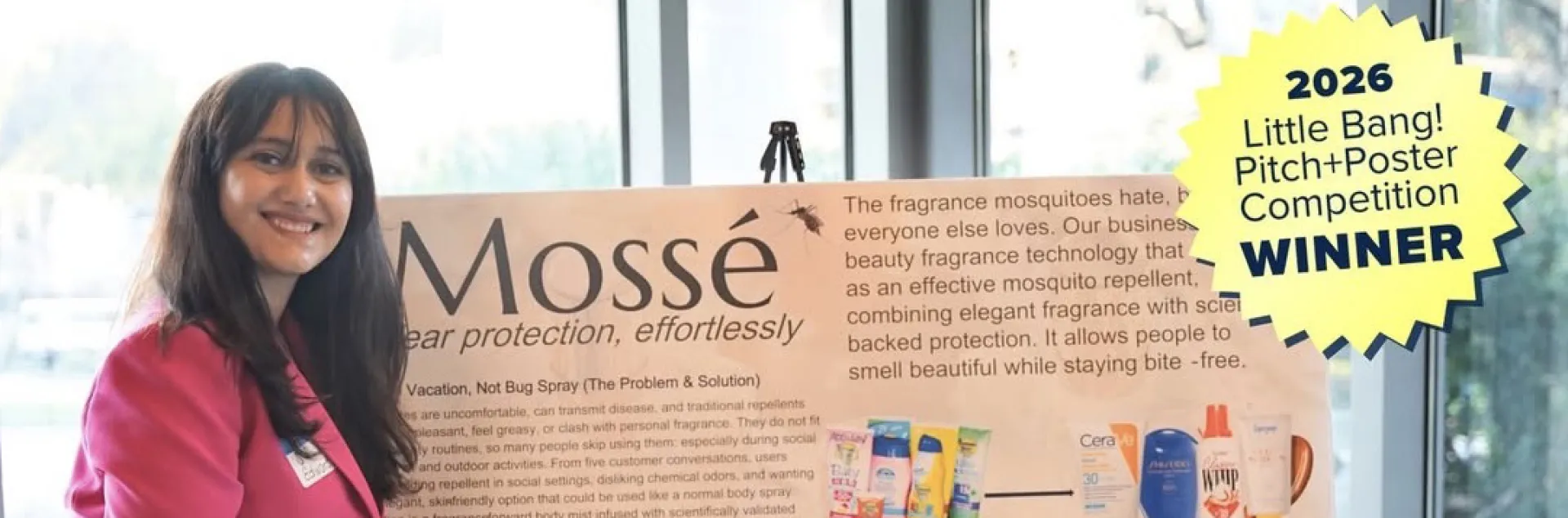
Congrats to UC Davis doctoral candidate, mosquito researcher, and entrepreneur Carla-Cristina ("CC") Edwards.
Edwards just won a $1000 prize from the UC Davis Institute for Innovation and Entrepreneurship’s “Little Bang! Pitch Plus Poster Competition" for her innovative business plan to produce and market a mosquito spray as a cosmetic product.
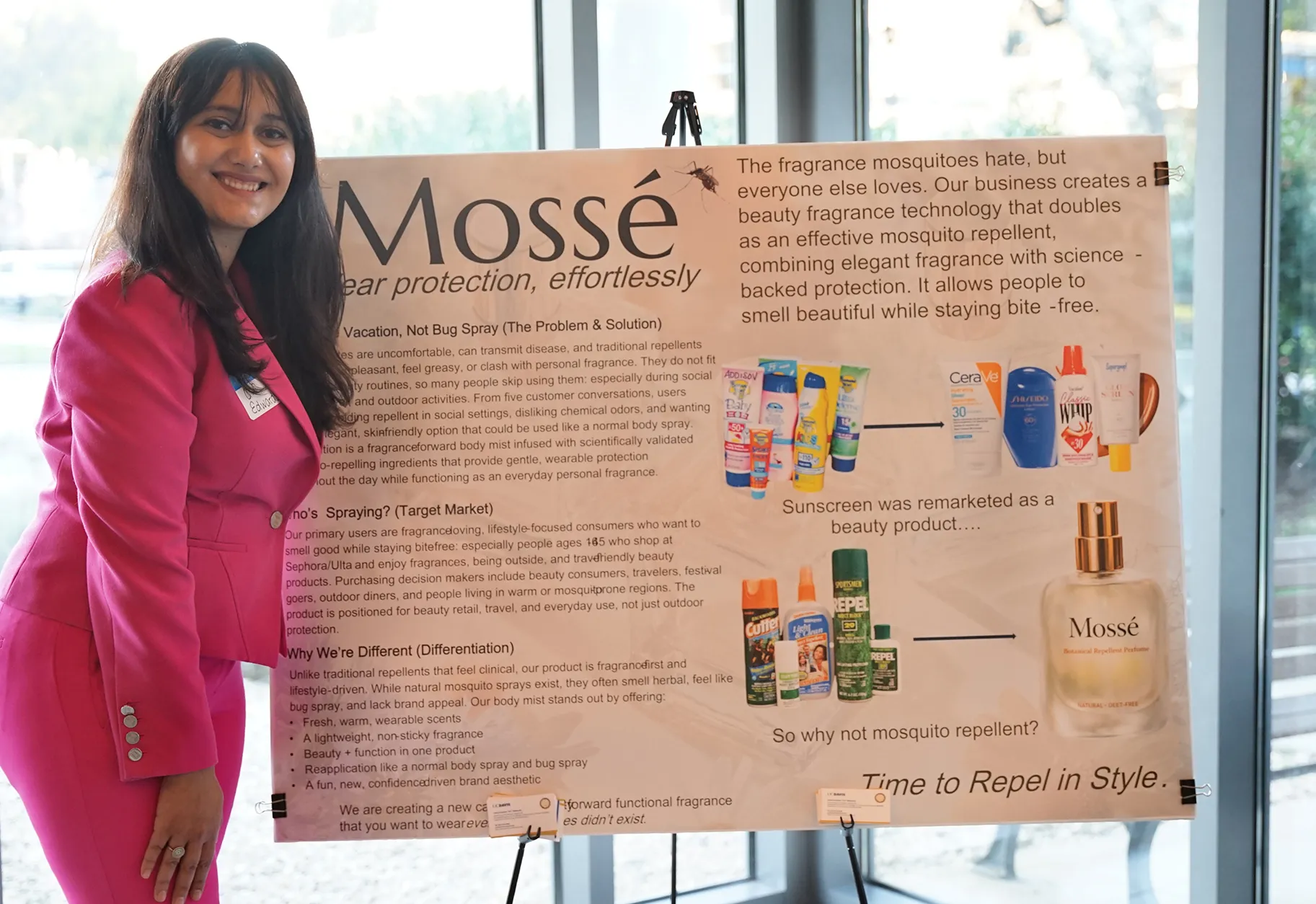
Mosquito sprays generally emit an unpleasant smell, feel greasy, and clash with personal fragrance. Edwards' product would be a non-greasy mosquito repellent with a lightweight fragrance and she'd market it in the cosmetic industry.
"My project, Mossé, focuses on a novel mosquito control concept and its potential real-world public health application," said Edwards, who studies with medical entomologist-geneticist of the Geoffrey Attardo, UC Davis Department of Entomology and Nematology.
"I’m still in the process of developing and protecting some aspects of the idea, so I’m keeping the technical details fairly high-level for now. But overall, the work highlights a new approach to improving protection against mosquitoes and the diseases they can spread.”
“This competition focuses on helping students transform early-stage ideas into clearly defined, real-world solutions through customer discovery, innovation, and concise communication,” Edwards said.
Little Bang! aims to help participants define a business idea and communicate it concisely on a poster. The annual competition is open to all currently enrolled students at the high school, community college, undergraduate, and graduate levels.
“There is a clear demand for better, more user-friendly repellents, and by exploring this niche, CC is also increasing public awareness of the need for protection against mosquitoes and ticks,” commented UC Davis Distinguished Professor Walter Leal of the Department of Molecular and Cell Biology, a former chair of the Department of Entomology. Leal is known for identifying pheromones and mosquito attractants, and elucidating a mechanism of action of the insect repellent DEET.
Attardo said the “Insecticide resistance is an ever-growing problem, and new solutions focused on personal protection rather than vector elimination are the future of vector-borne disease control. Her proposed product leverages the huge existing market for skin care products to facilitate public health benefits.”
"The award highlights her imagination and innovation in developing new ways to reduce the friction in helping people learn to protect themselves from these diseases," Attardo said. "People are already attuned to skin care products, and developing a new product that also protects against vector-borne disease transmission while facilitating outreach and education is ingenious. CC is the perfect person for this approach, as her gregarious, enthusiastic, and engaging nature aligns well with what's needed. Her award is well deserved and speaks to the exciting opportunities ahead for her!”
'Staying Bite Free'
Edwards' poster at the Little Bang competition reads in part: “The fragrance mosquitoes hate, but everyone else loves. Our business creates a beauty fragrance technology that doubles as an effective mosquito repellent, combining elegant fragrance with science-backed protection. It allows people to smell beautiful while staying bite-free.” She said the fragrance blends skin-safe, plant-derived aromatic compounds as well a natural compounds known to deter mosquitoes but won’t overpower the senses.
As part of the competition, Edwards conducted interviews with potential users “to better understand the problem and refine my approach. I then presented my idea through a research-based poster and a 90-second pitch, focusing on how scientific insight can be translated into practical impact.”
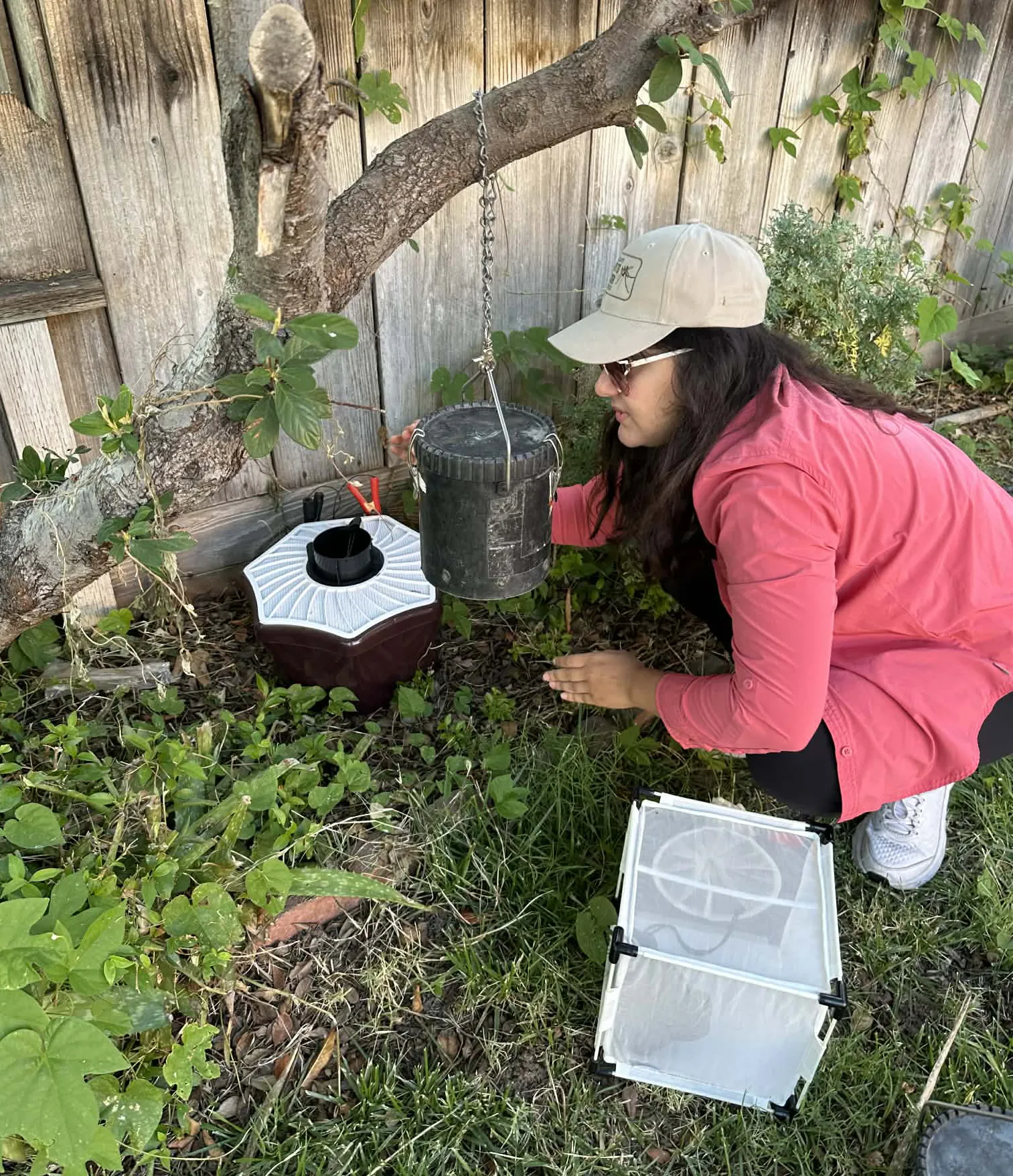
“Participating in Little Bang! was a valuable experience that strengthened my ability to communicate research beyond academia, think entrepreneurially, and consider how my work can create broader societal benefit,” Edwards commented. “I am grateful for the support from mentors and the opportunity to represent our program in an innovation-focused setting.”
Edwards related that she shared her idea with fellow entomologists at the 2024 Entomological Society meeting in Phoenix. Is the technology possible? Yes, they told her, but it would cost millions of dollars from start to finish, with approvals needed from U.S. Environmental Protection Agency and others. “With that and mind, I realized that might be not something that repellent companies might want to pursue. This created the idea that it would be a beauty product and I thought about marketing it with the lens as a cosmetic/beauty product rather than a repellent product, aware that the cosmetic and beauty industry has more money for this kind of research and development. With that, the competition was to present that idea and the project and how to go about that sector, find stakeholders, and market this product to continue the idea further.”
'It's Been a Great Experience'
“From the Little Bang competition, I’ve been able to network and potentially find further mentors in the cosmetic sector that can help the mentorship," Edwards said. "If this product could come to life one day, it probably will take a few years from now, but it’s been a great experience and opportunity to see how science can go into the startup world."
Edwards is now competing for the UC Davis “Big Bang! Competition" prize. Nearly $100,000 in prizes and grants will be awarded to the winners at an awards ceremony and ice cream social set from 5 to 8 p.m., May 19 in the UC Davis Conference Center. The awards:
- $25,000, First Place: Top innovation in the competition
- $10,000, Sector Awards: Recognizing excellence in Food + Agriculture, Animal Health, Human Health, Education, Energy + Sustainability, and Social Entrepreneurship.
- Residency Awards: Two awards valued at $4,000 each to support startups.
Pyrethroid Resistance in Aedes aegypti
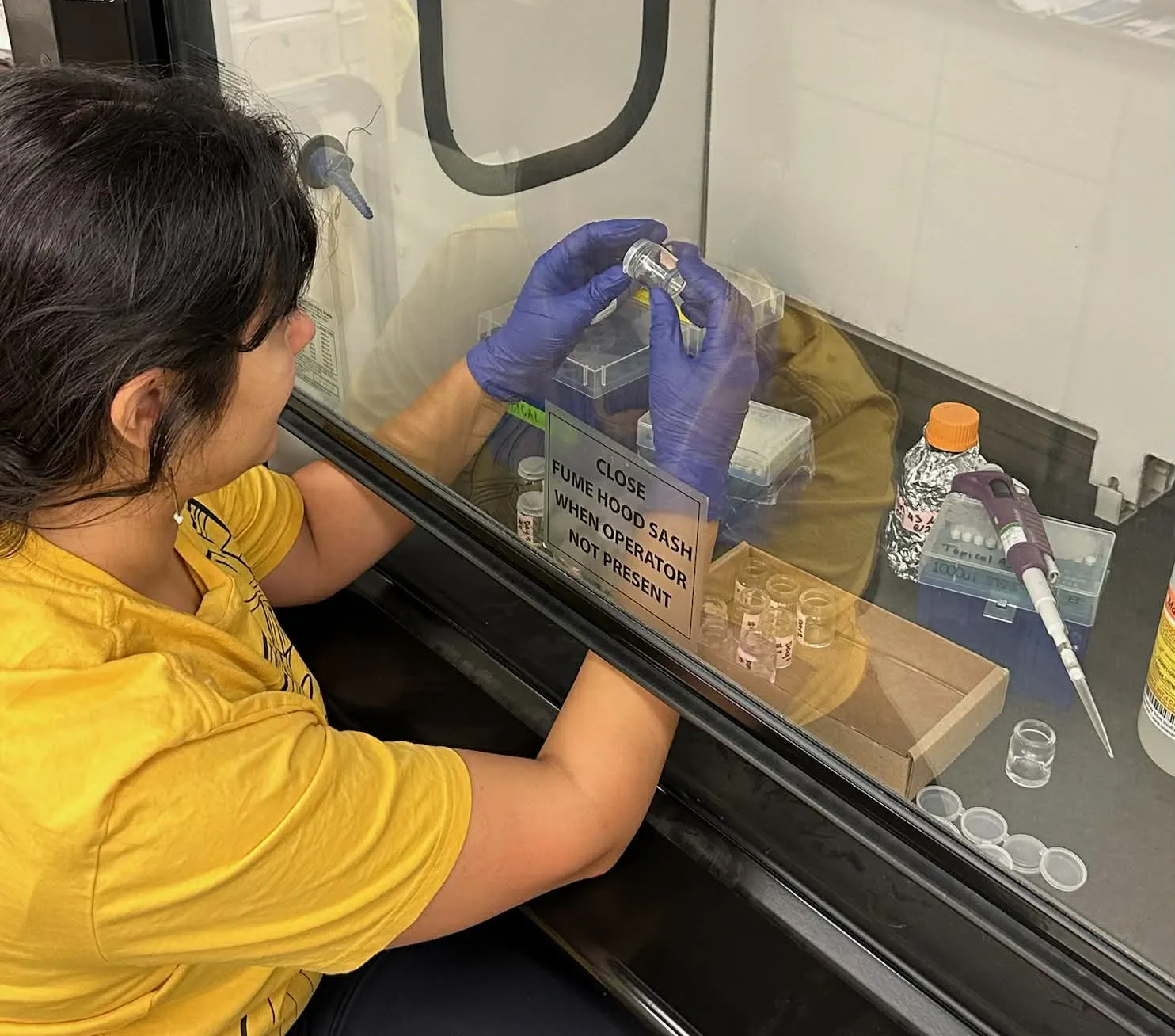
Edwards, projected to receive a 2027 doctorate in entomology, with a Designated Emphasis in the Biology of Vector-Borne Diseases, focuses her research on investigating the physiological mechanisms underlying pyrethroid resistance in Aedes aegypti, the yellow fever mosquito. She was a McNair scholar at Baylor University, where she completed her undergraduate degree in cell and molecular biology in May of 2021.
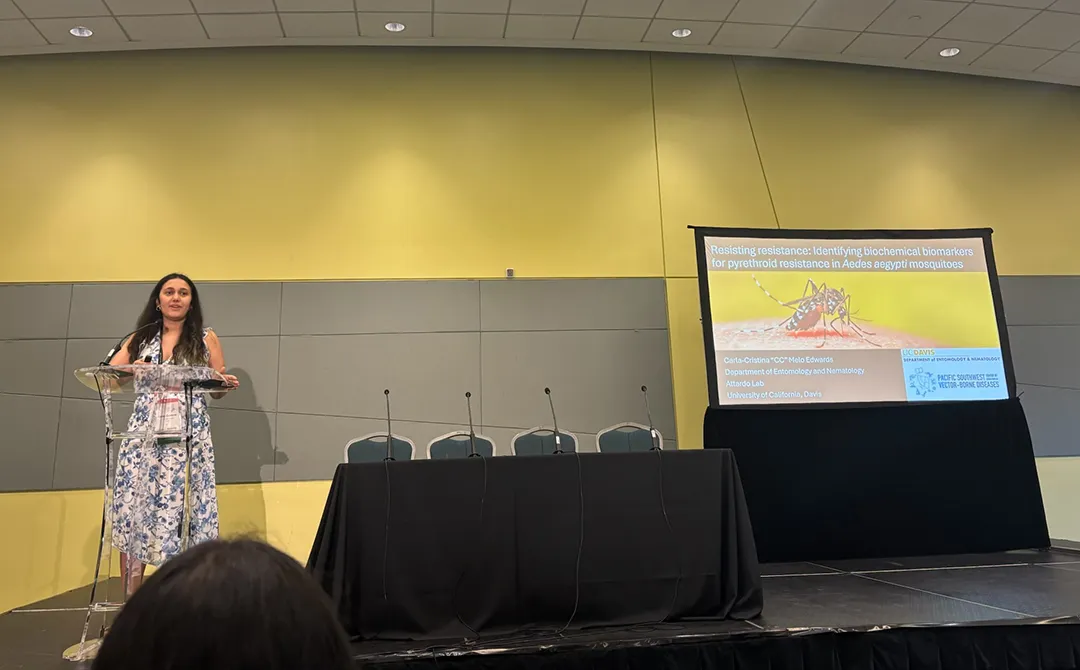
""CC is very passionate about finding new and innovative ways to communicate with and support the public, fellow students, and future scientists regarding vector-borne diseases," said Attardo. :Her work in our lab focuses on understanding the biology and biochemistry of disease vectors with respect to their response to insecticides and environmental stresses."
Edwards' work is widely recognized and supported with fellowships, awards, scholarships and grants. She received the 2023-25 UC Davis Eugene-Cota Robles Fellowship Award, the 2024-25 Pac-Vec Graduate Fellowship Award from the Pacific Southwest Center of Excellence in Vector-Borne Diseases (Pac-Vec is a center funded by the U.S. Centers for Disease Control and Prevention); and she twice received the UC Davis William Hazeltine Research Award. Hazeltine (1926-1994), an ardent supporter of the judicious use of public health pesticides to protect public health, managed the Butte County Mosquito Abatement District, Oroville, from 1966 to 1992, and the Lake County Mosquito Abatement District from 1961-1964.
Edwards, active in the Entomological Society of America (ESA) and the American Mosquito Control Association (AMCA), present talks at their meetings. She chairs the AMCA’s Young Professionals, comprised of more than 500 young mosquito control professionals throughout the nation.
At UC Davis, Edwards serves as vice president of the Entomology Graduate Student Association and as High School Outreach Chair for the UC Davis Society for the Advancement of Chicanos (SACNAS) Graduate/Postdoctorate Chapter.
She is an activity leader and volunteer with the UC Davis STEM Squad and a volunteer at the Bohart Museum of Entomology open houses, Biodiversity Museum Day, and UC Davis Picnic Day.
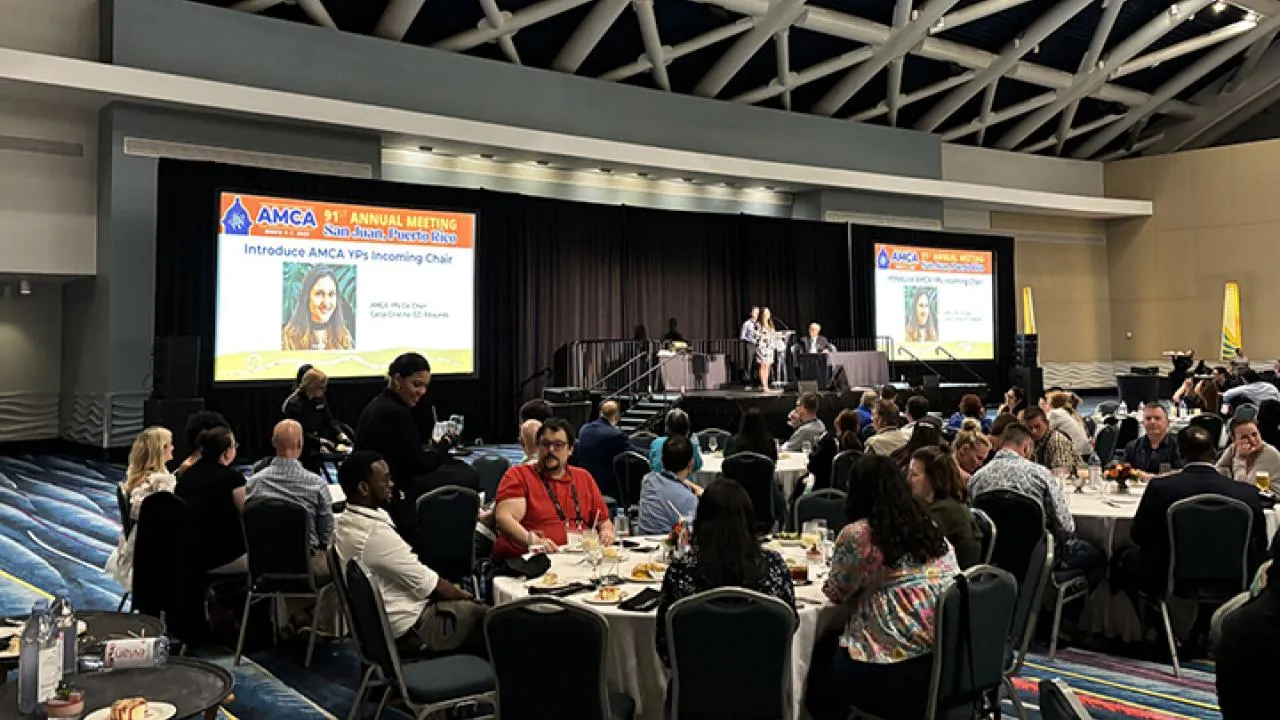
An image of CC Edwards, chair of the American Mosquito Control Association's Young Professionals, is flashed on the screen at a recent AMCA meeting.
Cover image: Doctoral candidate CC Edwards with her winning project. (UC Davis Photo)