A new cockroach in town?
That's what a UC Davis retired professor thought on Tuesday, Dec. 23 when he spotted an unusual cockroach emerging from his shower drain at his Davis home.
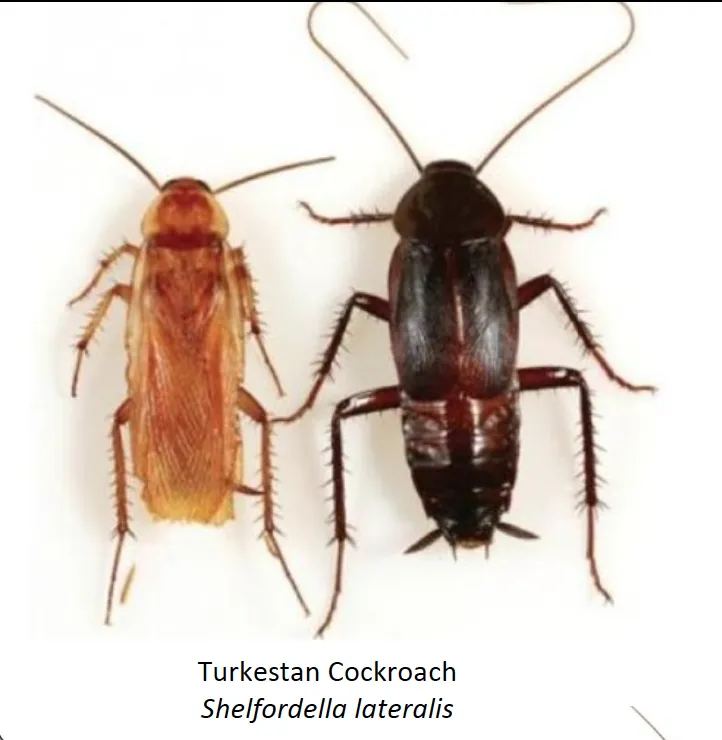
He said he "recognized it as unusual and caught it. It was a male Turkestan cockroach, Blatta lateralis, a species introduced in 1978. It is basically an outdoor cockroach but is known to travel in sewers and drainpipes."
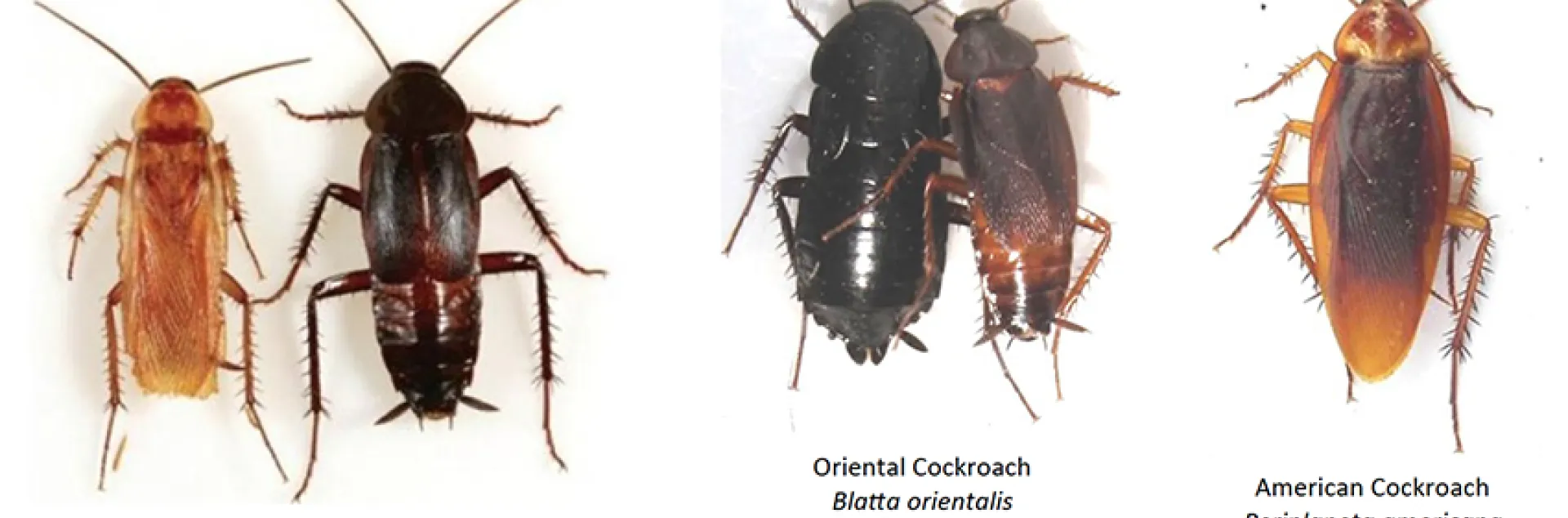
It's also known as Shelfordella lateralis and Periplaneta lateralis. It was first spotted in the United States in 1978 near the 724-acre Sharpe Army Depot, a U.S. Defense Logistics Agency in Lathrop (San Joaquin County), Calif. Scientists believe the species arrived on military equipment returning from Central Asia, perhaps Afghanistan.
UC Davis Distinguished Professor Emeritus Lynn Kimsey, director of the Bohart Museum of Entomology for 34 years until she retired in 2024, said: "Yes, Turkestan roaches have been around for a few years. People usually don't notice them because they're largely outdoor roaches. But they are all over the sidewalks in downtown Davis at night. Right now, there are eight exotic roaches in California, and I just got sent a photo of another that I can't recognize. Yay, international travel...:"
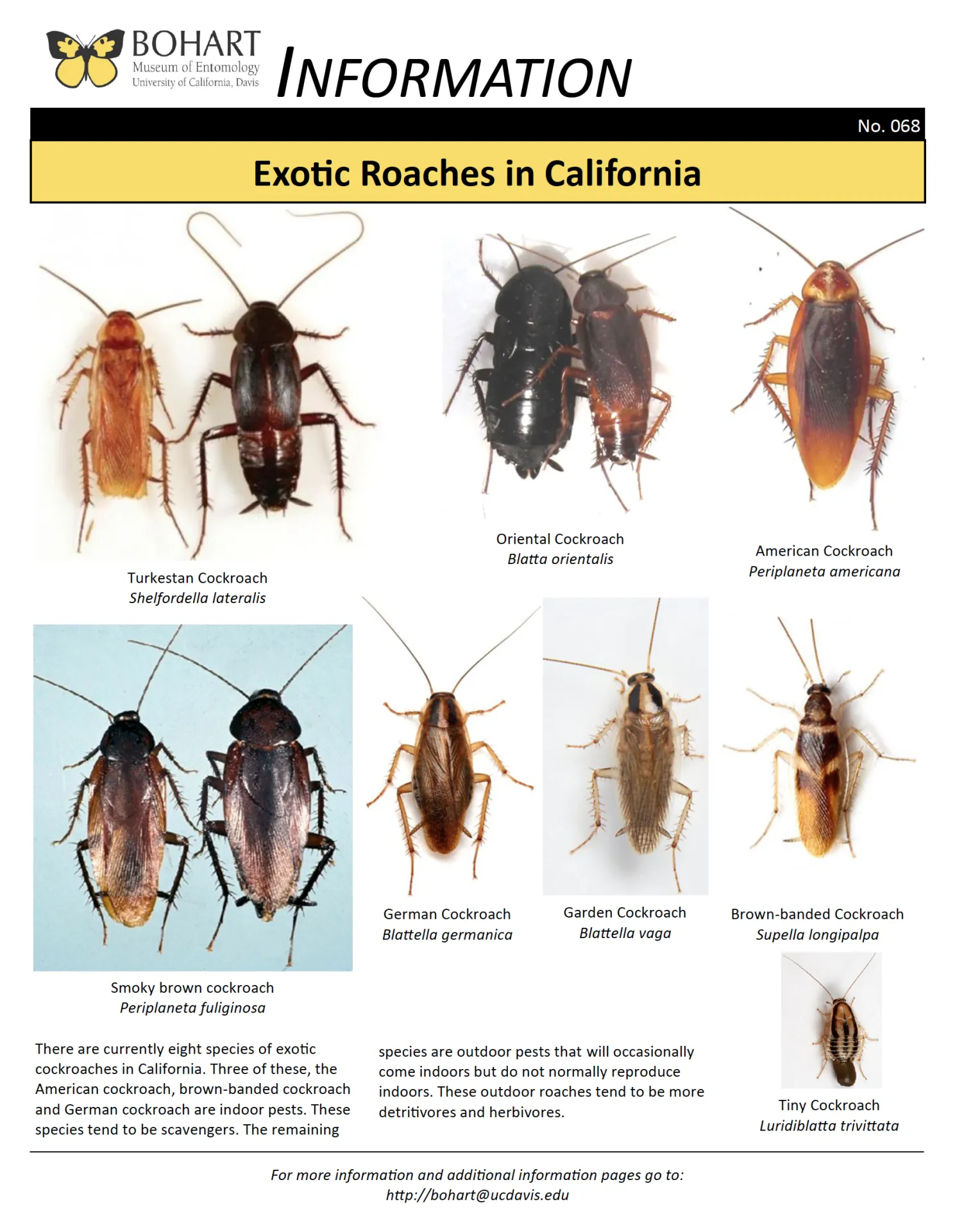
Kimsey, who directs the Bohart Museum Society, and edits and publishes its quarterly newsletter and Insect Notes, wrote this about roaches: "There are currently eight species of exotic cockroaches in California. Three of these, the American cockroach, brown-banded cockroach and German cockroach are indoor pests. These species tend to be scavengers. The remaining species are outdoor pests that will occasionally come indoors but do not normally reproduce indoors. These outdoor roaches tend to be more detritivores and herbivores."
The list:
- Turkestan Cockroach, Shelfordella lateralis
- Oriental Cockroach, Blatta orientalis
- American Cockroach, Periplaneta americana
- Smoky Brown Cockroach Periplaneta fuliginosa
- German Cockroach, Blattella germanica
- Garden Cockroach, Blattella vaga
- Brown-banded Cockroach, Supella longipalpa
- Tiny Cockroach, Luridiblatta trivittata
Newer Invasive Species
The UC Statewide Integrated Pest Management Program website says this about the Turkestan cockroach, which is also known as the red runner cockroach or rusty red cockroach:
"The Turkestan cockroach, Blatta lateralis, is a newer invasive species usually found in outdoor locations such as water meter boxes, cracks between blocks of poured concrete, compost piles, leaf litter, potted plants, and sewer systems. This species is often sold online and reared as food for insect-eating pets. Females are often confused with the oriental cockroach but can be distinguished by the cream-colored markings along the edges behind the head and around the short, rounded wings. Males may look similar to the American cockroach but are smaller and have yellowish-beige wings with cream-colored stripes along the edges. The nymphs are dark brown to black with reddish heads, thoraxes, and legs.:
"The biology of the Turkestan cockroach is similar to that of the oriental cockroach, though Turkestan cockroach females reach maturity faster and produce more eggs during their lifetimes than oriental cockroach females," according to UC IPM. "In recent years, the oriental cockroach is being displaced by the Turkestan cockroach, especially in southern California, the Central Valley, and other warm, dry parts of the state."
So, not a new cockroach in town, and definitely not new to the world. Fossil evidence points to their ancestors appearing on Earth more than 300 million years ago. That was during the Carboniferous period, which predates dinosaurs.
By the way, the roaches featured in the UC Davis Department of Entomology and Nematology's popular "Roach Races" during the annual UC Davis Picnic Day are American cockroaches. Cheer for them at Briggs Hall on Saturday, April 18.