Not everything is big in Texas.
If you're used to seeing the huge Texas longhorns, with horns spanning eight feet in length from tip to tip, then this is quite the comparison.
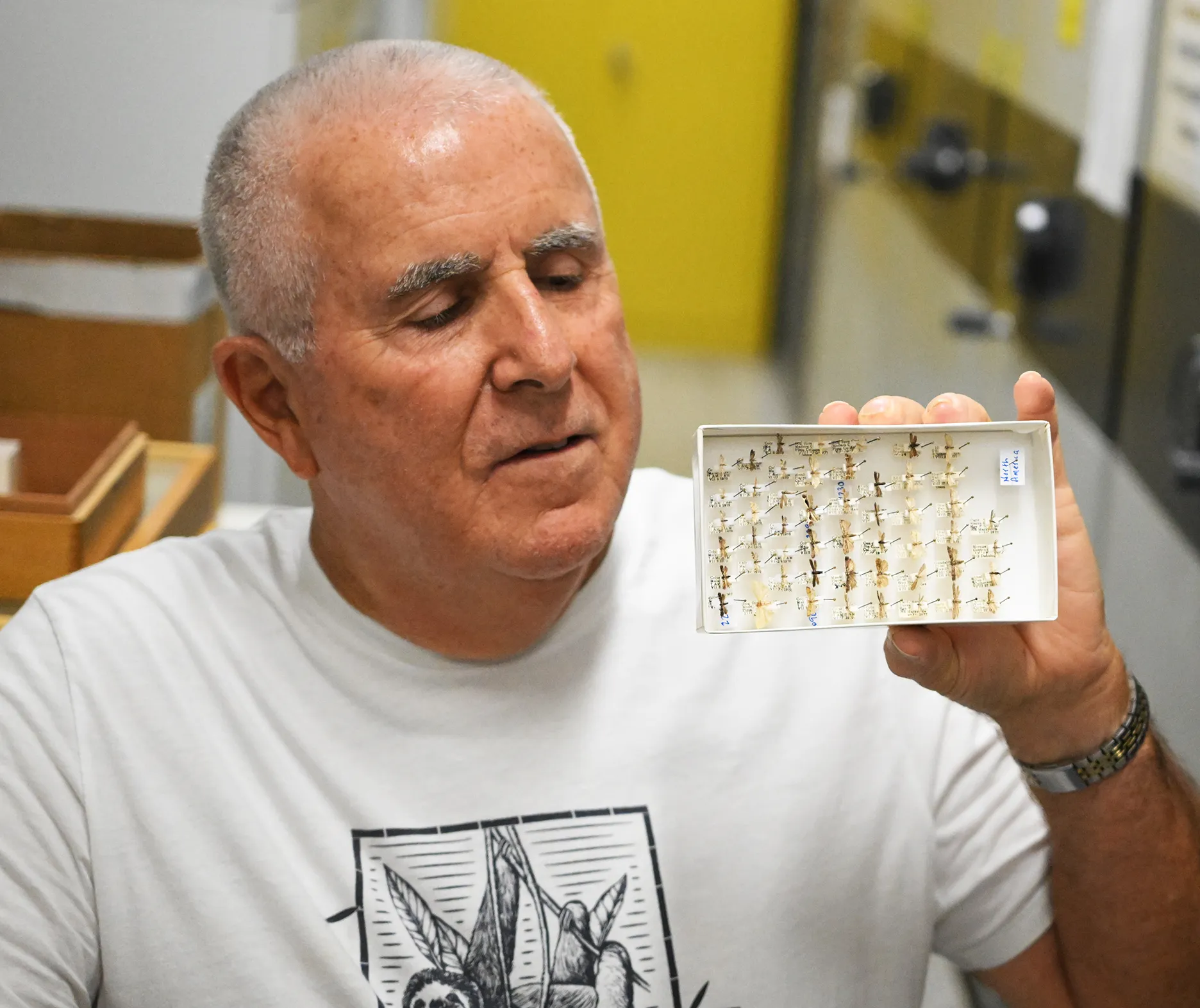
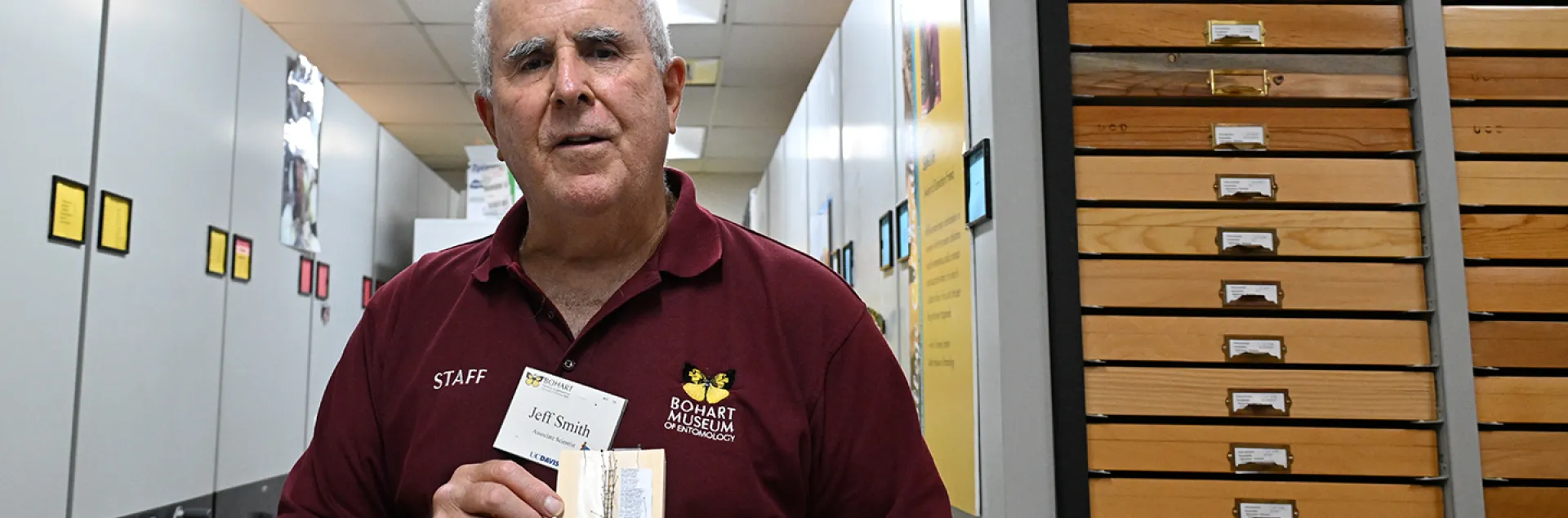
Entomologist Jeff Smith, the volunteer curator of the Lepidoptera collection at the Bohart Museum of Entomology, UC Davis, just finished spreading the wings of a micro moth with a 1-centimeter wingspan.
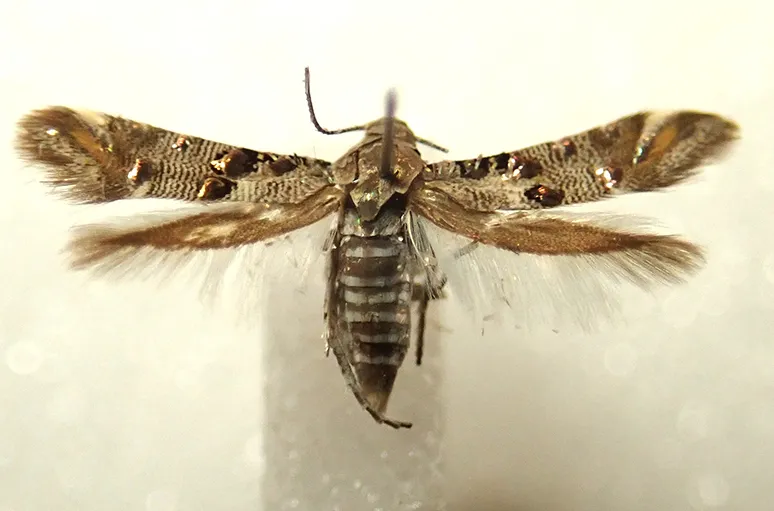
Smith, who recently spread the wings of a much smaller moth (4 mm wingspan), quipped: "This is 'huge" at a full 1 centimeter wingspan. It's from the Panhandle of west Texas. I just spread it from the vast amount of field-pinned micros we have in the Bohart, and it matches perfectly with its long name, Lithariapteryx abroniaeella, family Heliodinidae. Why do the smallest things have the longest Latin names?"
It's a beautiful moth.
"It looks like someone dabbed liquid mercury on its wings and the abdomen is banded with silver," he said.
Entomologists E. E. Grissell and Robert Denno collected it in west Texas. "They donated a great many specimens of micro-leps and others to the Bohart Museum," Smith said.
As for the tiny moth, Marmara arbutiella, with the 4mm wingspan? It was collected for the Bohart Museum in the Sacramento Delta.
Smith spreads several hundred Lepidoptera specimens per week. How many has he spread over the last three decades? "It is a wild guess, but I believe I have, for the past 30-plus years, spread 7,000-plus specimens annually, so that adds up to quite a few. For most of 2025, I have concentrated on our large backlog of micro Lepidoptera, about 25 drawers of field-pinned materials dating mostly to the late 1960s and 1970s."
"I suspect that THESE micro specimens will someday reveal many dozens--maybe hundreds?--of species new to science, particularly since many thousands of them are from Mexico and Panama," he commented.
He's often asked where to buy micro boards. He makes his own.
"One company that is attempting to resurrect the void left when BioQuip folded is Ecology Supplies at https://ecologysupplies.com/. They do carry spreading boards ($26) but not for micros.
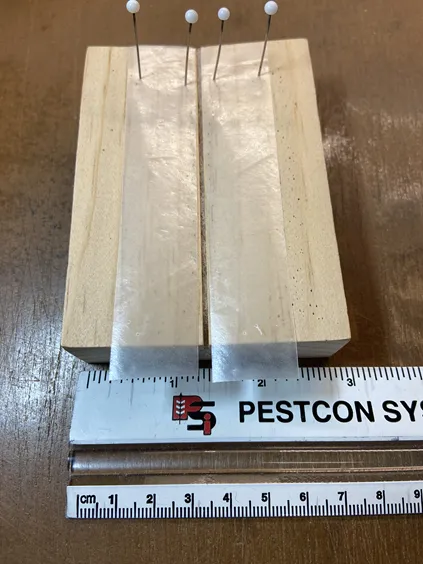
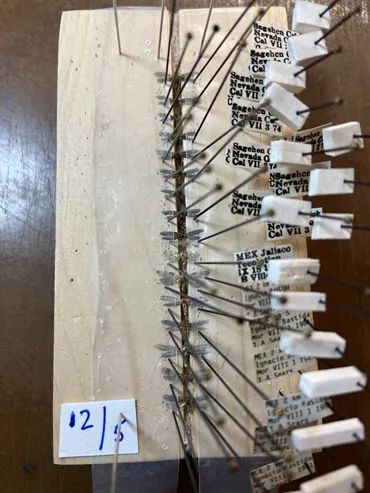
"I make my own micro boards and I probably have 50 of them with varying gaps for the moth to rest in, based on the size of the body. Essentially they are just mini-boards and easy to make. I shove a strip of polyfoam down into the gap for the minuten pin to set into to hold the moth in place while pulling out the wings. I always use a strip of cheapo waxpaper over the wings to hold them in place, with insect pins around the wing and through the paper. There are other styles of boards using different materials, but for the dried-then-relaxed (not fresh) specimens I do, my boards work well."
Smith received the UC Davis College of Agricultural and Environmental Sciences' Friend of the College Award in 2015 for his public service. At the time, Lynn Kimsey, then director of the Bohart Museum and now a UC Davis distinguished professor emerita, said: “You could not ask for a better friend than Jeff Smith. He has brought us international acclaim and saved us $160,000 through donations of specimens and materials, identification skills and his professional woodworking skills. This does not include the thousands of hours he has donated in outreach programs that draw attention to the museum, the college and the university.”