
Will there be native bees and honey bees at the 15th annual UC Davis Biodiversity Museum Day on Saturday, Feb. 21?
Yes! There will be bumble bees, carpenter bees, orchard bees and orchid bees--live or specimens--at the Bohart Museum of Entomology, and honey bees and other pollinators in the UC Davis Bee Haven.
The Bohart Museum, located in Room 1124 of the Academic Surge Building, 455 Crocker Lane, will be open from noon to 4 p.m. The UC Davis Bee Haven, located at 1 Biology Road, off Hopkins Road, will be open from 9 a.m. to 1 p.m.
The campuswide Bio Div Day, showcasing 12 museums and collections, is free and family friendly. Each has varying hours (See Bio Div Day website)
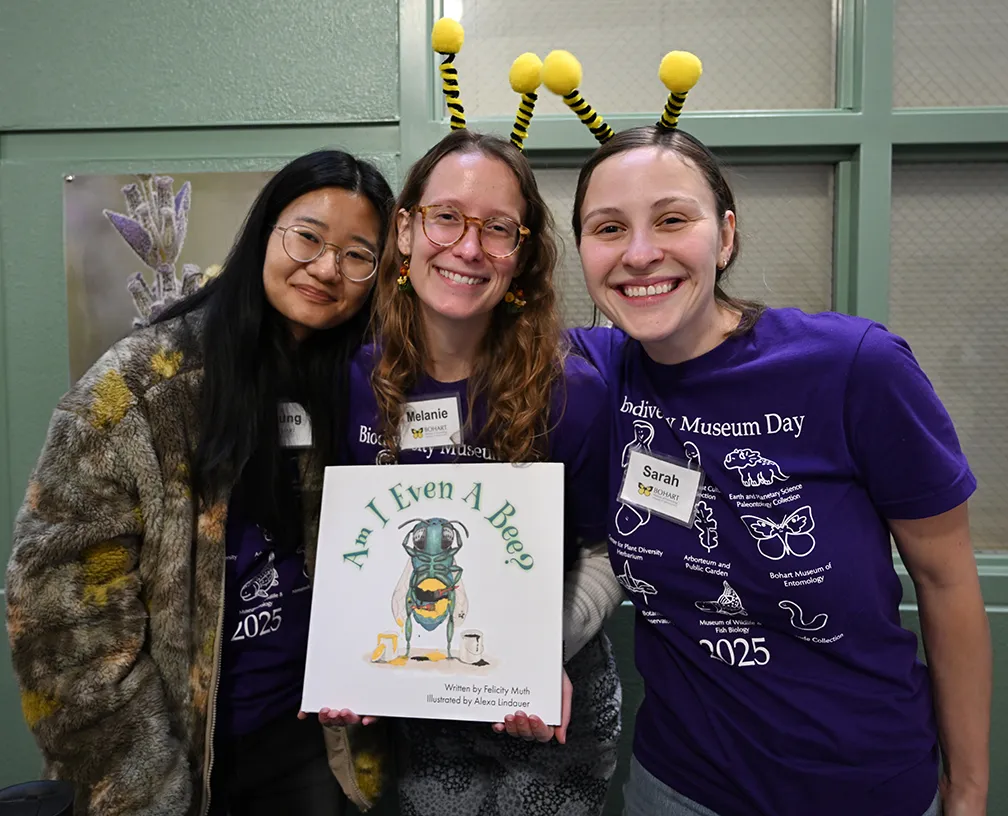
Stations in the Academic Surge hallway, directly outside the Bohart Museum, will feature the bee labs of Neal Williams, professor, and Rachel Vannette, professor and vice chair of the UC Davis Department of Entomology and Nematology (ENT), College of Agricultural and Environmental Sciences; and the bee labs of assistant professor Felicity Muth, assistant professor, Department of Neurobiology, Physiology Behavior, and Santiago Ramirez, professor, Department of Evolution and Ecology, College of Biological Sciences.
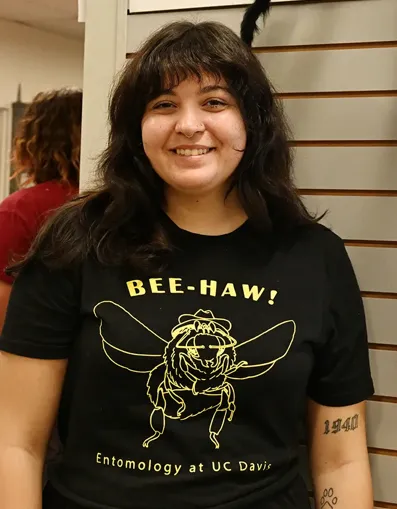
Faculty, graduate students and undergraduate students will be staffing the stations. Doctoral candidate Lexie Martin of the Vannette lab announced the displays and activities planned:
Muth Lab
--Live bumble bees, Bombus impatiens colony, and a microscope camera for a close-up look
Williams Lab
--Interactive orchard bee nests, ground nesting bee nests, posters, ground nesting 3D cast, and a flip board, "Is It a Pollinator?"

Vannette Lab
--Orchard bee life cycle plushes and carpenter bee nest (Doctoral candidate Lexie Martin, Vannette Lab)
--Halictid bee nest and orchard bee nesting block
--Microbe presses and scents
--Flower craft material (arts and crafts activity for attendees to make floral bouquets)
Ramirez Lab
--Orchid bee specimens and nesting boxes (possibly live bees) and scent information
--Monitor to show videos, and microscopes for close-up looks
The Academic Surge Building hallway also will be the site of the Bohart Museum's live petting zoo, where visitors can hold Madagascar hissing cockroaches and stick insects (walking sticks). The lab of Jason Bond will be showing arachnids, including trapdoor spiders and scorpions, while the lab of new faculty member Rodolfo da Silva Probst will focus on ants.
Inside the Bohart Museum
Inside the Bohart Museum, home of eight million insect specimens, visitors will gravitate toward the worldwide collection of butterfly specimens. They can ask questions of Jeff Smith, curator of the Lepidoptera collection, and fellow Bohart associate Greg Kareofelas.
Bees at The Haven
The UC Davis Bee Haven, a half-acre pollinator and demonstration garden installed by ENT in the fall of 2009 will be buzzing with activity. Director of The Haven is bee scientist Elina Niño, professor of Cooperative Extension, apiculture; a member of the ENT faculty; and director of the California Master Beekeeper Program. EXTERNAL IMAGE
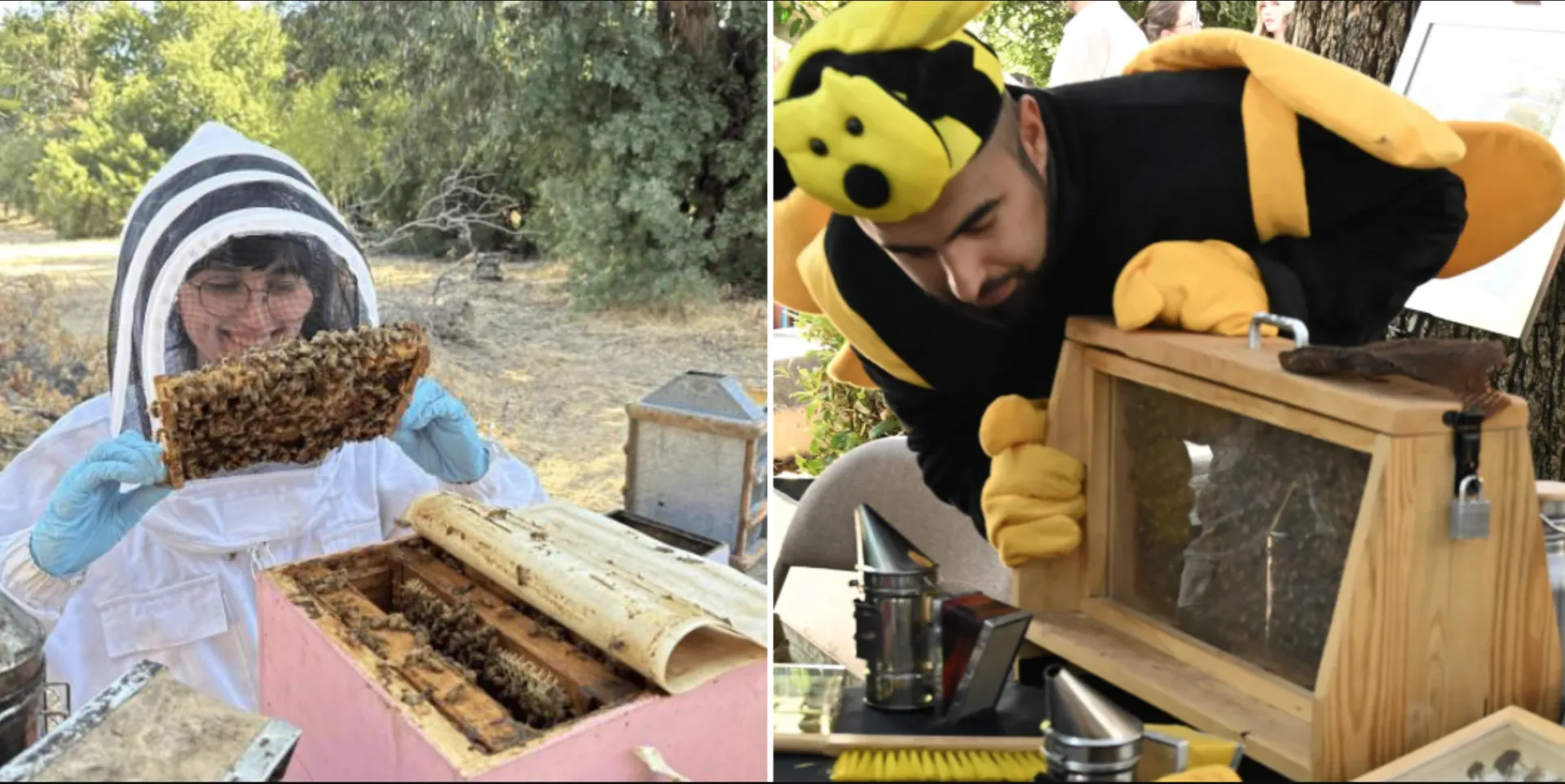
Meet the Bee Experts: Chat with Samantha "Sam" Murray, the education and garden coordinator, and Kian Nikzad, co-manager of the California Master Beekeeper Program, and ask them questions about bees, blooms, and habitat that supports pollinators.
EXTERNAL IMAGE
Explore the Garden: Wander through a diverse display of more than 200 plant species that feed and nourish honey bees and native pollinators. See the 6-foot-long worker bee, "Miss Bee Haven," a mosaic-ceramic sculpture that anchors the garden. It is the work of self-described rock artist Donna Billick. Also see the bee and floral art created primarily by ENT students in courses taught by UC Davis Distinguished Professor (now emerita) Diane Ullman, the co-founder and co-director (now emerita) of the UC Davis Art/Science Fusion Program.
EXTERNAL IMAGE
Hands-On Fun: Make a seed cookie, and take it home and plant it for the bees.
Bee Observation Hive: Observe bees through a glass-enclosed observation frame, and "immerse yourself in the rhythm of real pollinators in action," the organizers said.
In case of torrential rains, The Bee Haven organizers will change locations: they will move their projects into the Academic Surge Building. They will display the observation hive, give away seed cookies, and answer questions.
For more information on BioDiv Day, see the Bio Div Day website for names of the participating museums and collections; directions; a downloadable map; and the site of the food court (Katherine Esau Science Hall).
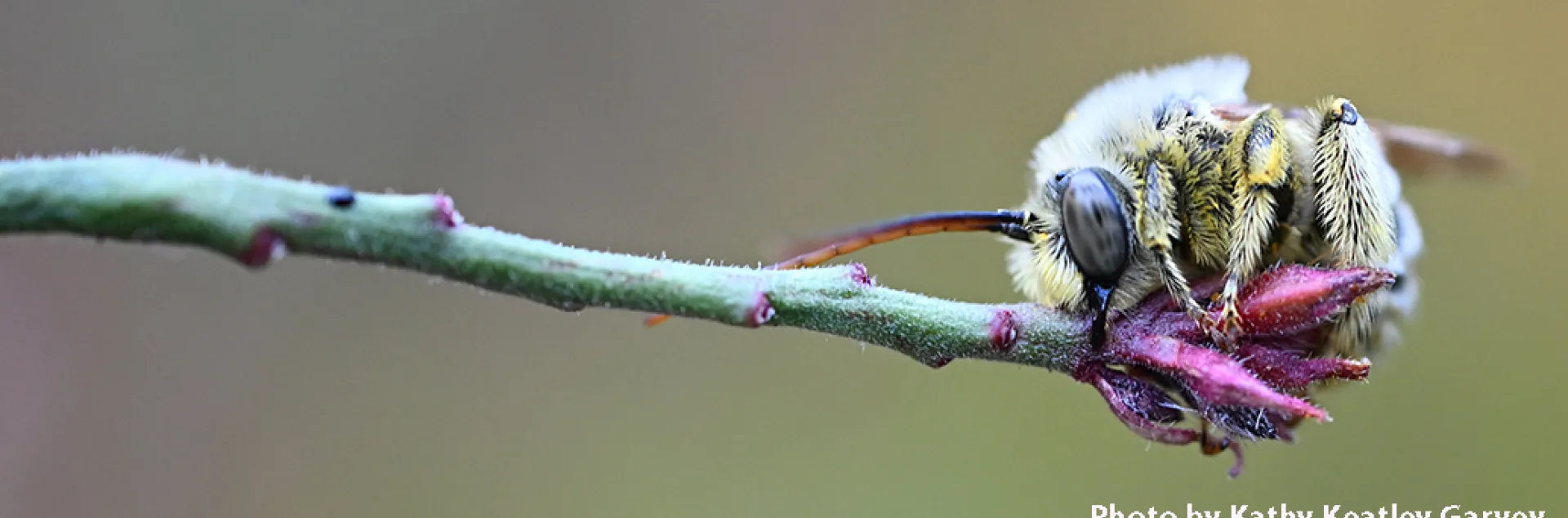
Cover Image: A native bee, a male longhorned bee, Melissodes agilis, asleep on gaura at dawn in a pollinator garden in Vacaville. (Photo by Kathy Keatley Garvey)