
We have a winner!
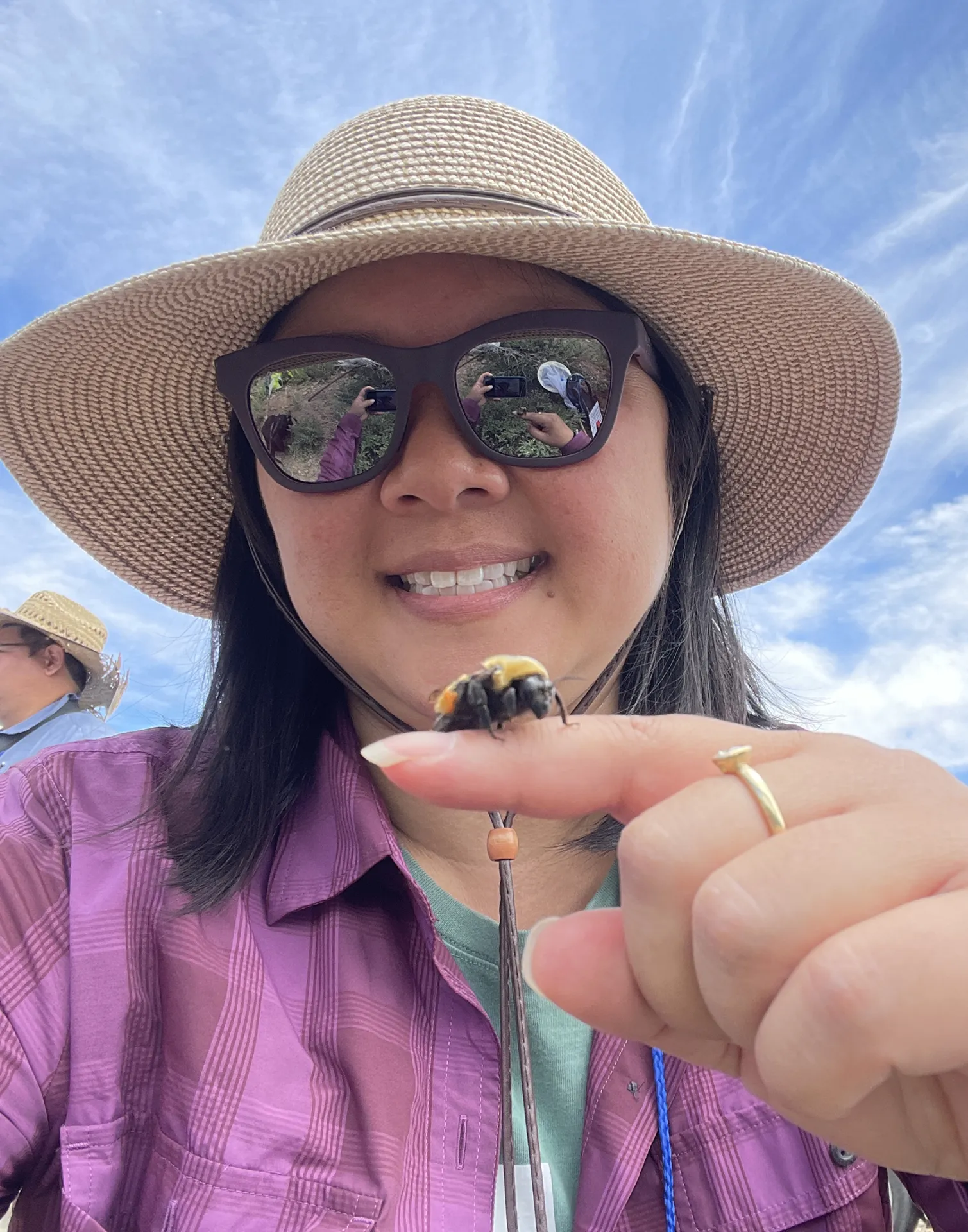
Drum roll...the winner of the 2026 Robbin Thorp Memorial First-Bumble-Bee-of-the-Year Contest, sponsored by the Bohart Museum of Entomology is Lesley Hamamoto of Sacramento.
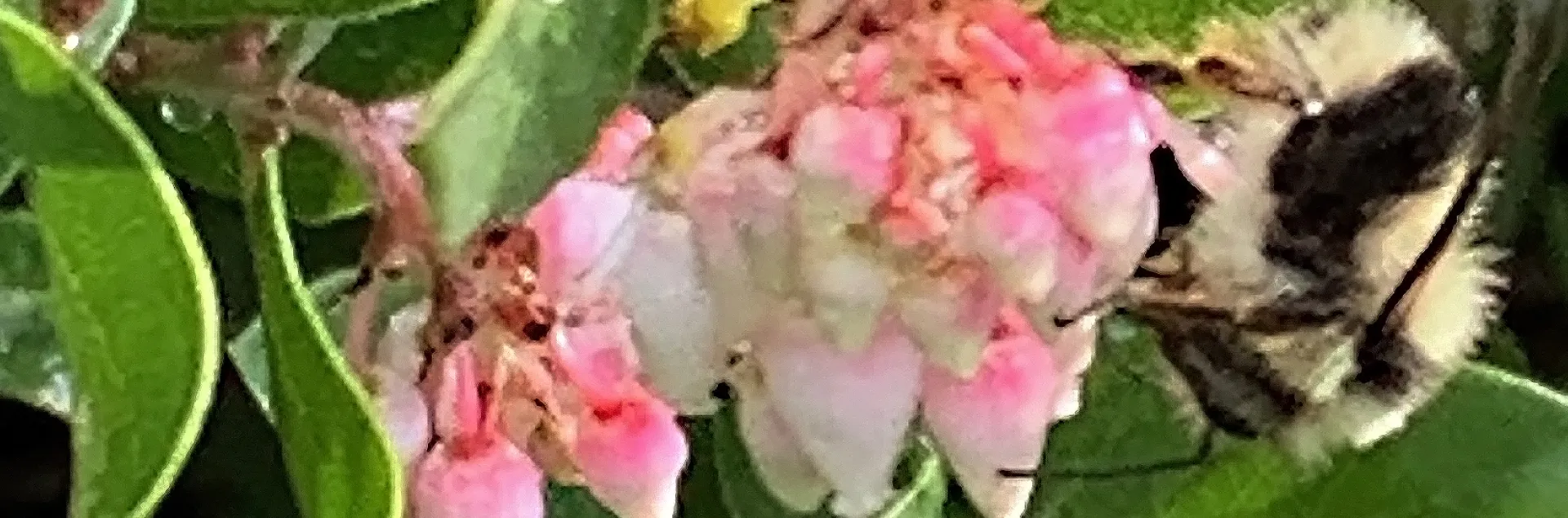
She photographed a black-tailed bumble bee, Bombus melanopygus, nectaring on manzanita at 9:59 am., Friday, Jan. 2 in the UC Davis Arboretum and Public Garden.
The contest rules specify that the first person to photograph or video a bumble bee in the two-county area of Yolo and Solano--and emails the image to the Bohart Museum--wins.
Hamamoto, a biologist/botanist with the Department of Water Resources, State of California since 2008, is a UC Davis alumna, and a former seven-year UC Davis employee.
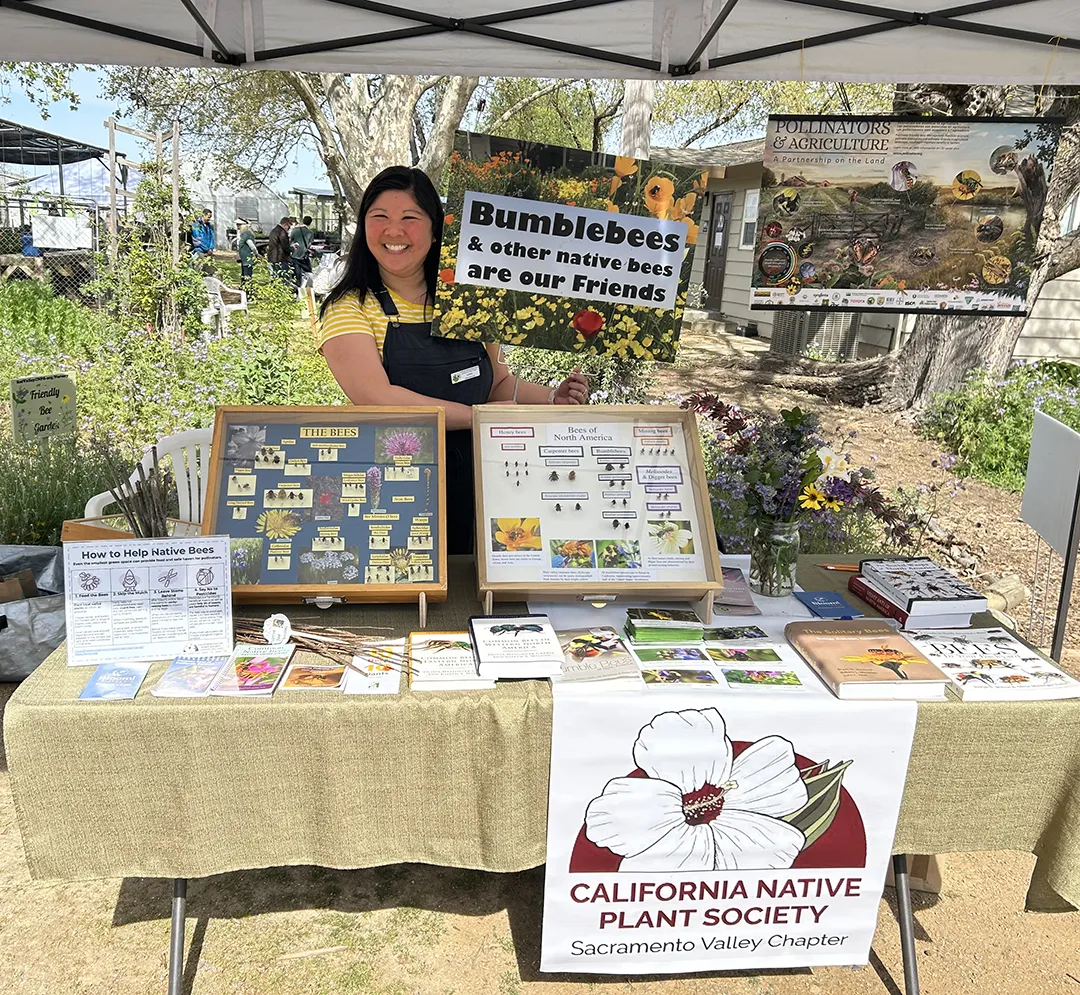
A bumble bee enthusiast and a native plant enthusiast, she's a volunteer with the California Bumble Bee Atlas and serves as the president of the Sacramento Valley Chapter of the California Native Plant Society.
Hamamoto will receive a coffee cup designed with the critically endangered Franklin's bumble bee. Thorp monitored the population of Bombus frankliniin its California-Oregon border range for two decades, last seeing it in 2006. It is now feared extinct.
But, get this...she knew Robbin Thorp! As a freshman at UC Davis in 1998, she enrolled in ENT 10, "Natural History of Insects," taught by Thorp. “We did a honey varietal tasting during that class and I always remember that he told us that yellow starthistle honey was his favorite flavor. I have to agree that it's the one good thing about invasive yellow starthistle! I didn't realize until I started reading and researching more about bumble bees that Dr. Thorp was really THE authority on bumbles in California. I feel very lucky to have had that opportunity to learn from him.”
The bumble bee contest, launched in 2021, memorializes Professor Thorp (1933-2019), a tireless advocate of pollinator species protection and conservation and co-author of Bumble Bees of North America: An Identification Guide (Princeton University) and California Bees and Blooms: A Guide for Gardeners and Naturalists (Heyday). Although he retired from the faculty in 1994 after 30 years of service, he continued his bee research until a week before he died, at age 85. Every January, he looked forward to seeing the first bumble bee of the year.
“I was so excited to find several bumble bees on Friday!” Hamamoto said. “I have wanted to participate in the first-bumble-bee-of-the-year contest since it began in 2021.” Her co-worker Michael Kwong, a senior environmental scientist with the State of California, teamed with fellow Monarch Watch participant Kaylen Teves of Vallejo, to win the 2025 contest. They photographed a yellow-faced bumble bee, Bombus vosnesenskii, on Jan. 11 on an oak leaf at the Glen Cove Marina, Vallejo.
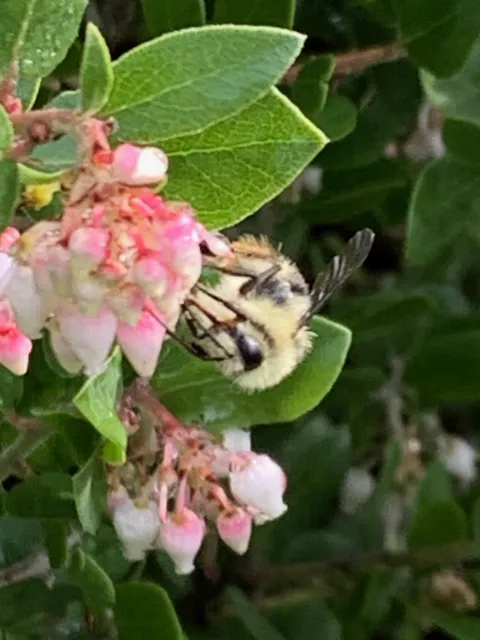
“I had been watching for a window of sunny weather, so as soon as I saw that it was going to be sunny for a few hours, I hightailed it out to the Arboretum,” Hamamoto shared. “I knew that early blooming manzanitas would be highly attractive to bumbles, so I was specifically headed to a few that I knew of. I live in Sacramento, so I had to head over the county line to participate in the contest. I have sometimes participated unofficially from my home native garden, but I don't think I have ever found a bumble earlier than the contest winner.”
Hamamoto has participated since 2022 as a volunteer with the California Bumble Bee Atlas, a statewide community science project aimed at tracking and conserving California's native bumble bees. “I was fortunate to be able to take the Bumble Bee Field Course with Leif Richardson and Rich Hatfield in 2023--the workshop sold out in 2 minutes and getting in was likened to getting tickets to Taylor Swift's Eras tour!"
Hamamoto has organized an annual "bumblepalooza" weekend for the last two years “for some of my friends that I met in the field course and we meet up and do a bunch of Atlas surveys. The first year was in the Carson Valley area where we had been for the field course, and last year we stayed at the Point Reyes Field Station. We have even talked about holding a future bumblepalooza in northern California to look for B. franklini.“ (Thorp last sighted the bumble bee in 2006. Its range is a narrow 13,300-square-mile area in Siskiyou and Trinity counties in California.)
Hamamoto and Kwong also led a bumble bee field trip last year for "find out farms," a local native plant nursery and eco-education organization. The Sacramento Valley Chapter of CNPS holds an annual Wildlife Wonders event there "and where I have been one of the volunteers at the Friendly Bee exhibit table.”
Hamamoto received her bachelor's degree in biological sciences, with a plant biology emphasis, from UC Davis in 2001, and went on to receive her master's degree from Sacramento State University. She worked at UC Davis in Plant Biology for seven years before accepting her position with the State of California.
Hamamoto credits UC Davis for setting her “firmly on the path of studying and growing plants." She remembers "field trips to local botanical hotspots such as Stebbens Cold Canyon and Jepson Prairie Preserve, and several years working at the UC Davis Botanical Conservatory being particularly formative experiences.”
The Bohart Bumble Bee Committee includes three members who worked with Thorp: UC Davis Distinguished Professor Emerita Lynn Kimsey, who directed the Bohart Museum for 34 years; Tabatha Yang, education and outreach coordinator for the Bohart Museum; and Kathy Keatley Garvey, communications specialist, UC Davis Department of Entomology and Nematology.
How It Began
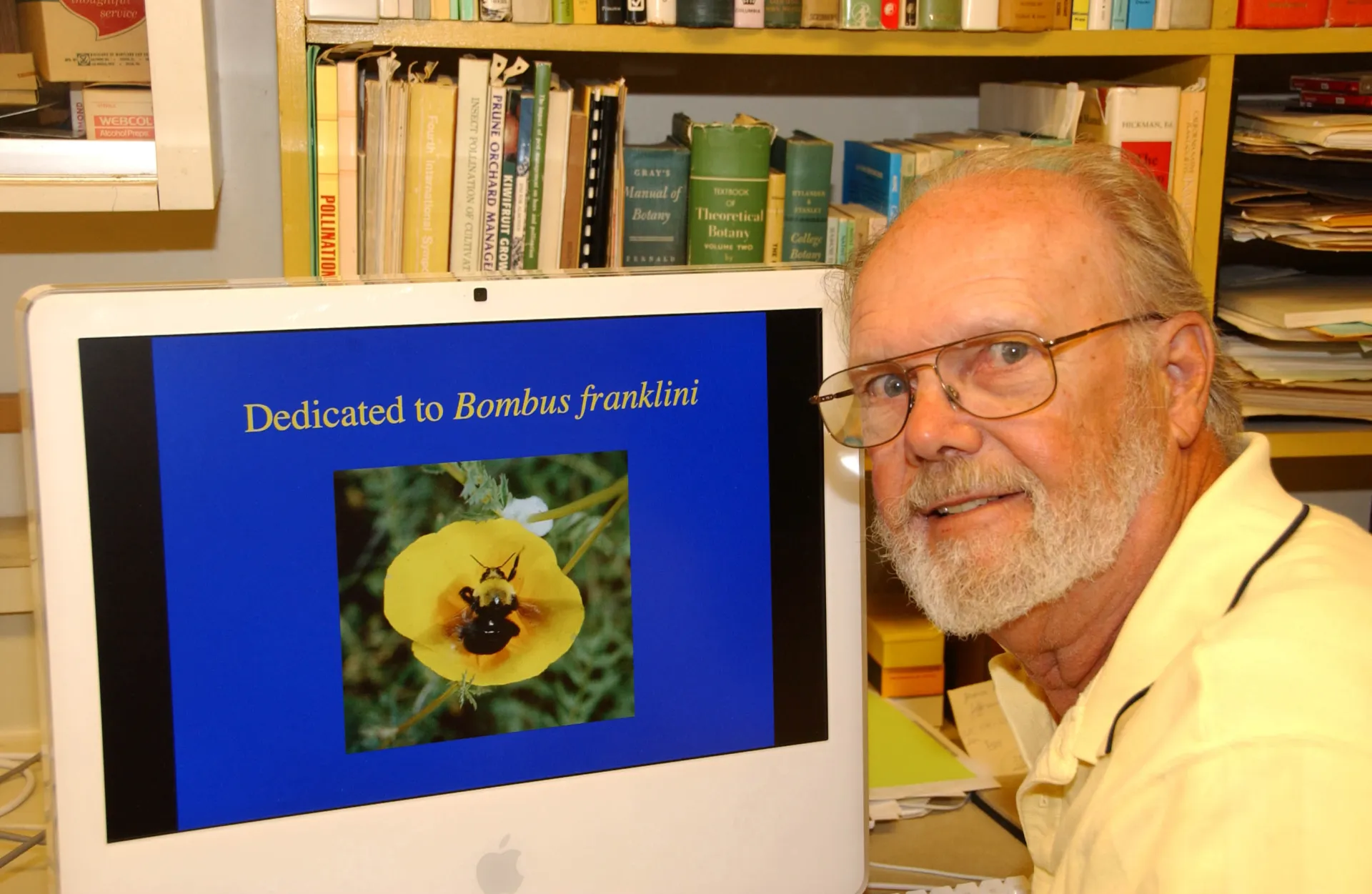
Every January, Thorp encouraged his "posse"--bumble bee enthusiasts and insect photographers Allan Jones, Kathy Keatley Garvey, Gary Zamzow and Kim Chacon--to find and photograph the first bumble bee of the year in Yolo and Solano counties. Chacon, the 2019 winner, was the last to win the informal bee contest. Location: The UC Davis Arboretum and Pjblic Garden. At the time, she was a UC Davis doctoral student researching "habitat connectivity issues for bees at a landscape scale." She is a 2018 alumna of The Bee Course, a nine-day intensive workshop affiliated with the American Museum of Natural History and held annually at the Southwestern Research Station, Portal, Ariz. Thorp, one of the instructors, taught the course from 2002 to 2018.
The Winners
In addition to the 2025 winners, the recipients of the Franklin Bumble Bee Cup are:
2024: Nancy Hansen of Fairfield, who photographed a black-tailed bumble bee, B. melanopygus, in her yard at 10:57 a.m., Monday, Jan. 1.
2023: Ria deGrassi of Davis, who photographed a B. melanopygus at 12:32, Jan. 8 on a ceanothus in her yard.
2022: Tie between Maureen Page, then a doctoral candidate in the lab of pollination ecologist Neal Williams, professor, UC Davis Department of Entomology and Nematology; and Ellen Zagory of Davis, retired director of public horticulture for the UC Davis Arboretum and Public Garden. Each photographed a bumble bee on manzanita in the Arboretum at 2:30 p.m., Jan. 1. Page photographed a B. melanopygus, while Zagory captured an image of the yellow-faced bumble bee, Bombus vosnesenskii.
2021: UC Davis postdoctoral researcher Charlie Casey Nicholson, then of the Williams lab and the Elina Lastro Niño lab, photographed a B. melanopygus at 3:10 p.m., Jan. 14 in a manzanita patch in the Arboretum.
The Bohart Museum, located in Room 1124 of the Academic Surge Building, 455 Crocker Lane, UC Davis, houses a global collection of eight million specimens. Director of the Bohart is Professor Jason Bond, the Evert and Marion Schlinger Endowed Chair of Systematics, UC Davis Department of Entomology and Nematology, and executive associate dean, College of Agricultural and Environmental Sciences.
Cover Image: A black-tailed bumble bee, Bombus melanopygus, in the UC Davis Arboretum and Public Garden that Lesley Hamamoto photographed on Jan. 2. There were multiple bumble bees there.