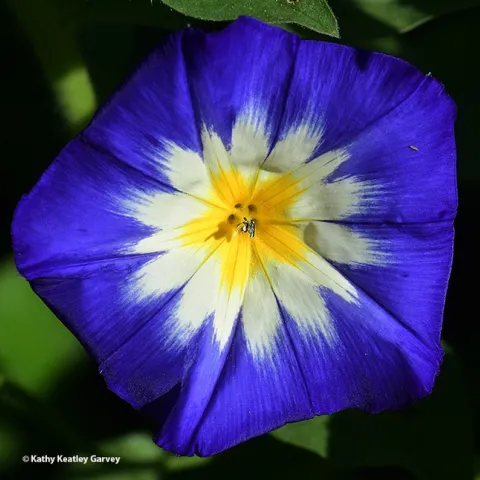
Did someone come in the middle of night and tie-dye this flower? No, just Mother Nature showing us some tri-colors: combining a brilliant blue, a soft yellow, and a creamy white in two starburst patterns.
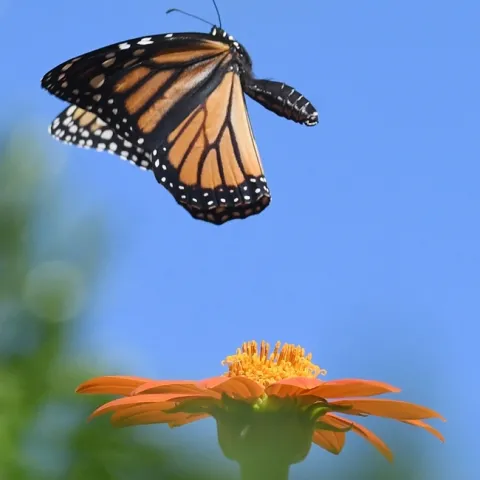
"Recent studies have continued to shed light on the ecology of monarch butterflies (Danaus plexippus) in western North America. These studies have documented a declining overwintering population over several decades, punctuated by unexpected variability in recent years.
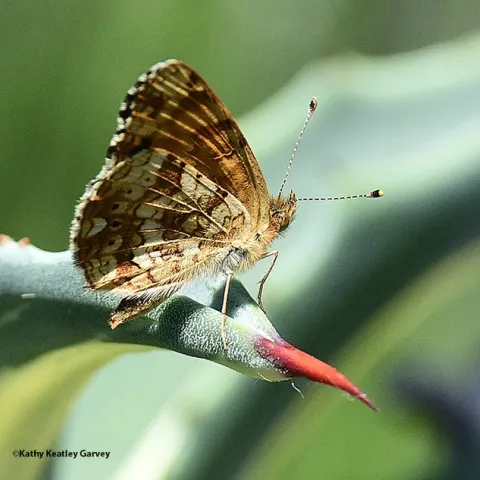
Ever seen a Phyciodes mylitta, aka Mylitta Crescent? It's a butterfly that breeds on thistles, such as Cirsium, Carduus and Silybum. The one that visited our yard June 17 wasn't visiting a thistle, however. It landed on a cactus. It's an orange and black butterfly (orange wings with black markings).
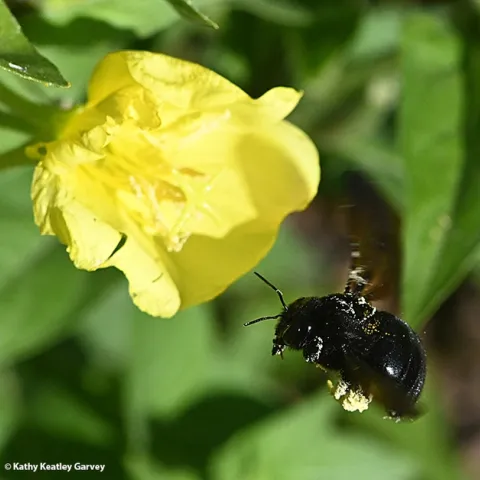
As National Pollinator Month winds down, let's visit a "morning" carpenter bee and an evening primrose. The evening primrose, Oenothera biennis, native to the Americas, is unique in that it blooms as night (as its name implies) and dies back at noon.
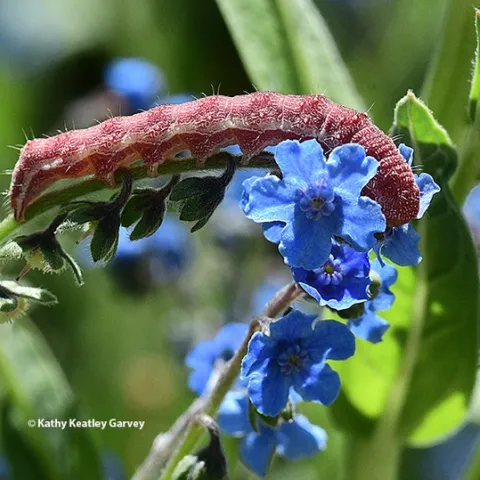
Please, please, forget to eat our forget-me-nots! But it's not going to happen. So here we are in our Vacaville pollinator garden, looking at the Chinese forget-me-nots. We see honey bees, leafcutter bees, syrphid flies, lady beetles, cabbage white butterflies, and other critters foraging.