Would you eat a chocolate-covered cicada? Yes? No? Maybe? Entomophagy is no problem for scientists at the Bohart Museum of Entomology, University of California, Davis. They know where the office snacks are kept. The items includedrum rollchocolate-covered cicadas.
You've probably read the children's book, "Where's Waldo?" Waldo wanders around the world, gets lost in the crowd or scenery, and it's your job to find him. Where'd he go? If you have a praying mantis in your yard, you probably play "Where's Waldo?" a lot. In our yard, it's "Walda.
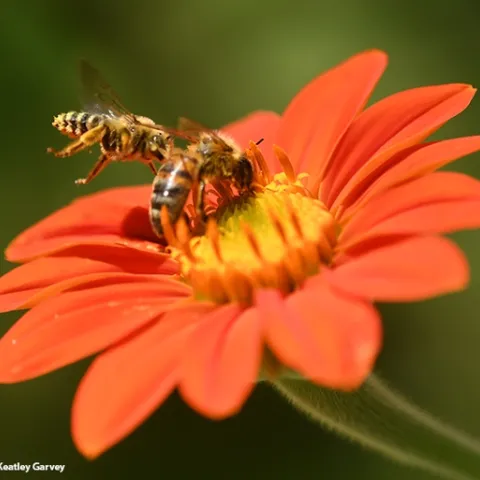
So, here you are, a honey bee nectaring on a Mexican sunflower, Tithonia rotundifola. All's right with the world, at least in your world. You're sipping nectar to take home to your colony and suddenly...a buzz.
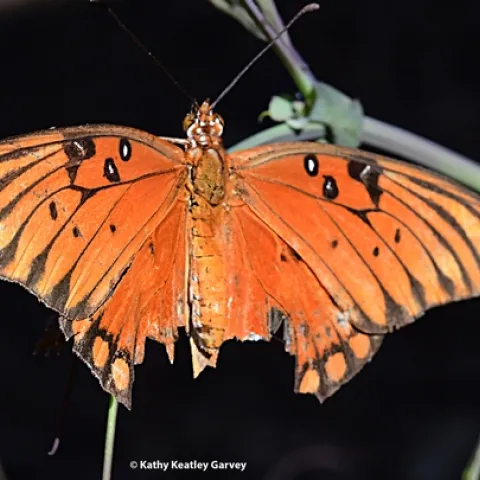
Interviewer: "Hey, Gulf Fritillary! What happened to you? Something take a chunk out of your wings?" Miss Gulf Frit: "I dunno. I was just fluttering around the passionflower vine and something grabbed me." Interviewer: "Do you have any idea what happened?" Miss Gulf Frit: "Sorry, no.
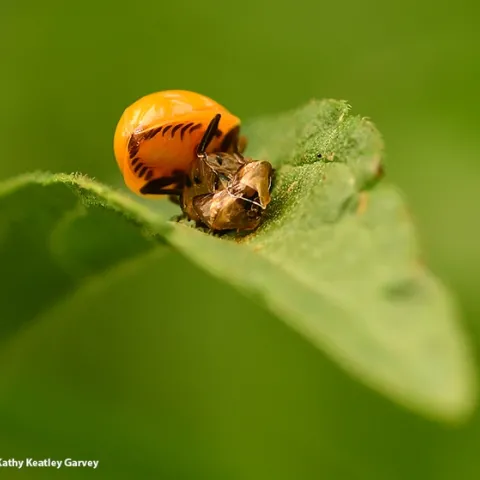
If you're an entomologist, an agriculturist, a gardener or an insect enthusiast, you've probably seen the life cycle of a lady beetle, aka ladybug: from the egg to the larva to the pupa to the adult.