Ever seen a beneficial insect and a pest sharing the same blossom? At a recent visit to the UC Davis Ecological Garden at the Student Farm, we watched a honey bee, Apis mellifera, and a lygus bug nymph, Lygus hesperus, foraging on a batchelor button, Centaurea cyanus. The bee: the beneficial insect.
Enthusiasm is building and buzzing for the California Master Beekeeper Program's online course, "An Introduction to Mead 2021," set from 9 a.m. to noon, Saturday, May 1.
They were the "Look-at-Cats." The feral cats on our farm (the progeny of strays dropped off by "imperfect" strangers) became known as "The Look-at-Cats." You couldn't touch, pet or hold them. You could feed them, though, and spay or neuter them--if you could catch them. And you could name them, too.
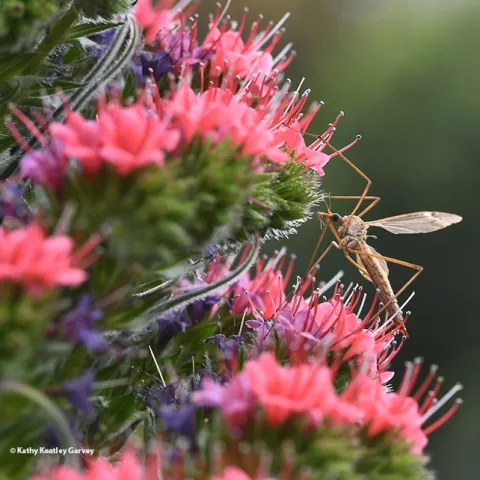
They're out there, and you don't have to crane your neck to see them. Some folks mistakenly call them "mosquito hawks" or "mosquito eaters," but they are neither. They are crane flies, members of the family Tipulidae of the order Diptera (flies). They're everywhere.
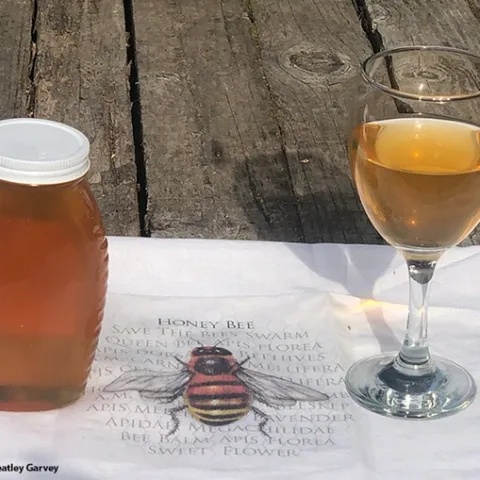
Want to celebrate May Day by learning about mead, the world's most ancient alcoholic beverage? Remember mead? It's also known as "honey wine," created by fermenting honey with water. Sometimes mead makers add fruits, spices, grains, and hops. There's a "me" in mead.