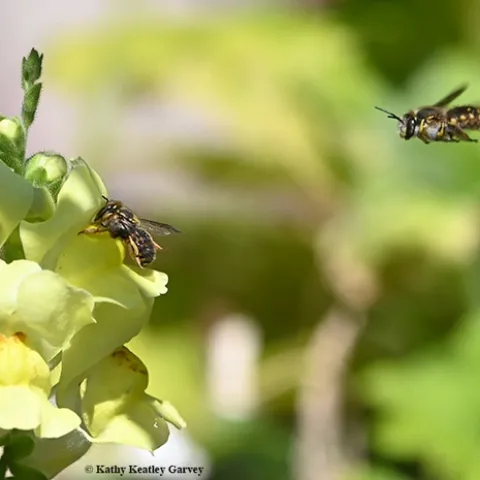
Love is in the air. Or, more specifically, in the snapdragons. If you maintain a pollinator garden, you've probably seen female European wool carder bees (Anthidium manicatum) nectaring on flowers or scraping or carding fuzz for their nests.
Let's hear it for biocontrol. You've seen lady beetles, aka ladybugs, preying on aphids. But have you seen an assassin bug attack a spotted cucumber beetle? No? How about a crab spider munching on a stink bug? All biocontrol, part of integrated pest management (IPM).
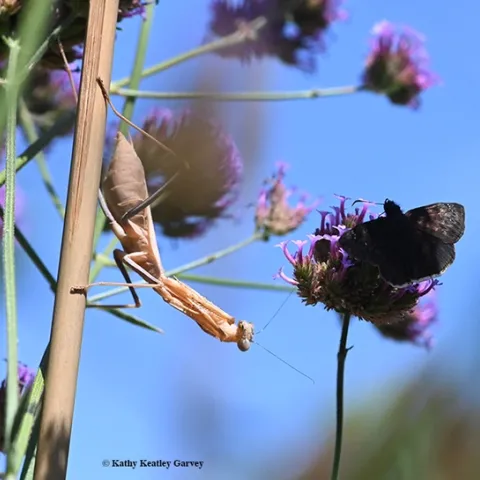
When we last left Ms. Mantis, a female Stagmomantis limbata residing in our verbena patch, she was munching on a honey bee. A successful ambush stalker, she was. But not always. Her plan to take down a duskywing butterfly, genus Erynnis, didn't go so well.
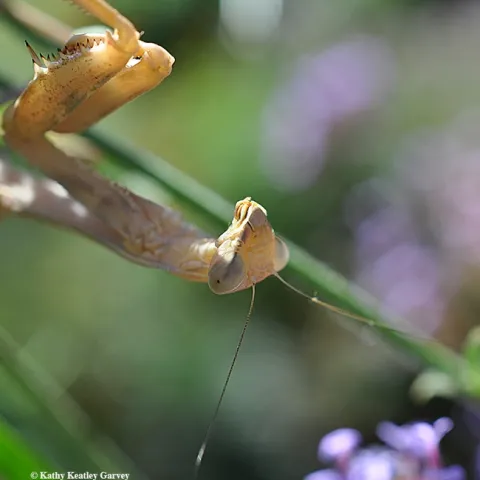
Yes, I'm hungry. A female praying mantis is perched upside down in our pollinator garden. She has maintained this position in the verbena over a four-day period, enduring temperatures that soar to 105 degrees.
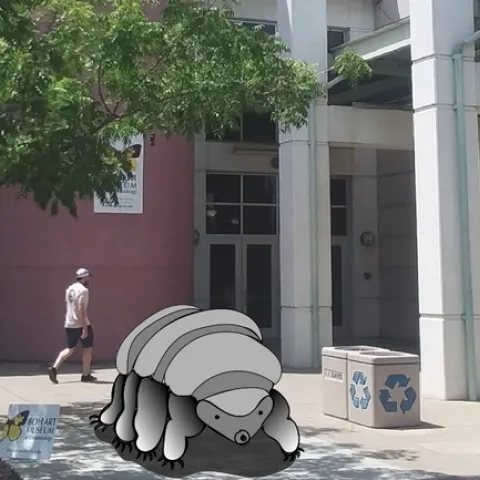
What a wonderful idea! The Bohart Museum of Entomology at UC Davis boasts one of the world's largest tardigrade (water bear) collections, and what Lynn Kimsey wants to do, will certainly add to that point.