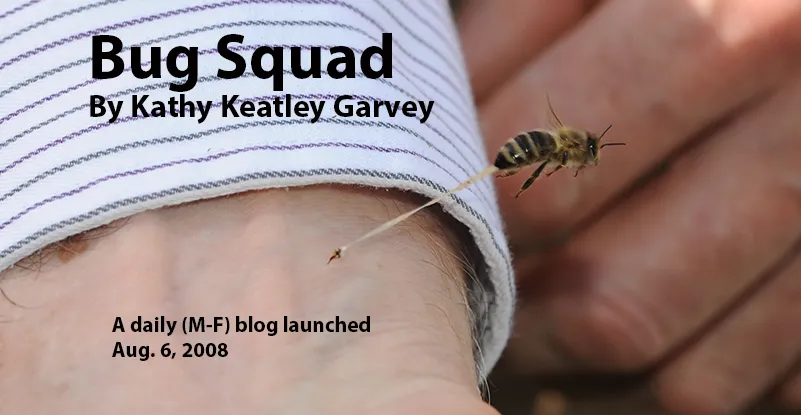
So you want to become a beekeeper... You want to do your part to help the declining bee population. You want to learn about the honey bees that pollinate the food you eat, including fruits, vegetables and nuts (especially almonds!). You'd love some honey for your table and some wax to make candles.
So here's this newly eclosed male monarch trying to sip a little nectar from a Mexican sunflower (Tithonia). A female longhorned bee, probably Melissodes agilis, seeks to claim it. There's no such thing as sharing, especially when nectar is at stake and it's first-come, first-served.
If you're a beekeeper or plan to become a beekeeper, you need to read the UC Davis Apiculture Newsletter, the work of Extension apiculturist Elina Nio and her associates at the Harry H. Laidlaw Jr. Honey Bee Research Facility, aka the UC Davis Bee Biology Facility.
If you engage in a mini-monarch conservation project, you know the joy of watching the egg-caterpillar-chrysalis-adult transformation. It's one of Nature's miracles.
So you have this significant garden pest--a caterpillar eating your cabbage, lettuce, tomato, squash, geraniums and petunias--and more. And then one morning you see a moth on your blanket flower (Gaillardia). Hmm...