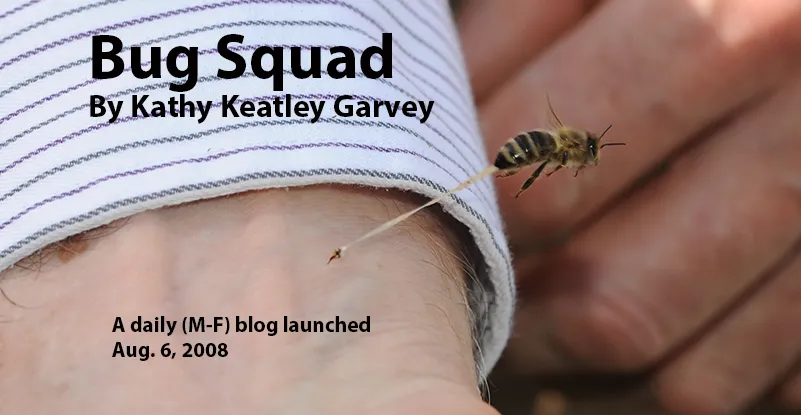
How times change with the advancement of knowledge. It's long been known that when honey beesas well as other insectsget trapped in the milkweed's pollinia, or sticky mass of pollen, many perish when they are unable to free themselves.
Do they ever slow down? Not much. The male European wool carder bee (Anthidium manicatum), a yellow and black bee about the size of a honey bee, spends most of the day defending its "property" (food) from other visitors.
So here's this tiny praying mantis hovering over a spider's web in the bluebeard (Caryopteris clandonensis) in our pollinator garden. In the web are freshly caught prey, including a honey bee.
A bumble bee news story released today by Andy Fell of UC Davis News and Media Relations is a great example of scientific collaboration between entomologists and engineers.
Dear Crab Spider, Please don't eat the pollinators. You may help yourself to a mosquito, a crane fly, a lygus bug, an aphid, and a katydid, not necessarily in that order. And more than one if you like.