Bug Squad

A daily (M-F) blog launched Aug. 6, 2008 and about the wonderful world of insects and those who study them. (Photo by Kathy Keatley Garvey)

Neonics and Bumble Bees

November 18, 2015
By Kathy Keatley Garvey
Research published today in the journal Nature about neonicintoid pesticide exposure and bumble bees is causing quite the buzz, and keeping noted bumble bee expert Robbin Thorp busy fielding phone calls.
View Article
Primary Image
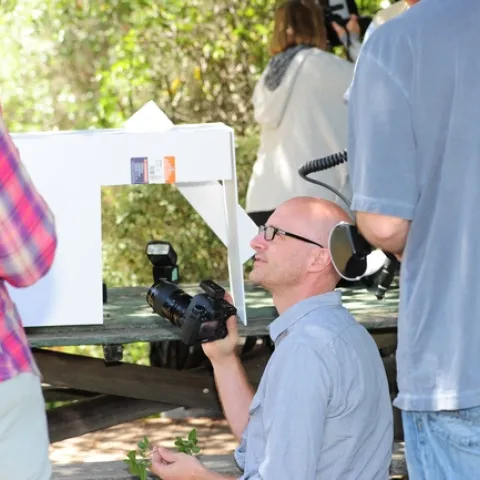
Alex Wild shows photographers some white box techniques at BugShot Hastings. (Photo by Kathy Keatley Garvey)

BugShot Austin 2016!

November 17, 2015
By Kathy Keatley Garvey
If you like to photograph insects, and want to know more about macro photography and entomology, then "BugShot Austin 2016" may be something to consider-- for either yourself or as a gift for someone.
View Article
Primary Image
Gulf Fritillaries (Agraulis vanillae) mating on a passionflower vine. (Photo by Kathy Keatley Garvey)

Gulf Fritillaries: Spectacular and Showy

November 16, 2015
By Kathy Keatley Garvey
Sex in the afternoon. On the passionflower vine. That's what happened today on the Passiflora (see images below). Coming soon, more Gulf Fritillaries. The Gulf Frit (Agraulis vanillae), an orangish-reddish butterfly of the family Nymphalidae, is as spectacular as it is showy.
View Article
Primary Image
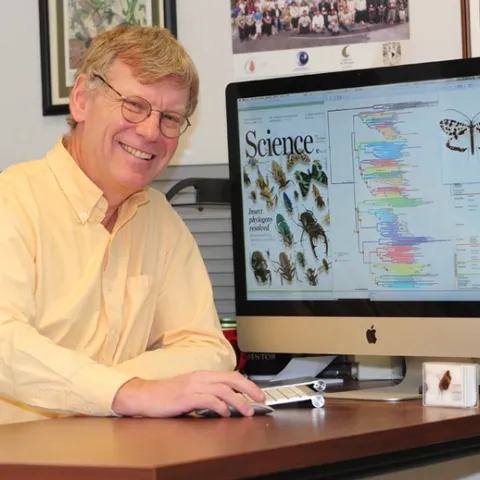
Karl Kjer, newly appointed Schlinger Chair of Systematic Entomology in the UC Davis Department of Entomology and Nematology, will deliver a Premier Presentation at the ESA meeting. (Photo by Kathy Keatley Garvey)

Can You Feel the Synergy?

November 13, 2015
By Kathy Keatley Garvey
When the Entomological Society of America meets Nov. 15-18 in Minneapolis, Minn., it will be all about insects and synergy.
View Article
Primary Image
A truck loaded with bee hives. Image taken through a car window. (Photo by Kathy Keatley Garvey)

What to Do When a Bee Truck Overturns

November 12, 2015
By Kathy Keatley Garvey
When a bee truck overturns, all sorts of things can happen. None of them is good--unless both the people and the bees fare well. Bystanders panic. Bees can and do react to all the commotion by stinging the first responders and the bystanders. It's especially difficult at night.
View Article