Bug Squad

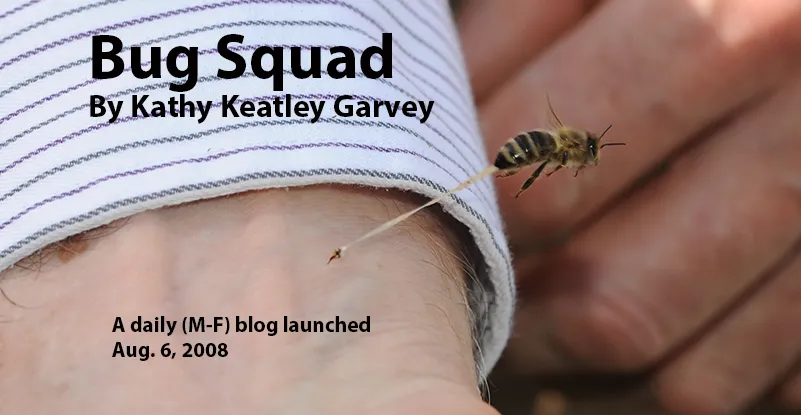
A daily (M-F) blog launched Aug. 6, 2008 and about the wonderful world of insects and those who study them. (Photo by Kathy Keatley Garvey)
Primary Image
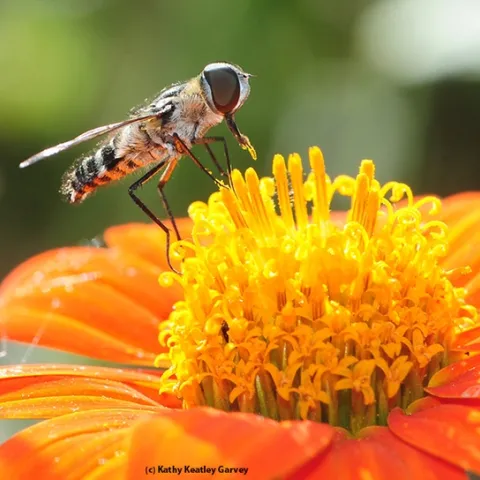
A bee fly, genus Villa, collecting pollen on a Mexican sunflower (Tithonia). (Photo by Kathy Keatley Garvey)

Why Flies Are Pollinators, Too!

October 7, 2015
By Kathy Keatley Garvey
Will all the pollinators please stand up! Or do a fly-by like the Blue Angels or a crawl-by like babies competing in a diaper derby. Bees--there are more than 4000 of them in North America--are the main pollinators, but don't overlook butterflies, beetles, birds, bats and moths. And flies.
View Article
Primary Image
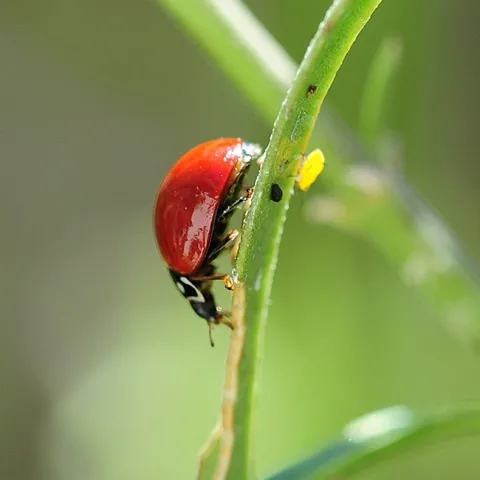
A lady beetle munching on an aphid while another aphid (far right) looks on. (Photo by Kathy Keatley Garvey)

The Aphid Eater

October 6, 2015
By Kathy Keatley Garvey
The circle of life... Monarch caterpillars feast on milkweed, their host plant. Oleander aphids feast on the juices of milkweed plants. Lady beetles, better known as ladybugs (but they're beetles, not bugs) feast on the aphids. The milkweed is the only plant that the monarch caterpillars eat.
View Article
Primary Image
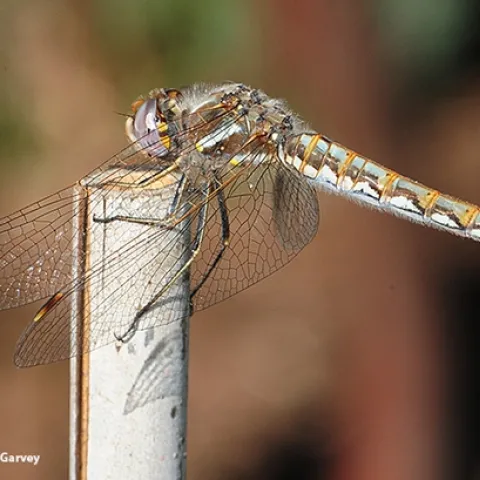
A wind-whipped female variegated meadowhawk, a Sympetrum corruptum. (Photo by Kathy Keatley Garvey)

To 'Catch' a Dragonfly

October 5, 2015
By Kathy Keatley Garvey
Dragonflies are fierce predators but they are predator-shy. "If it looks like a duck, swims like a duck, and quacks like a duck, then it probably is a duck," as the saying goes.
View Article
Primary Image
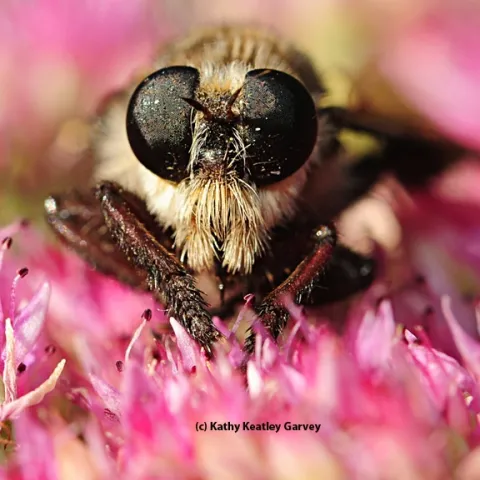
Robber fly staring at the photographer. A robber fly is one of many insects that students use in "How to Make an Insect Collection." (Photo by Kathy Keatley Garvey)

How to Make an Insect Collection

October 1, 2015
By Kathy Keatley Garvey
It's that time of year again. Teachers ask their students to make an insect collection. The project is considered a "rite of passage." However, often the students--whether they be middle school, high school or college level--don't know where to begin.
View Article