The University of California, Davis, prides itself on teaching, research and public service. A few faculty members excel at all three (they're called triple threats) and distinguished professor James R. Carey of the UC Davis Department of Entomology and Nematology is one of them.
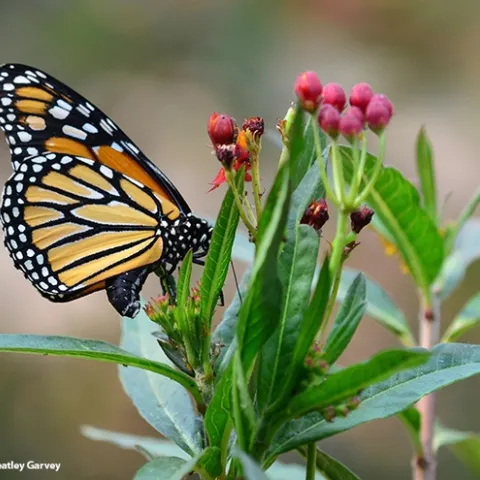
Have you ever seen a monarch butterfly (Danaus plexippus) lay an egg on her host plant, the milkweed? Have you ever seen a close-up of the egg? The larva or caterpillar? The chrysalis? The eclosure (when the adult emerges from the chrysalis)? It's a fascinating sight. Not all eggs will make it.
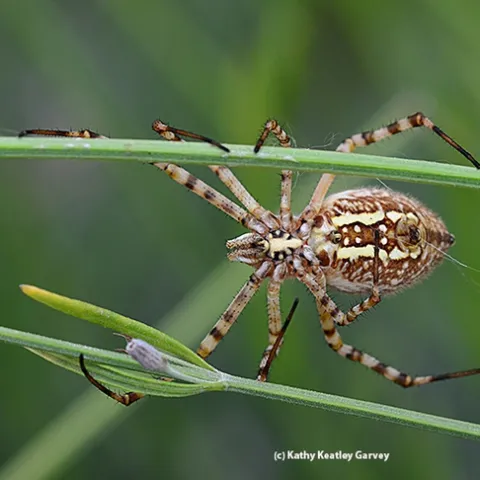
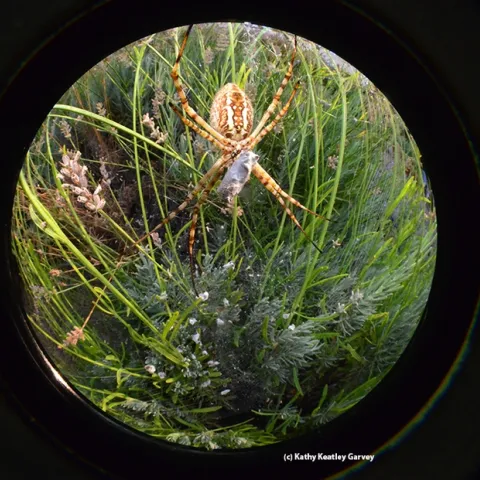
For more than two weeks now, we've been watching a banded garden spider (Argiope trifasciata) trap and wrap its unfortunate prey (fortunate if you're a spider, unfortunate if you're the prey) snared in its web.
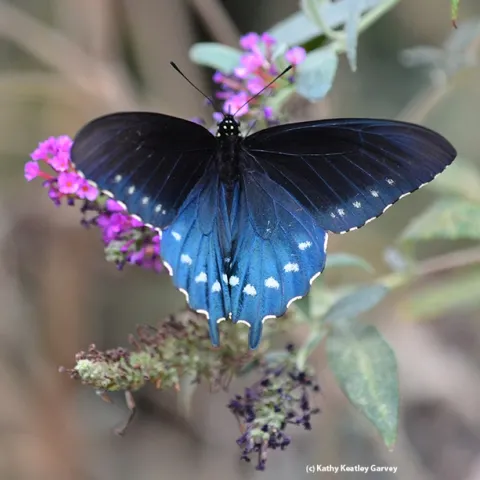
Never say "pipe down" to a pipevine swallowtail. It's a butterfly we treasure. You may have seen it nectaring on your butterfly bush. It's black with blue iridescent upper wings and orange arrowhead-like spots on its inner wings.
Talk about greed. Talk about gluttony. How much food does a banded garden spider (Argiope trifasciata) need? For 30 minutes, we watched a well-fed banded garden spider catch bee after bee in its sticky web that it had cleverly anchored between two lavender plants.