UC ANR is committed to providing an accessible and inclusive web experience for all users. If you encounter an accessibility barrier on this or need content in an alternative or remediated accessible format, please contact anraccessibility@ucanr.edu.
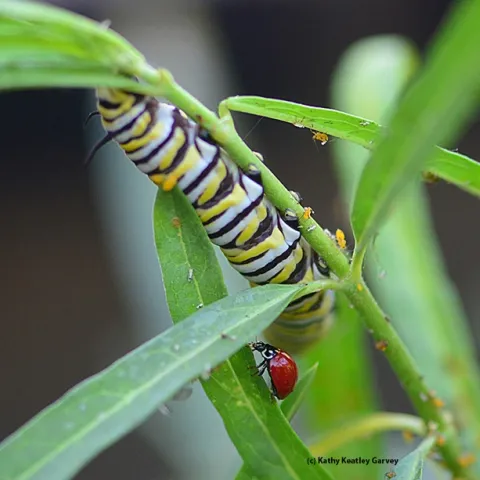
Sometimes in a world of towering skyscrapers, jumbo jets and warehouses big enough to hold a small planet--or at least a state the size of Rhode Island--we don't realize how small small is. Last weekend it was a veritable insect feast on our narrowleafed milkweed.
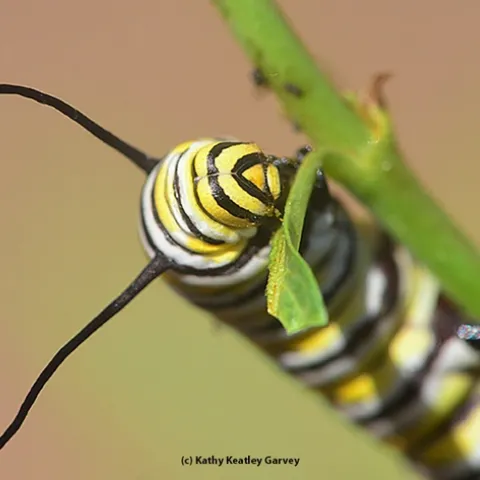
Thank you, Mrs. Monarch. Thank you for laying your eggs on our newly planted narrowleaf milkweed. We planted the narrowleafed milkweed last spring, hoping we could coax you to come.
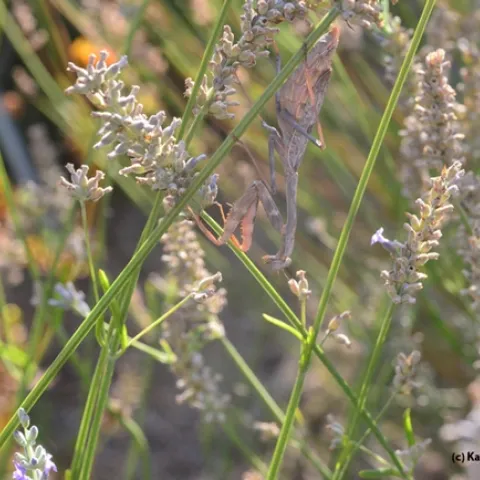
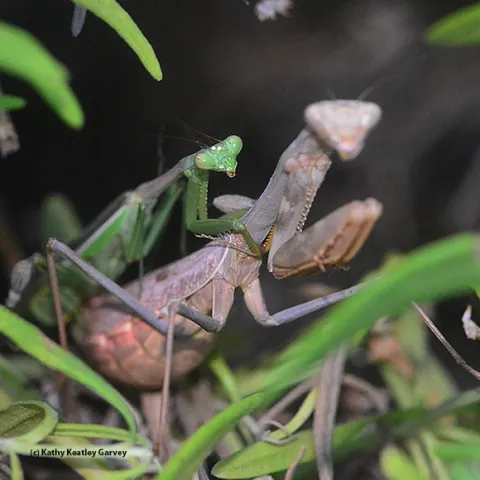
Yes, it happens. We've heard the stories and read some of the scientific literature about what a female praying mantis will do to her partner during the mating process. Sexual cannibalism. She'll bite the head off of her mate and eat it--but the mating process continues unabated.
The severe California drought--we're in the fourth year--is affecting us all, but it's also affecting insects, says Lynn Kimsey, director of the Bohart Museum of Entomology and professor of entomology at the University of California, Davis.