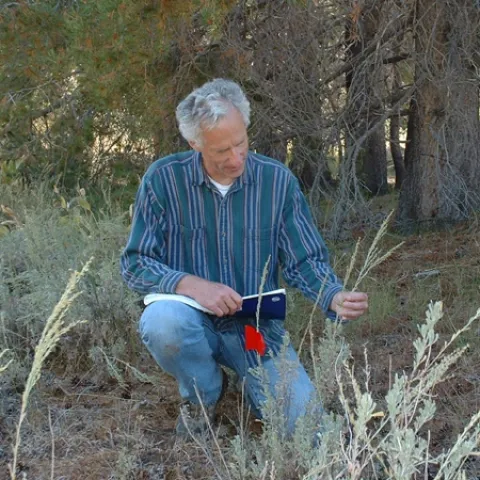
Plants can eavesdrop. They can sense danger. So says ecologist Richard 'Rick' Karban, professor of entomology, UC Davis Department of Entomology and Nematology, and author of the newly published book, Plant Sensing and Communication (University of Chicago Press).
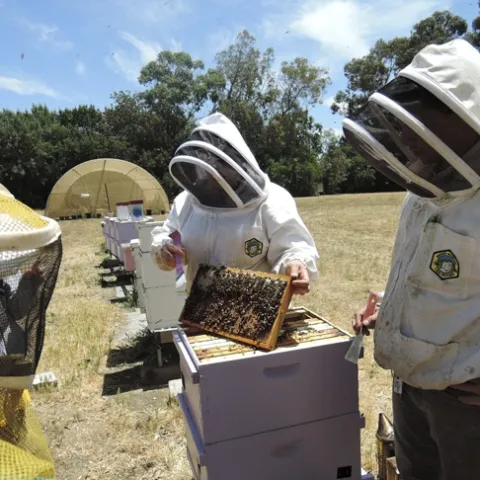
So you want to be a beekeeper...but you don't know where to begin. You're in luck. Bee experts at the Harry H. Laidlaw Jr. Honey Bee Research Facility, University of California, Davis, are planning two short courses or sessions in September--the first on Sept. 13 and the second on Sept. 20.
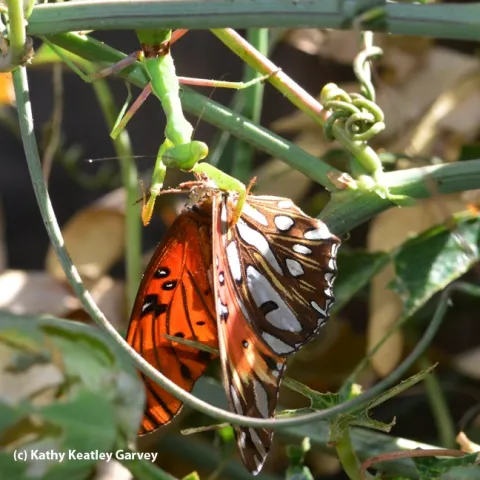
Sometimes you just can't win for losing. This morning a newly emerged Gulf Fritillary butterfly (Agraulis vanillae) began drying its damp wings, preparing for flight. It had just emerged from its chrysalis.
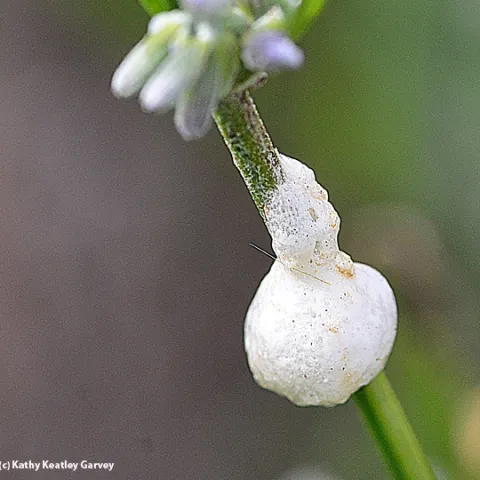
Talk about a spittin' image. When you see one spittlebug froth, you've seen them all, right? They all look alike, right? Well, the froth does, but you'll see different shapes and sizes on your plants.
So, what's a meloid beetle to do? Here you are, a meloid beetle foraging on a Mexican sunflower (Tithonia) and these long-horned digger bees keep dive-bombing you and pestering you. Then a Gulf Fritilllary butterfly (Agraulis vanillae) decides it wants a share of your flower.