Bug Squad

A daily (M-F) blog launched Aug. 6, 2008 and about the wonderful world of insects and those who study them. (Photo by Kathy Keatley Garvey)
Primary Image
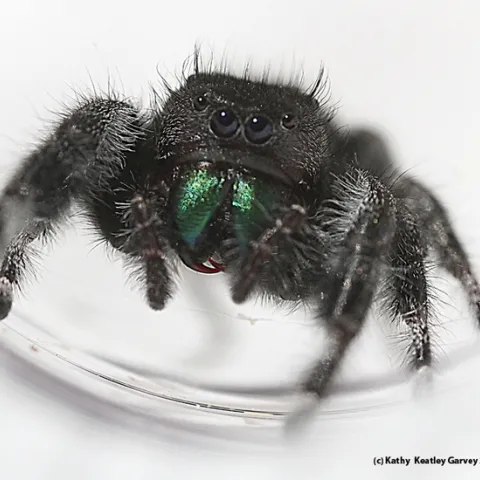
A jumping spider, Phidippus audax, "poses" for a photo. (Photo by Kathy Keatley Garvey)

Jump! How Far?

June 10, 2015
By Kathy Keatley Garvey
Who's that knocking on our front door? Actually, we didn't hear it knock. It appeared out of nowhere and climbed up to our doorbell. We gingerly placed the jumping spider, Phidippus audax, in a vial to transport it to our backyard bee garden. Phidippus audax, aka P.A.
View Article
Primary Image
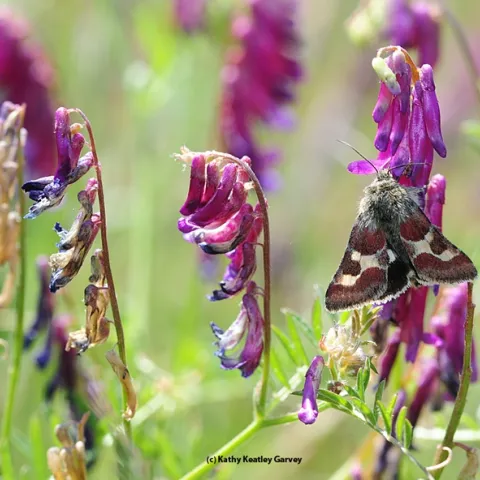
This moth, Schinia sueta, feeds on hairy vetch, Vicia villosa, in a meadow at Hastings Preserve, Carmel. (Photo by Kathy Keatley Garvey)

One Cool Little Moth: Schinia sueta!

June 9, 2015
By Kathy Keatley Garvey
Ever heard of Schinia sueta? It's a moth. We spotted this little moth, from the Noctuidae family, in a meadow at the Hastings Preserve in Carmel in early May during the BugShot Macro Photography Course, taught by Alex Wild, John Abbott and Thomas Shahan.
View Article
Primary Image
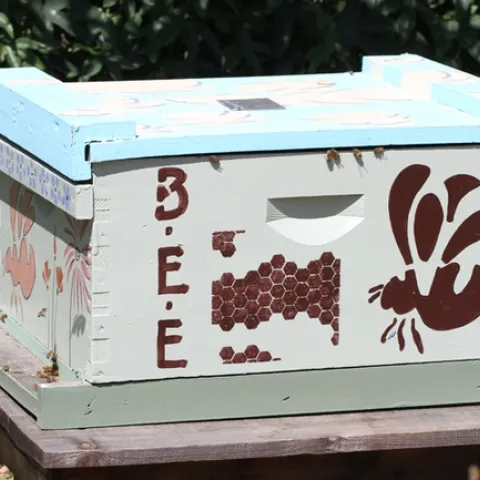
A bee colony is one of the features in the Häagen-Dazs Honey Bee Haven on Bee Biology Road, west of the UC Davis campus. (Photo by Kathy Keatley Garvey)

UC Davis Bee Garden to Mark National Pollinator Week

June 8, 2015
By Kathy Keatley Garvey
It's almost time to celebrate! Or cele-bee-ate! In observation of National Pollinator Week, the UC Davis Department of Entomology and Nematology has scheduled an open house at its half-acre bee garden, the Hagen-Dazs Honey Bee Haven from 5:30 to 7 p..m., Friday, June 19.
View Article
Primary Image
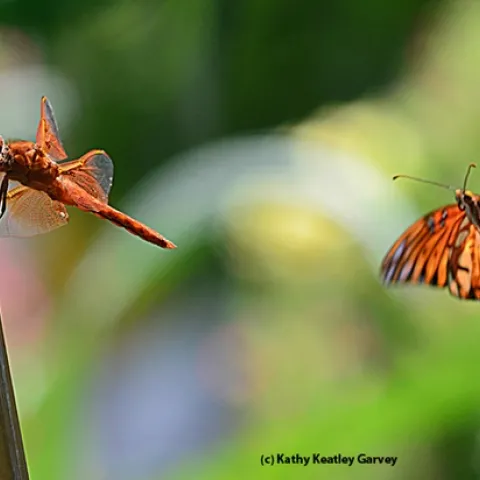
A Gulf Fritillary butterfly checking out a red flameskimmer dragonfly. (Photo by Kathy Keatley Garvey)

Right Color, Wrong Species

June 5, 2015
By Kathy Keatley Garvey
You never know what you'll see in your pollinator garden. That's why it's always a good idea to carry a camera with you, or you might miss a bit of drama. Not in drama queens, but in drama kings.
View Article
Primary Image
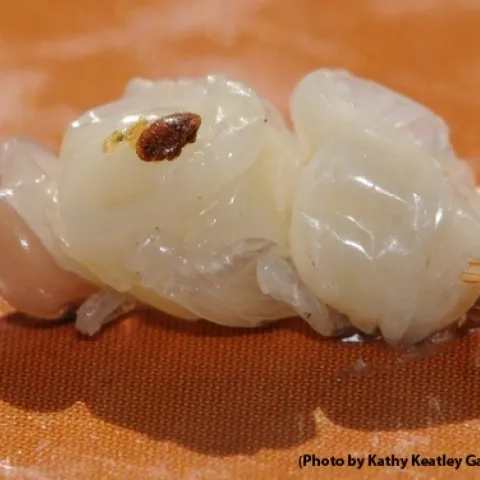
Mite on drone pupa. (Photo by Kathy Keatley Garvey)

Smell Like a Bee

June 4, 2015
By Kathy Keatley Garvey
Newly published research by a Michigan State University-led team indicates that one of the reasons why the varroa mite is so destructive is because it infiltrates hives by smelling like a bee. The parasitic mite, or Varroa destructor, is a "blood sucker" that feeds on bees.
View Article