Bug Squad

A daily (M-F) blog launched Aug. 6, 2008 and about the wonderful world of insects and those who study them. (Photo by Kathy Keatley Garvey)
Primary Image
Emcee Bill Rains (left) congratulations Robbin Thorp. (Photo by Kathy Keatley Garvey)

Two Who Make a Difference

February 25, 2015
By Kathy Keatley Garvey
They are two who make a difference. Native pollinator specialist Robbin Thorp, emeritus professor of entomology, received the 2015 Distinguished Emeritus Award and Hugh Dingle, emeritus professor of entomology, received an Edward A.
View Article
Primary Image
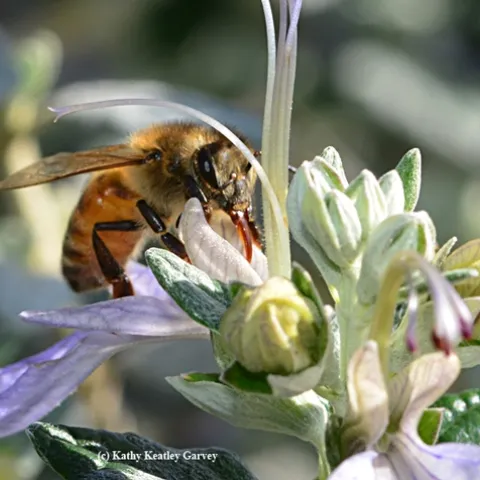
A honey bee gathering nectar from a bush germander at CornerStone Sonoma. (Photo by Kathy Keatley Garvey)

How Are These Two Alike?

February 24, 2015
By Kathy Keatley Garvey
What does a bee have in common with a bulldog? If you've ever been to Cornerstone Sonoma on Arnold Drive (Highway 121) in Sonoma, and admired the luxurious gardens and intriguing shops, you know. The bees go head-first in the blossoms and Axel, an English bulldog, goes head-first in a bucket.
View Article
Primary Image
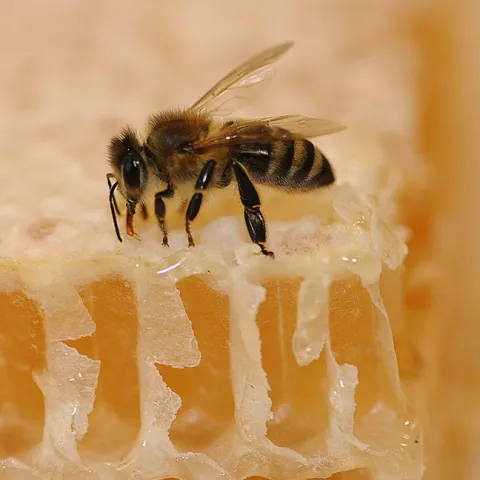
Honey bee sipping honey. (Photo by Kathy Keatley Garvey)

Honey, I Hardly Know Ya

February 23, 2015
By Kathy Keatley Garvey
Ever been to a Farmer's Market and picked up a jar of honey advertised as "organic?" Is it organic? And if you're a beekeeper, has a consumer ever asked you if your honey is organic? How do you know?
View Article
Primary Image
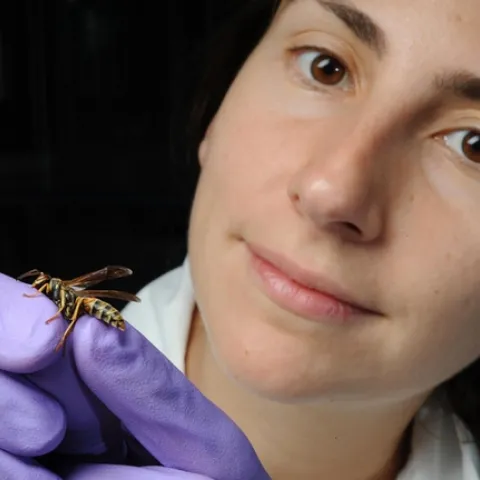
Amy Toth with a Polistes paper wasp.

From Marla Spivak to Amy Toth

February 20, 2015
By Kathy Keatley Garvey
May is a few months away, but already there's strong interest in the line-up of speakers at the UC Davis Bee Symposium, set Saturday, May 9 in the UC Davis Conference Center. The theme? "Keeping Bees Healthy." An excellent topic.
View Article
Primary Image
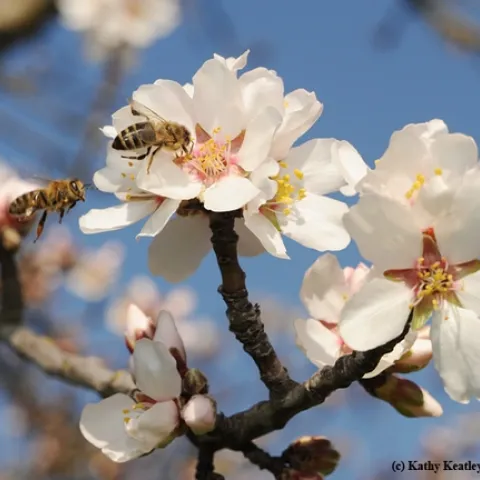
Two bees heading for the same almond blossom. (Photo by Kathy Keatley Garvey)

Feel the Buzz!

February 19, 2015
By Kathy Keatley Garvey
The word is "bees" and "almonds" are their world. Right this very minute there are about 1.7 million colonies of bees pollinating California almonds. Since it takes two colonies to pollinate one acre, and California doesn't have that many bees, beekeepers throughout the nation trucked in some 1.
View Article